I didn’t expect my “HR trends” wake-up call to happen in a Tuesday budget meeting. Someone said, “Can we just freeze hiring and… wait?”—and the room went quiet in that very specific way that signals anxiety dressed up as strategy. That’s when it hit me: the big shift in 2025–2026 isn’t a shiny HR technology demo. It’s the awkward, human re-negotiation of trust—how we hire (skills-based), how we pay (pay transparency), how we protect energy (employee wellbeing), and how we let artificial intelligence into the workflow without turning people into cogs. Here’s what I’m seeing, what I’m stealing from smarter teams, and what I’m side-eyeing hard.
1) HR trends 2026 starts with trust (not perks)
Why 2026 feels different
Based on what I’m seeing in HR Trends 2025-2026: What’s Changing, HR trends 2026 are shaped by a strange mix: job markets feel weaker in many places, yet some teams still face real labor shortages. That creates tension. People stay because leaving feels risky, but employers still struggle to hire for key roles. In that environment, perks don’t fix much. Trust does.
My “job hugging” moment
I had a conversation with a manager who said, “People aren’t engaged—they’re just job hugging.” They were holding onto their roles, doing the minimum, and avoiding visibility. It wasn’t laziness. It was uncertainty. That moment helped me see how disengagement can look “stable” on paper: low turnover, fewer complaints, steady headcount. But underneath, people were emotionally checked out.
In 2026, retention without trust can be a quiet form of risk.
Where trust breaks first
Trust usually doesn’t break during big announcements. It breaks in the everyday gaps:
- Vague career paths: “We’ll figure it out” becomes a long-term answer.
- Unclear pay: people don’t need perfection, but they need logic and honesty.
- Silent burnout risk: workload grows, support stays flat, and nobody names it.
Mini checklist: what I look for in a trustworthy people strategy
- Clear role levels and promotion signals (written, not implied)
- Pay ranges and a simple explanation of how pay moves
- Managers trained to spot burnout early and act fast
- Regular listening loops with visible follow-through
- Metrics that track capacity (not just performance)
2) Skills-based hiring is eating the job description (skills-based workforce)
What I mean by a skills-based model (and what it isn’t)
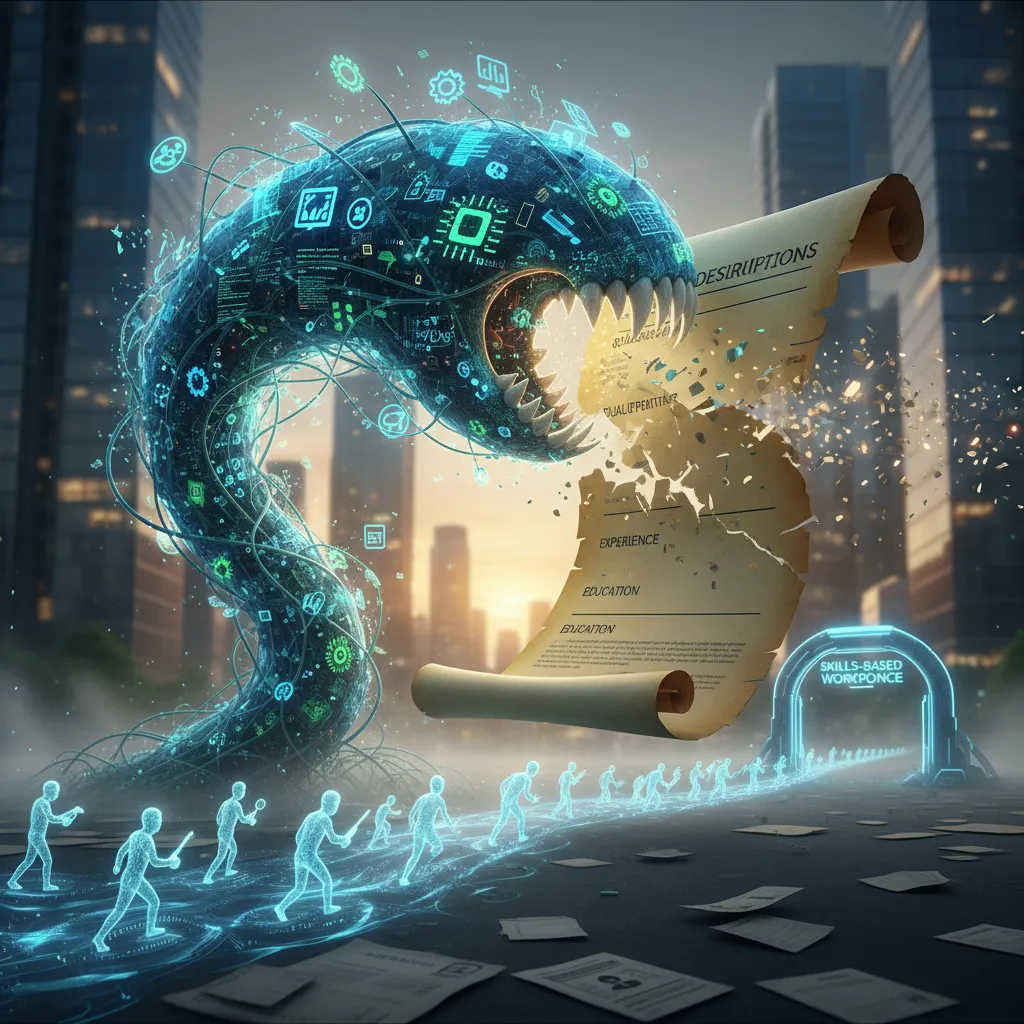
In the 2025–2026 HR trend reports I keep coming back to one shift: skills-based hiring is slowly replacing the old “job description as truth.” In a skills-based workforce, I use fewer titles and focus on capabilities: what someone can do, how they think, and how fast they learn.
What it isn’t: a free-for-all where “anyone can do anything.” It still needs clear standards. The difference is that standards are written as skills and outcomes, not years of experience or brand-name employers.
Skills-based hiring in practice
When I build a skills-based model, I start by rewriting requisitions. I replace vague lines like “strong communicator” with observable behaviors and proof.
- Rewriting reqs: “Can map a process and reduce cycle time by 10%” beats “process mindset.”
- Structured interviews: same questions, same scoring rubric, less gut feel.
- Portfolio proof: work samples, case write-ups, GitHub, dashboards, or a short paid task.
A scenario: same title history, different capabilities
Imagine two candidates who both held the title Operations Manager for three years. On paper, they look equal. In a skills-based interview, I might see this:
| Candidate | Cognitive capability | Problem-solving signal |
|---|---|---|
| A | Follows known playbooks | Fixes issues after escalation |
| B | Diagnoses patterns fast | Prevents repeat failures with root-cause work |
How it changes talent acquisition metrics (and reduces hiring regret)
Skills-based hiring pushes me to track different metrics: quality of hire, time-to-productivity, and interview-to-offer accuracy (did our assessment predict performance?). When we hire for capabilities, not titles, we reduce “hiring regret” because expectations are clearer and evidence is stronger.
3) Internal mobility becomes the retention engine (workforce planning)
In the 2025–2026 shift, internal mobility stopped being a “nice-to-have” and became a retention engine. The reason is simple: redeploying talent is faster than recruiting. Hiring cycles drag, budgets change, and candidates drop out. But moving someone internally can happen in weeks—sometimes days—if the system is ready.
Why internal mobility is suddenly a must-have
- Speed: internal moves beat slow recruiting when priorities change.
- Trust: people stay when they can see a path forward.
- Capability: skills already exist inside the company, just not in the right place.
My messy lesson (and what it cost)
I learned this the hard way. We had an open role and chose to backfill externally because it felt “cleaner.” While we waited, two high-potential employees asked about growth options. We told them to “hang tight.” They didn’t. Both left within a quarter. The external hire was fine, but we lost momentum, context, and two future leaders.
“If people can’t move inside, they will move outside.”
How I operationalize internal mobility
Internal mobility only works when it’s visible and repeatable. These are the building blocks I now push for:
- Project marketplaces: short-term gigs so people can try new skills without a full transfer.
- Talent reviews: not just performance—also readiness, interests, and mobility risk.
- Skill profiles: a simple skills inventory tied to real work, not vague titles.
Where workforce planning fits (and what changes)
Workforce planning can’t live in annual org charts anymore. I treat it like a quarterly rhythm: skill gap reviews every 90 days, linked to business priorities. A lightweight table helps:
| Quarter | Top skill gaps | Internal moves |
|---|---|---|
| Q1 | Data, AI ops | Projects + rotations |
4) Employee wellbeing becomes infrastructure (burnout prevention)
I used to roll my eyes at “wellbeing weeks.” They felt like a poster and a smoothie bar, not a fix. Then I watched technostress become a daily need to manage: nonstop pings, tool overload, and the pressure to be “always on.” In 2026, the trend I see is clear: employee wellbeing becomes infrastructure, built into how work runs, not added on top.
What wellbeing infrastructure looks like
Real burnout prevention starts with workload design, recovery time, and manager rituals. If the system creates overload, no meditation app will save it.
- Workload design: fewer “top priorities,” clearer ownership, and limits on work-in-progress.
- Recovery time: protected breaks after launches, travel, or intense sprints.
- Manager rituals: weekly check-ins that ask, “What should we stop?” not just “What’s next?”
Burnout risk as a board topic (without turning people into KPIs)
I’d report burnout risk like a safety issue: trends, not names. I avoid scoring individuals. Instead, I share signals and system causes:
- After-hours work patterns by team (aggregated)
- Meeting load and context switching
- On-call pages per person and recovery time taken
- Pulse survey themes, shared as quotes
“We measure the work and the environment, not the person.”
Tiny moves that help right now
- Meeting hygiene: default 25/50 minutes, agendas, and “no-meeting” blocks.
- Focus blocks: two protected hours daily for deep work.
- Sane on-call expectations: rotation caps, clear severity rules, and comp time that actually happens.
5) Total rewards + pay transparency: the clarity era
In 2026, I’m seeing total rewards move away from “everything for everyone” and toward intentional design. The source trend is clear: budgets are tighter, expectations are higher, and employees want to understand why a benefit exists. Instead of adding perks, I’m mapping rewards to real needs: fair pay, flexible work, health support, growth, and time.
Total rewards: designed on purpose
I now treat total rewards like a product. Who is it for? What problem does it solve? What will we stop doing to fund what matters?
- Core: pay, healthcare, time off, retirement
- Growth: learning budgets, internal mobility, coaching
- Life: flexibility, caregiving support, mental health access
Pay transparency: trust accelerant (and conflict starter)
Pay transparency is rising because it builds trust fast. When people can see ranges and rules, they stop guessing. But it can also trigger conflict when the story doesn’t match the numbers—especially if long-tenured employees sit below new-hire ranges. Transparency doesn’t create pay gaps; it reveals them.
A script I’ve used: ranges without overpromising
“For this role, our current range is $X–$Y. Where you land depends on skills, scope, and market data. If you grow into higher impact work, we review pay in our normal cycle, and sometimes off-cycle for major changes. I can’t promise a specific number today, but I can explain what moves pay within the range.”
Culture compliance: when pay, policy, and values collide in public
In the clarity era, compensation is public-facing. A job post, a leaked offer, or a viral thread can test your values. I check alignment across:
- posted ranges vs. actual offers
- promotion rules vs. manager “exceptions”
- stated values vs. who gets rewarded

6) AI expansion in HR: from automation to agentic AI (with guardrails)
In the 2025–2026 shift, I’m seeing AI move from “nice-to-have automation” to something closer to a co-worker. That sounds efficient, but it also raises real risk. In HR, the best results still come when we use AI for support, not for final judgment.
Where AI actually helps today (if you’re careful)
- Screening support: I use AI to summarize resumes, spot missing basics, and group candidates by skills. I don’t let it decide who is “good.”
- Employee FAQs: Chatbots can answer policy questions fast, but only if the knowledge base is current and the bot clearly says when it’s unsure.
- People analytics: AI can surface patterns in turnover, engagement, and hiring funnels. I treat outputs as signals, not truth.
Agentic AI: when workflows start acting without you
Agentic AI is the moment the system doesn’t just recommend—it acts. For example, it could schedule interviews, send follow-ups, open a requisition, or trigger a learning plan based on performance data. That’s exciting because it saves time. It’s scary because one wrong step can scale fast.
My guardrail mindset: speed is great, but accountability is better.
Automation vs human judgment
I keep critical thinking in the loop for anything that affects pay, performance, promotion, discipline, or termination. AI can draft, sort, and flag—but humans must review context, bias risk, and fairness. I also push for basic controls: audit logs, approval steps, and clear ownership.
My rule of thumb
If you can’t explain the decision, don’t automate it. If I can’t describe why the model ranked someone higher, I won’t let it drive the outcome. I’d rather use AI to produce a short, readable summary than a hidden score.
7) HR operating models get rewired (and it’s overdue)
In 2026, I see a clear pattern: old HR operating models crack under pressure. They were built for steady cycles, not constant change. Speed is the first stress test. Leaders want answers in days, not quarters. Data is the second. HR is expected to use skills data, pay data, and engagement signals in real time. The third is cross-functional messiness: work now sits between HR, IT, Finance, Legal, and business teams, and the “who owns this?” question slows everything down.
Why the old model breaks
- Too many handoffs between COEs, HRBPs, and shared services
- Decisions without clear owners, so work stalls or gets re-done
- Data scattered across tools, making reporting slow and trust low
The model I’m seeing work
What’s working best looks like product-minded HR paired with stronger workforce planning. Instead of “programs,” teams run HR products (like internal mobility, onboarding, or performance) with roadmaps, user feedback, and measurable outcomes. At the same time, workforce planning becomes a real operating rhythm, not a yearly spreadsheet. Most important: clear owners for decisions, data, and delivery.
“If everyone is involved, no one is accountable.”
A quick operating model audit I run
- Decisions: Who decides? Who inputs? Who signs off? Where do decisions get stuck?
- Data: What is the source of truth for skills, headcount, pay, and performance?
- Handoffs: Where do requests move between teams, and what gets lost each time?
Why this matters for people
When HR operating models are rewired, employees feel it: faster support improves wellbeing, clearer skills data boosts internal mobility, and consistent ownership strengthens culture compliance across managers and teams.
Conclusion: My 2026 HR ‘packing list’ (the non-glam stuff)
When I look across the biggest HR trends 2026 is bringing—skills-based work, changing rewards, stronger wellbeing infrastructure, wider AI use, and new operating models—one theme keeps showing up: trust. If people don’t trust how decisions are made, they won’t trust the skills framework. If they don’t trust pay and rewards, they won’t believe performance reviews. If they don’t trust how data is used, AI will feel like surveillance, not support. And if they don’t trust leaders, no org design will “fix” culture.
If I had to rebuild HR for a 300-person company in 2026
I’d start with the basics that make trust real, not just a value on a slide. I’d build one clear job architecture, then connect it to skills, pay ranges, and growth paths. I’d set simple rules for hybrid work and workload, and I’d invest in manager training that focuses on coaching, feedback, and fair decisions. For AI, I’d use it first in places where it reduces admin (like FAQs, scheduling, and drafting), with plain-language policies on what data is used, what is not, and how humans stay accountable.
What I’m watching next
First, compliance convergence: privacy, AI rules, wage laws, and health requirements are starting to overlap, and HR will be the connector. Second, pay transparency: not just posting ranges, but explaining how pay moves. Third, employee disengagement signals: slower response times, lower internal mobility, rising absence, and “quiet quitting” patterns that show up before resignations do.
My call to action is simple: pick one system to fix this quarter—performance, pay, scheduling, onboarding, manager capability—and make it trustworthy end to end. Don’t try to do all of HR trends 2026 at once. Build one solid piece, then stack the next.
TL;DR: HR trends 2026 aren’t just “new tools.” They’re a reset of trust: skills-based hiring and a skills-based model for workforce planning, real wellbeing infrastructure, clearer total rewards, smarter internal mobility, and practical AI in HR (including agentic AI) with culture compliance guardrails.