Finance Trends 2025-2026: What’s Changing
The finance sector is going through a major change as we move from 2025 to 2026. Thanks to rapid advancements in technology, especially artificial intelligence
Get your daily shot of concentrated business intelligence. Actionable insights, honest reviews, and exclusive deals across operations, sales, HR, finance, data science, and beyond.

The finance sector is going through a major change as we move from 2025 to 2026. Thanks to rapid advancements in technology, especially artificial intelligence

The world of Human Resources (HR) is going through a major change as we approach 2025-2026. This change is primarily driven by the widespread use

Sales trends in 2025-2026 show significant changes in the retail and food services industries. It’s important for businesses to understand these shifts in order to

The world of operations is about to change significantly as we approach 2025-2026. The old ways of making small improvements and using basic automation are

I grouped 63 operations tips into a few high-impact themes: decision hygiene, flow + bottlenecks, systems thinking (ERP/SCM/SOA), and measurement. Then I added a keyword-analytics layer—TF-IDF, Search Frequency Rank, and Research Topic Trends—so the practices stay relevant and measurable.

Build an Operations AI Strategy around five pillars: business alignment, ROI use cases, data/platform readiness, AI governance framework, and operating model skills + MLOps/security. Aim for a 70/20/10 portfolio, deliver 90-day quick wins, embed AI into existing tools, and run weekly/monthly/quarterly improvement cycles to scale.

Operations is shaping the next wave of AI adoption in 2026: fewer pilots, more execution discipline. Manufacturing is already deep in predictive AI (48%), supply chain planning (35%), and process optimization (36%), with 94% using some AI. Cloud ERP is a practical enabler (49% simplify IT, 49% cut costs, 48% improve agility). The winners will pair AI workflows with leadership shift, team preparedness, and clear performance metrics—while planning for big AI infrastructure spending ($527B) and the rise of physical AI (58% today, 80% soon).

If you want quick wins, start with no-code workflow automation (think Zapier AI’s 8,000+ app connections). If you’re already in Microsoft 365, Copilot at $30/user/month is hard to ignore for secure, everyday ops. For revenue and service teams, Salesforce Einstein starts at $50/user/month. For analytics-heavy orgs, ThoughtSpot and DataRobot stand out for data-driven insights and machine learning automated insights. Whatever you choose, prioritize integration capabilities, security compliance safeguards enterprise, and a clear “pilot-to-production” plan.

Implementing AI in operations works when you treat it like process improvement: pick high-friction workflows, fix data plumbing, pilot fast, measure operational metrics, and scale with an AI policy. Use generative AI where it truly fits (support, knowledge work), automate where ROI is clear, and plan for workforce impact.

Sales trends in 2025-2026 show significant changes in the retail and food services industries. It’s important for businesses to understand these shifts in order to

Reply faster than feels polite (63% of buyers expect same-day). Write the plan, protect prospecting time, qualify like a skeptic, sell outcomes not price, and use data + empathy to become a trusted advisor—especially in virtual selling.

If I had to boil it down: I use AI-driven sales tools to cut research time (up to 90%), score leads with predictive analytics, personalize outreach messaging across channels, and coach with conversation intelligence—while keeping humans in charge of relationships. The teams that win in 2026 will treat AI sales integration like infrastructure, not a hack.

AI sales tools can materially improve sales efficiency and sales performance: better lead scoring, higher conversion rates, stronger sales forecasting and forecast accuracy, and faster cycles via conversation intelligence. The catch is boring but real: data quality, training, and incremental rollout matter more than the fanciest demo. By 2026, agentic AI and AI agents are expected to be embedded in RevOps, making hybrid human-AI selling a competitive advantage.

If you want AI that actually moves deals, match the tool to the moment: prospecting (Apollo.io AI / ZoomInfo Copilot), lead qualification + scheduling (Exceed.ai), conversation intelligence (Gong.io / Remberg Copilot), CRM-native scoring & forecasting (Einstein AI, Agentforce Salesforce, Freddy AI, Zia AI). Build around one CRM integration, keep the stack small, and track a few outcomes (reply rate, meetings, forecast accuracy) instead of collecting “features.”

Map your current sales process first, set clear objectives with measurable goals, pick the right sales AI tools, run pilot testing, integrate with your CRM, train the sales team, and monitor/optimize with success metrics tied to revenue growth and conversion rates.

The world of Human Resources (HR) is going through a major change as we approach 2025-2026. This change is primarily driven by the widespread use

If I had to compress 63 HR tips into one page: build mental health support like infrastructure, hire for skills not pedigree, make pay transparency a strategy (not a memo), use AI integration for boring work not people judgment, and treat workforce planning as your cost-control lever.

If I had to boil it down: I’d start with a skills-based approach and workforce planning, pair HR-IT collaboration with an AI architecture I can defend, pilot agentic AI in HR operations where time savings are measurable, and lock in AI governance (privacy + bias mitigation) before scaling. Then I’d use predictive analytics to prove business value—especially in benefits experience and retention improvement—because that’s where employees feel it fastest.

AI in HR is already delivering measurable wins (70% lower admin task load, 30–40% hiring cost savings, better satisfaction), but the real unlock comes from pairing agentic AI with HR analytics, clear governance, and honest communication about headcount shifts.

If you’re shopping for AI HR solutions in 2026, pick tools that (1) reduce ticket volume with an AI assistant, (2) improve performance reviews without sounding robotic, (3) tighten applicant tracking and resume screening, (4) make HR analytics and workforce planning visual, and (5) handle employee relations and investigation planning with care. My short list: HiBob, Lattice, BambooHR, Workday HCM, Payscale, HR Acuity (olivER), Leena AI, Gusto, and Microsoft Copilot—each wins in different lanes.

Implement AI in HR by picking one painful workflow, fixing your data pipes, piloting safely, adding governance, and scaling toward AI agents that handle multi-step HR processes—while training managers for human AI synergy.

The finance sector is going through a major change as we move from 2025 to 2026. Thanks to rapid advancements in technology, especially artificial intelligence

If you want AI that helps finance teams (not just demos), start with 3 workflows: real-time forecasting, AI reconciliation for the financial close, and credit risk modeling. Choose tools that are explainable, integrated (Excel/ERP/Salesforce), and auditable. Measure impact with cycle time, forecast accuracy, and error rate—then scale via no-code automation and AI agents with compliance workflows baked in.

AI in Finance is moving from pilots to operational muscle: agentic AI can cut manual workload 30%–50%, speed PO cycles up to 80%, halve AML case time, and boost credit-risk memo productivity 20%–60%—but only if data infrastructure and AI governance show up early.

If you need workflow and auditability, start with StackAI. For order-to-cash and treasury, HighRadius stands out. For predictive analytics in a low-code vibe, DataRobot is a workhorse. For credit risk automation, Zest AI and Upstart are the names to know. For financial crime detection and compliance tools, SymphonyAI is built for the job. For AI investing platforms, Kavout, Trade Ideas, and Magnifi cover ranking, scanning, and conversational analysis. For FP&A tools 2026, Planful (plus enterprise CPM leaders like Anaplan and Prophix One) brings explainable AI into forecasting—when your data house is in order.

Implement AI in finance in three phases: Foundation (3–6 months), Expansion (6–12 months), and Maturation (12–24 months). Start with data governance + cloud-based ERP readiness, run tight pilot programs (invoice automation is a classic), scale what works with RPA + predictive analytics, and lock in ethical AI and regulatory compliance—tracking ROI with financial KPIs.

Finance leaders expect an AI-powered future by 2026: more internal AI platforms, faster fraud detection, hyper-personalised banking, and voice AI—if responsible AI, regulatory compliance, and data platforms keep up. Agentic AI is the wildcard: huge upside, sharp governance edges.

By 2026, winning with AI is less about “training a model” and more about operationalizing agentic systems on a unified governed data foundation: RAG + vector databases, rigorous evals (golden datasets, offline testing, drift), autonomous analytics copilots, synthetic data workflows, predictive/prescriptive intelligence, and regulation-ready governance (e.g., EU AI Act).

AI and data science ops improved most when we treated generative AI as an organizational resource, built ‘AI factories’ (platform + methods + data + algorithms), invested in AI-ready data, and matured leadership (hello, chief data officer). Agentic AI is real but entering the trough of disillusionment; edge AI and smaller domain optimized models will quietly win on latency, cost, and sovereignty. Open source AI is speeding up governance and capability—if you operationalize it. Plan for denser hybrid computing (even quantum assisted) as AI infrastructure evolves toward 2026.

Pick one decision to improve, not a model to deploy. Build a data foundation (often cloud-native), design for privacy and governance, ship in thin slices with monitoring, and use copilots/agents where they actually reduce work. Align with 2026 trends: copilots, data mesh, PETs, real-time anomaly detection, and AI factories.

Five AI trends shape 2026: the AI bubble deflates into sober ROI, AI factories scale delivery, generative AI becomes an organizational resource, agentic AI matures into tool-using systems, and chief data leadership hits record support (70%). Prioritize AI-ready data, smaller domain-optimized models, edge AI cost/latency wins, and open-source interoperability—then measure value realization ruthlessly.

If you’re doing deep data analysis and neural network development, TensorFlow still feels like the safest bet. If your day is mostly business intelligence software and quick answers, Power BI (and ThoughtSpot) win on speed-to-insight. For machine learning automation, DataRobot (and H2O.ai Driverless AI) are the “set up the pipeline and breathe” options. For laptop-first analytics, DuckDB is the 2026 surprise MVP. For scale, pair Apache Spark/Arrow with cloud data warehouses like Snowflake or BigQuery. And yes—GitHub Copilot is everywhere (62% adoption), but it’s not magic inside sprawling notebooks.

AI Trends 2026 looks less like bigger models and more like better systems: AI factories, agentic AI that’s useful (not magical), smaller domain models, open-source acceleration, and AI infrastructure tuned for value realization—plus a sober look at bubble deflation.

For 2026 marketing trends, I’m treating AI as invisible infrastructure: streamline AI marketing operations, use synthetic data sources carefully, measure ROI by cycle time and rework, optimize for AI shopping assistants, and protect trust in AI with real brand authenticity.

AI transformed my marketing operations when I treated it like a teammate with guardrails: invest where ROI is measurable (faster cycles, less rework, scalable content production), track brand discovery across AI summaries/overviews, and prepare for AI agents as the next gatekeepers—without losing human connections.

If I had to choose: ChatGPT for content creation and ideation, Semrush AI + ContentShake for keyword research and SEO optimization, Ahrefs AI for backlink analysis and brand monitoring, HubSpot AI for CRM-led customer engagement, Zapier workflows for glue, and ManyMoney AI for e-commerce customer journeys and campaign optimization. Pick by workflow, not hype.

Start with 1–2 low-risk, high-impact AI marketing tools (think lead scoring and content creation). Fix data quality, run a tight pilot, measure ROI over 6–12 months, then scale with governance, human review, and cross-functional support—especially for real-time personalization and autonomous campaign optimization.

AI Marketing Trends in 2026 are less about shiny tools and more about ecosystems: AI search reduces clicks, first-party data becomes citation fuel, and agentic AI changes how buyers choose. Invest in clarity, measurement, and brand visibility where AI answers live.

AI in marketing is moving from shiny tools to invisible infrastructure. In 2026, only AI that proves ROI, reduces workflow time, and earns trust will stick—powered by first-party data, synthetic data, and agentic platforms.

AI Automation Examples that deliver real results tend to share the same bones: a clear handoff to humans, tight feedback loops, and real-time data. Expect up to ~70% support deflection with AI chatbots, 20–35% lift from sales follow-ups, and 40–50% faster time-to-hire when HR hiring is automated—plus big wins in predictive maintenance and supply chain intelligence.

If you want the easiest on-ramp, Zapier’s 8,000+ integrations still make it the best beginner-friendly automation platform. For visual scenario building and data wrangling, Make’s Core plan ($9/month) is hard to beat. For deep customization and self-hosting, n8n is the most flexible. For AI-first, production-grade automations, Vellum AI shines with evaluations, traces, and versioning. Devs who live in APIs often prefer Pipedream; enterprises typically need governance/RBAC like Workato. If you already pay for ChatGPT Plus ($20/month), the Agent Builder can be a surprisingly good “good enough” start.

Pick one process. Measure it. Run a 4-week PoC on 100–500 transactions with human-in-loop. Deploy in phases (shadow → 25% → 75% → 100%). Govern it, then continuously improve and expand.

Physical AI is shifting from R&D to real deployments, with adoption in manufacturing at 58% and projected 80% in two years (Deloitte). Agentic AI (mixing analytical + generative AI) plus stronger sensor technologies and edge AI chips are making AI autonomy more practical—but AI risk governance (68% priority) and AI cybersecurity (59% adoption for augmentation) decide whether the gains stick. Build with control planes, workflow orchestration, and open source AI where it improves interoperability—then measure outcomes, not hype.

AI-driven automation is accelerating across labs, manufacturing, and healthcare ops—but readiness, interoperability, and human-centric AI design are what separate pilots from real, scalable change.

Automation in 2026 is less about flashy robots and more about repeatable systems: task specific AI, agentic AI systems, hybrid automation (AMRs + AS/RS), predictive maintenance, and reskilling workers—measured with simple KPIs.

In-depth analysis, real ROI data, and transparent affiliate disclosures

Artificial intelligence (AI) is leading the way in technological innovation, changing how industries work and how professionals do their jobs. AI is being used in

The landscape of news consumption in 2026 is being reshaped dramatically by advancements in AI News technology. Artificial intelligence now plays a central role in

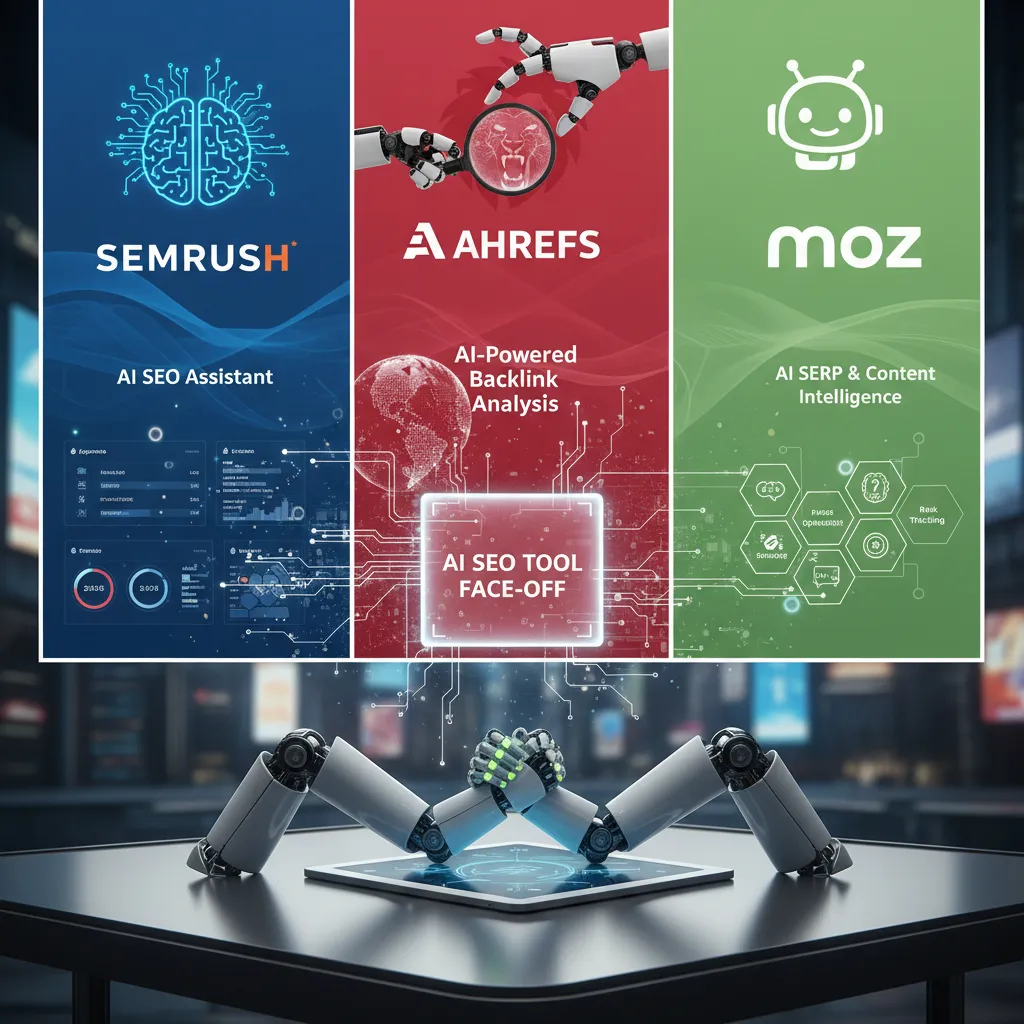
If you live in backlinks and link building, I keep coming back to Ahrefs (huge backlink database, frequent updates). If you need an all-in-one SEO tools + PPC tools + content workflow, Semrush is the “Swiss Army” pick. If you want beginner friendly SEO with Domain Authority and a simpler UI (and lower entry pricing), Moz is a calmer starting point—just expect lighter long-tail keyword coverage.

August’s AI releases signal a shift from chatty tools to agentic AI: AI agents with persistent memory, small language models for cost/speed, and regulation-first deployment (EU AI Act + sandboxes).

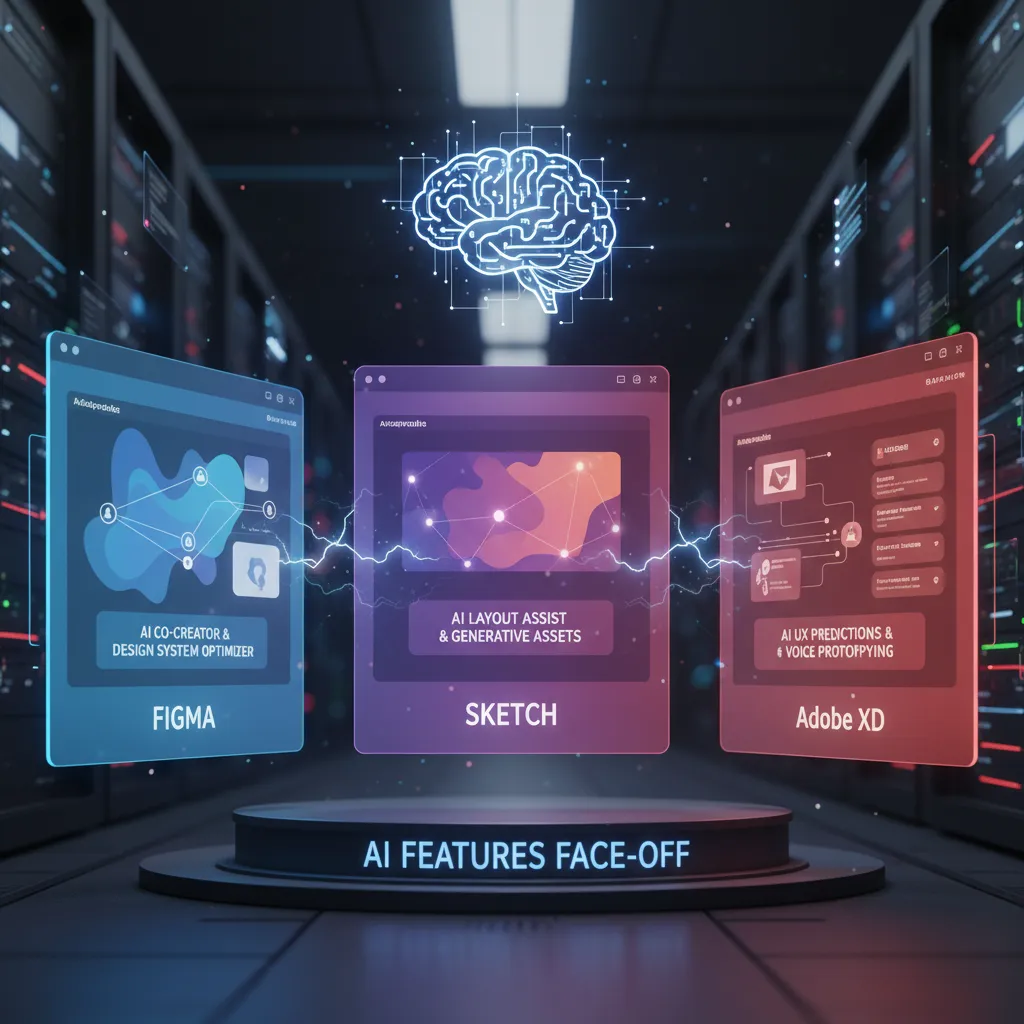
If you live in real time collaboration and cross platform access, Figma is the safest bet (and it’s pushing hardest on AI features). If you’re Mac-only and obsessive about pixel perfect control, Sketch still has real strengths—especially with plugins. Adobe XD has excellent Auto Animate/voice prototyping ideas, but “maintenance mode” changes the long-term calculus, even with Creative Cloud integration.

AI-powered social media management in 2025 works best when AI handles the busywork (content creation drafts, content scheduling, social listening, sentiment analysis, performance analytics) and I keep strategy, voice, and judgment. Pick tools based on team collaboration, multi-platform scheduling, security, and analytics—expect $99–$249/month for premium plans.
Save thousands on business tools with our exclusive partner discounts
AI-Powered Business Intelligence
Weekly conversations with business leaders, AI innovators, and industry experts. Get actionable insights you can implement immediately.