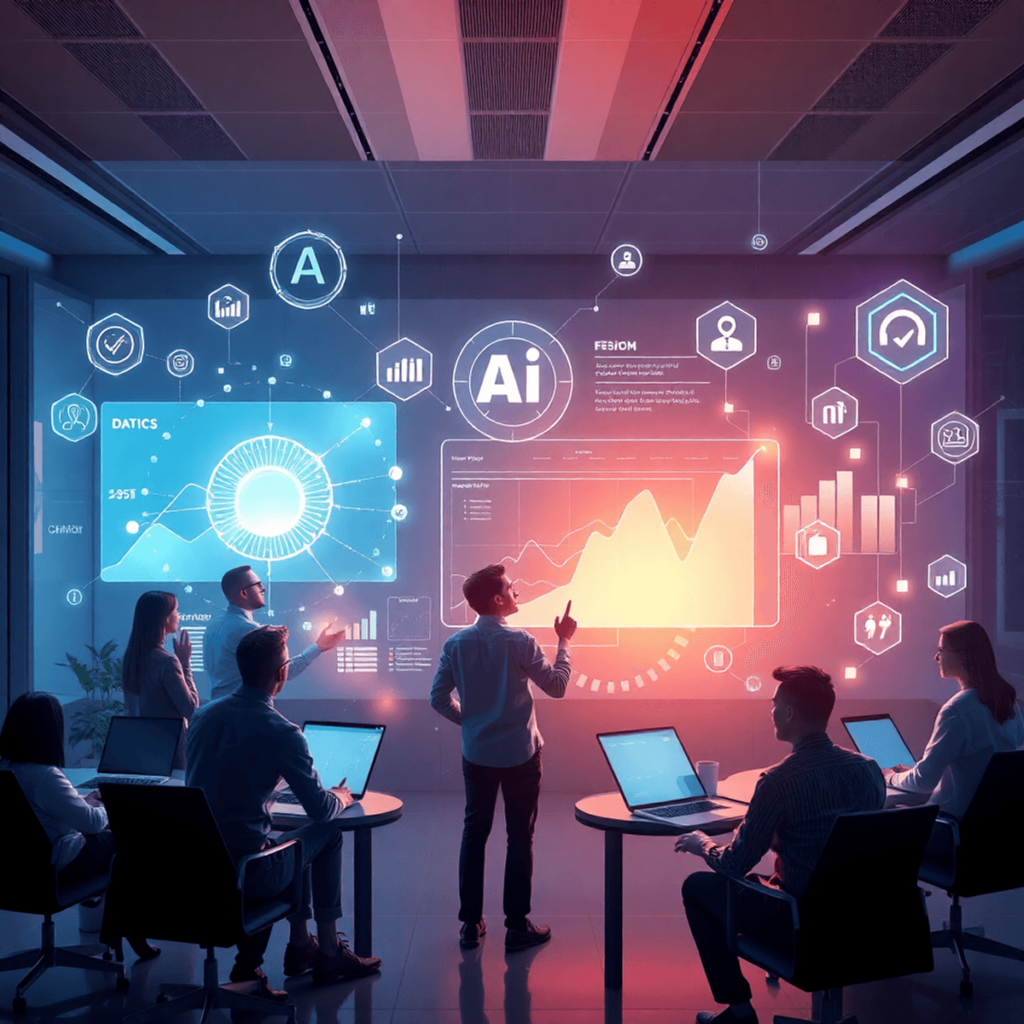

Marketing has undergone a transformative journey, with AI-powered marketing tools reshaping strategies and execution by 2026. The integration of artificial intelligence into digital marketing automation marks a pivotal shift from manual processes to intelligent systems capable of handling complex tasks with speed and precision.
Key developments in this evolution include:
- Automation of repetitive marketing tasks such as content scheduling, customer segmentation, and campaign management, freeing marketers to focus on strategy and creativity.
- Personalization at scale, enabling brands to deliver tailored messaging that resonates with individual customers across multiple channels.
- Optimization through predictive analytics, allowing data-driven decisions that improve campaign performance and maximize return on investment.
This article aims to provide a comprehensive comparison of the top AI-powered marketing tools available today. By examining their features, capabilities, and impact on marketing workflows, readers will gain insights into how these solutions can elevate their digital marketing efforts and drive measurable business results.
Understanding the Role of AI in Modern Marketing
Artificial intelligence has become the backbone of modern marketing, seamlessly connecting people, processes, and tools throughout the entire marketing lifecycle. This integration enables businesses to use AI marketing automation for tasks that would otherwise require significant manual effort and time.
How AI Connects People, Processes, and Tools
- People: Marketers, creative teams, data analysts, and customer service representatives work together more effectively when AI platforms share insights and automate communication workflows.
- Processes: Routine activities such as content scheduling, campaign segmentation, and lead nurturing are streamlined through AI-driven automation engines that reduce human error and delays.
- Tools: Various marketing technologies—such as CRM systems and social media schedulers—are brought together under AI-powered orchestration layers that enable real-time data sharing and coordinated execution.
This interconnected system promotes a more flexible and unified approach to marketing campaigns.
Benefits of AI in Marketing
- Streamlining Repetitive Tasks: AI automates labor-intensive processes like data entry, customer segmentation, A/B testing setup, and email dispatching. This reduction in manual workload frees marketers to focus on strategic initiatives.
- Scaling Personalized Messaging: Personalization at scale becomes achievable through algorithms that analyze customer behavior patterns and dynamically tailor messaging across channels such as email, SMS, social media ads, or website content.
- Predicting Campaign Performance: Machine learning models assess historical campaign metrics to forecast outcomes like click-through rates, conversion probabilities, and ROI. These predictive insights allow marketers to optimize budget allocation proactively.
“AI-powered tools offer a feedback loop where past performance informs future strategy with greater precision than traditional analytics alone.”
Challenges and Considerations When Adopting AI Tools
Implementing AI in marketing is not without its challenges:
- Integration Complexity: Ensuring AI solutions seamlessly connect with existing CRM platforms or ecommerce systems requires careful planning to avoid data silos or workflow disruptions.
- Data Privacy Compliance: Handling large volumes of consumer data demands adherence to evolving regulations such as GDPR or CCPA. Missteps can expose businesses to legal risks.
- Quality Control: Automated content generation or targeting algorithms may occasionally produce outputs that diverge from brand voice or customer expectations. Human oversight remains essential.
- Learning Curve & Resource Allocation: Teams must invest time learning new tools and managing multiple subscriptions or vendor relationships.
Adopting personalized marketing powered by AI requires finding a balance between efficiency gains and thoughtful governance structures that maintain brand integrity while embracing technological innovation.
Exploring Different Categories of AI-Powered Marketing Tools
1. Digital Asset Management (DAM) Platforms with AI Features
Digital asset management platforms have transformed significantly with the integration of AI, enabling marketers to handle vast libraries of brand assets more efficiently. These systems leverage advanced algorithms to automate workflow automation and streamline approvals, reducing manual bottlenecks that traditionally slow down creative projects.
Key capabilities include:
- Automated Workflow Management and Approvals
- AI-driven workflows monitor project stages, assign tasks automatically, and trigger notifications for approvals. This reduces delays and ensures that teams stay aligned on deadlines and deliverables without constant manual oversight.
- Intelligent Metadata Tagging and Organization
- AI analyzes visual content to generate descriptive metadata tags, categorizing images, videos, and documents accurately. This capability minimizes silos by enabling cross-departmental access to relevant assets through smart search functions that go beyond simple keyword matching.
- Version Control & Centralized Repositories
- Maintaining brand consistency requires strict version control features. AI-enhanced DAM platforms track changes automatically, archive previous versions securely, and ensure that only the latest approved assets are in circulation. Centralized repositories serve as a single source of truth for all digital content, facilitating collaboration across marketing teams and external agencies.
Examples of these features in action include:
- Automated tagging generating hundreds of relevant keywords per asset based on content analysis.
- Workflow rules that use AI to predict bottlenecks and reassign resources proactively.
- Dashboards providing real-time status updates on creative projects from ideation through publication.
Such platforms not only improve operational efficiency but also empower marketers to focus more on strategy and creativity rather than administrative tasks related to managing digital assets. The ability to quickly locate the right asset at the right time enhances campaign agility and brand governance simultaneously.
2. AI-Powered Tools for Creating Content
AI-powered tools for creating content use natural language generation (NLG) technology to quickly and efficiently produce high-quality written content. These platforms can take input data, keywords, or briefs and turn them into well-written articles, blog posts, product descriptions, social media captions, and ad copy that are tailored to specific marketing goals.
What Can AI-Powered Content Creation Tools Do?
AI-powered content creation tools offer a range of features and capabilities to help businesses create content more effectively. Here are some key things these tools can do:
- Generate Text That Sounds Human: Using advanced machine learning models, these tools can generate text that sounds like it was written by a person. This is important for maintaining a consistent brand voice and style across all your content.
- Ensure Consistency in Brand Voice: The algorithms used by these tools are designed to ensure that the content they generate matches your brand’s unique voice and style. This means that even if multiple people are using the tool to create content, it will still sound like it’s coming from the same brand.
- Produce Large Amounts of Content Quickly: One of the biggest advantages of using AI-powered content creation tools is their ability to produce large volumes of content quickly. This is especially useful for businesses that need to create a lot of content in a short amount of time.
- Save Time on Manual Writing Tasks: By using these tools to generate initial drafts or ideas for your content, you can save time on manual writing tasks. This frees up your marketing team to focus on more strategic activities.
- Tailor Messages to Specific Audiences: Many AI-powered content creation tools allow you to incorporate data-driven insights into the content they generate. This means you can tailor your messages to specific audience segments based on their preferences or behaviors.
- Improve Search Rankings with SEO Optimization: Some of these tools also have built-in SEO features that allow you to integrate keyword strategies directly into the generated content. This can help improve your search rankings and increase organic traffic.
How Do AI-Powered Content Creation Tools Fit Into Your Workflow?
In addition to their individual capabilities, AI-powered content creation tools also offer benefits when integrated into broader marketing workflows:
- Streamline Metadata Tagging: When used in conjunction with digital asset management systems, these tools can automate the process of tagging metadata for your created content. This makes it easier to organize and find your assets later on.
- Organize Creative Resources with Version Control: If you’re working with multiple versions of an asset (such as different designs or video edits), using a digital asset management platform alongside an AI-powered tool can help keep everything organized and ensure everyone is working off the latest version.
- Support End-to-End Marketing Workflows: By connecting your AI-powered content creation tool with other platforms like advertising automation engines or analytics tools, you can create a seamless workflow from creation through distribution and measurement.
Examples of Popular AI-Powered Content Creation Tools
Here are some examples of popular AI-powered content creation tools:
- Jasper: A tool specifically designed for generating long-form articles with customizable templates and tone controls.
- Copy.ai: An all-in-one platform that combines ideation (coming up with ideas), drafting (writing), and editing in one interface.
- ChatGPT: A versatile text generation model capable of generating various types of text such as blog posts, product descriptions, etc.
These solutions complement broader marketing ecosystems by feeding directly into advertising automation engines or analytics tools that assess campaign effectiveness.
The combination of NLG technology with robust branding algorithms empowers businesses to maintain message uniformity while scaling communications — vital in an era where personalized customer experiences drive competitive advantage.
3. Visual Design & Creative Production Tools Enhanced by Visual AI Technology
AI-powered marketing tools span several key categories including digital asset management, content creation tools, visual AI, advertising automation, and analytics tools. Within this ecosystem, visual design and creative production tools leverage cutting-edge visual AI technology to transform how brands generate and manage their marketing visuals.
1. Image Generation Software
Artificial intelligence enables marketers to produce stunning visuals effortlessly through image generation software. These platforms utilize deep learning models trained on vast datasets to create high-quality images tailored to brand aesthetics and campaign goals. This technology reduces reliance on stock photos or lengthy manual graphic design processes, accelerating content creation timelines. Examples include AI-driven design assistants that automatically generate banners, social media posts, or ad creatives aligned with a company’s style guide.
2. Video Editing Automation
Video content remains a dominant format in marketing, yet editing can be time-consuming and resource-intensive. Visual AI tools automate many aspects of video production—such as cutting clips based on scene changes, adjusting lighting and color grading, adding subtitles dynamically, or syncing audio tracks—streamlining the creative workflow. Automated video editors enable teams to rapidly produce personalized video advertisements or product demos at scale without extensive manual intervention.
3. Creative Acceleration Across Industries
Visual AI technology accelerates creativity by removing repetitive tasks from human designers and allowing them to focus on higher-level strategy and innovation. Industries ranging from retail and entertainment to real estate benefit from faster turnaround times on visual campaigns while maintaining consistent brand asset organization through integration with digital asset management systems. Metadata tagging powered by AI ensures all creative assets are easily searchable and compliant with brand standards.
Key advantages of these visual AI tools include:
- Seamless workflow automation connecting asset creation with metadata tagging and brand governance
- Reduction in silos through centralized repositories that enhance collaboration among marketing teams
- Enhanced capacity for producing diverse content formats (static images, videos, animations) rapidly
- Support for multichannel marketing strategies by adapting creatives automatically for different platforms
Incorporating visual AI within an integrated marketing tech stack complements other categories such as content creation tools that generate text-based copy or advertising automation platforms optimizing campaign delivery. The synergy between these technologies enables marketers to execute highly personalized and visually compelling campaigns with greater efficiency than traditional methods allowed.
4. Advertising Solutions Using Advanced Algorithms for Optimization
AI-powered advertising solutions use complex algorithms to change how marketing budgets are used, bids are made, and content is shared—resulting in more effective and powerful campaigns.
Dynamic Budget Allocation
- Real-time adjustment: Advanced systems continuously monitor campaign performance across channels and reallocate budgets dynamically to the best-performing ads or segments.
- Maximizing ROI: By focusing spend on high-conversion opportunities, dynamic budget allocation reduces wasted ad spend and enhances overall campaign effectiveness.
- Cross-channel coordination: Budgets can be shifted between platforms such as social media, search engines, and display networks based on instant analytics.
- Adaptive learning: Algorithms learn from historical data and ongoing responses to optimize future allocations automatically without manual intervention.
Bidding Optimization Techniques
- Automated bid management: AI tools analyze auction environments, competitor bids, and user behavior to set optimal bids for keywords or placements.
- Goal-driven strategies: Bidding can be tailored for objectives like maximizing clicks, conversions, or return on ad spend (ROAS).
- Budget pacing: AI ensures bids align with daily or campaign budget caps while maintaining competitive positioning.
- Predictive bidding: Machine learning models forecast the likelihood of user engagement or conversion, adjusting bids proactively.
Automated Content Distribution
- Target audience precision: AI segments audiences based on behavior, demographics, and preferences to deliver personalized content at scale.
- Channel optimization: Automated systems decide the best mix of email, social media posts, paid ads, or SMS for distribution depending on the message type and timing.
- Scheduling intelligence: Content deployment is timed intelligently to coincide with peak engagement periods identified through data analysis.
- Performance tracking & iteration: Continuous monitoring enables automatic refinement of distribution tactics for improved reach and conversion rates.
Advertising automation works smoothly with other AI-powered marketing tools like digital asset management for organized brand asset storage and metadata tagging. This all-encompassing method supports workflow automation across content creation tools, visual AI production, and analytics platforms—giving marketers the power to manage intricate campaigns with little manual supervision while keeping brand consistency.
The combination of these technologies in advertising solutions changes how marketers plan budgets, compete in ad auctions, and connect with audiences through customized messaging delivered efficiently across various channels.
5. Analytics Tools Using Machine Learning for Deeper Marketing Insights
AI-powered marketing tools include various types such as digital asset management, content creation tools, visual AI, advertising automation, and analytics tools. Among these, analytics solutions stand out by using machine learning to turn raw data into actionable insights, allowing marketers to make informed decisions throughout the campaign lifecycle.
1. Predictive Analytics Software
Predictive analytics software uses historical data and AI algorithms to predict future marketing trends and campaign outcomes.
Here’s how it works:
- It analyzes past data to identify patterns and trends.
- It applies AI algorithms to forecast future outcomes based on these patterns.
- It helps marketers make informed decisions about their strategies.
Example: Platforms like HubSpot AI and Salesforce Einstein integrate predictive scoring models to estimate lead conversion probabilities.
2. Advanced Customer Journey Mapping
Advanced customer journey mapping utilizes machine learning to understand the various interactions and touchpoints a buyer has across different channels.
Here’s how it works:
- It collects data on multi-channel interactions such as website visits, email opens, social media engagements, etc.
- It uses machine learning algorithms to analyze this data and identify patterns in consumer behavior.
- It helps marketers understand where prospects are in the decision-making process and deliver personalized content accordingly.
Example: A company might use advanced customer journey mapping to identify that their target audience prefers receiving email newsletters over other forms of communication. Armed with this knowledge, they can tailor their messaging and offers specifically for email recipients.
3. Attribution Modeling Techniques
Attribution modeling techniques powered by AI help marketers determine which campaigns or channels are most effective in driving conversions.
Here’s how it works:
- It applies different attribution frameworks (e.g., last-click, multi-touch) to allocate credit among various marketing touchpoints.
- It identifies which campaigns or channels contribute most effectively to conversions and revenue generation.
- It optimizes marketing spend by highlighting underperforming tactics and reinforcing successful ones.
Example: A retail brand may use attribution modeling techniques to discover that their Facebook ads have a higher impact on sales compared to Google search ads. With this insight, they can reallocate their budget towards Facebook advertising for better results.
Analytics tools play a crucial role in evaluating the effectiveness of other AI-powered marketing strategies like digital asset management workflows or advertising automation.
Marketers using these insights can improve their metadata tagging practices and organization of brand assets within digital asset management platforms. This collaboration streamlines workflow automation processes by providing accurate feedback loops based on data analysis. The integration of predictive analytics with creative production promotes continuous improvement essential for competitive marketing landscapes.
Comparative Analysis: Leading Players in Each Tool Category
Content Creation Tools: Jasper vs Copy.ai vs ChatGPT
| Feature | Jasper | Copy.ai | ChatGPT |
| Functionality | Specializes in long-form content generation, ideal for blogs, articles, and comprehensive copywriting projects. Incorporates templates optimized for marketing funnels and SEO. | Offers multi-step workflows and excels at generating diverse formats such as social media posts, email subject lines, and product descriptions with quick turnarounds. | Shines in conversational content creation and ideation, providing flexible dialogue-based interactions that can be adapted for brainstorming or drafting varied marketing materials. |
| Strengths | Robust SEO integration and ability to maintain brand voice consistency across extended texts. | Intuitive interface and fast generation speed, making it suitable for teams needing rapid output without sacrificing quality. | Adaptability allows marketers to explore creative angles through interactive prompts, supporting iterative content refinement. |
| Ideal Use Cases | Fits businesses requiring extensive blog content or detailed whitepapers with SEO considerations. | Suits agencies managing multiple smaller campaigns needing diverse short-copy formats. | Advantageous for ideation sessions, customer support scripts, or conversational marketing initiatives. |
| Creative Advantages | Advanced tone adjustments to align messaging with target audiences precisely. | Features for multilingual generation which broadens global reach possibilities. | Natural language understanding fosters authentic-sounding dialogues that resonate well on social platforms. |
Visual Design & Creative Production: Canva AI vs Runway
| Feature | Canva AI | Runway |
| Functionality | Integrates image generation and video editing within a drag-and-drop interface designed for marketers with minimal technical expertise. Supports template customization for brand consistency. | Offers more advanced AI-powered video editing tools including background removal, motion tracking, and generative effects suited for professional creatives. |
| Strengths | Excels at enabling quick content production with vast libraries of stock assets and design elements optimized for social media and advertising campaigns. | Stands out with sophisticated visual effects automation that accelerates post-production workflows in video-heavy marketing efforts. |
| Ideal Use Cases | Perfect for small businesses or marketing teams seeking streamlined graphic design without deep technical skills. | Fits enterprises or agencies needing high-quality video content with complex editing demands. |
| Creative Advantages | Encourages brand uniformity through locked templates and shared asset libraries across teams. | Empowers creators to experiment with cutting-edge visual effects while reducing manual editing time substantially. |
CRM-Integrated AI Marketing Suites: HubSpot AI vs Salesforce Einstein
| Feature | HubSpot AI | Salesforce Einstein |
| Functionality | Provides predictive lead scoring, content personalization engines, and real-time performance dashboards deeply integrated within its CRM platform focused on inbound marketing workflows. | Delivers advanced predictive analytics including next-best-action recommendations, automated opportunity insights, and comprehensive cross-channel campaign orchestration capabilities. |
| Strengths | Benefits from ease of use and seamless integration with the broader HubSpot ecosystem including sales and service modules. Its user-friendly interface supports rapid adoption by marketing teams. | Strengths lie in scalability and customizability tailored to large enterprises requiring sophisticated data models and AI-driven decision-making across departments. |
| Ideal Use Cases | Suits SMBs focusing on inbound lead nurturing combined with CRM-driven marketing automation. | Designed for enterprises managing complex customer journeys involving multiple touchpoints and business units. |
| Creative Advantages | Built-in content suggestions help marketers create relevant messaging personalized by segment without leaving the platform. | Enables dynamic customer segmentation powered by machine learning models fine-tuned on historical interaction data to optimize engagement strategies. |
Each toolset reflects distinct priorities tailored to specific marketing roles or organizational scales but collectively demonstrate how artificial intelligence refines creative processes, enhances targeting precision, and streamlines execution across channels—key drivers behind modern marketing transformation efforts.
Selecting the Right Set of Tools for Your Business Needs
Choosing AI-powered marketing tools requires a strategic approach focused on integration compatibility, brand alignment, and data privacy compliance. These factors dictate how seamlessly new solutions will function within your existing ecosystem and uphold your organization’s standards.
Integration Compatibility
Evaluate whether the AI tools can easily connect with your current CRM systems, ecommerce platforms, and other essential software.
Look for platforms offering open APIs or native integrations to minimize development time and reduce technical barriers.
Compatibility ensures smooth data flow across marketing channels, enabling unified customer profiles and consistent campaign execution.
Consider tools that support automation workflows, allowing triggers and actions between multiple applications to enhance operational efficiency.
Brand Alignment
Assess how well the marketing tool preserves your organization’s unique voice and visual identity through features like customizable templates, brand asset control, and tone consistency algorithms.
Tools with brand governance capabilities help maintain uniform messaging across diverse campaigns and geographic locations, protecting brand equity.
Check if the solution supports multi-language options or regional customization if operating in global markets.
The ability to enforce brand guidelines within automated content creation prevents dilution of messaging during scale.
Data Privacy Compliance
Implementing multiple AI marketing solutions raises the stakes for adhering to regulations such as GDPR, CCPA, or industry-specific standards.
Verify that each tool provides robust mechanisms for data encryption, consent management, and secure storage to protect consumer information.
Understand how data is shared between integrated systems to avoid inadvertent breaches or unauthorized access.
Regular audits and compliance checks must be part of your selection criteria to mitigate risks linked to privacy violations.
Selecting AI marketing tools by weighing these core dimensions ensures operational harmony while safeguarding brand reputation and consumer trust. This foundation enables marketers to harness AI-driven automation confidently without compromising legal or organizational requirements.
Balancing Efficiency with Human Oversight in an Era Dominated by Automation Technologies
The integration of AI-powered marketing tools has redefined efficiency, enabling rapid execution and data-driven decisions. A well-designed human-AI collaboration strategy ensures that this efficiency is complemented by human creativity, critical thinking, and ethical judgment.
Best Practices for Human-AI Collaboration
1. Define clear roles and responsibilities
Assign tasks best suited for AI—such as data analysis, repetitive content generation, and campaign performance prediction—while reserving strategic decision-making, creative refinement, and brand value alignment for humans. This delineation prevents over-reliance on automation where nuance and empathy are essential.
2. Implement iterative review processes
Use AI to draft or generate content and insights, then apply human oversight to review for tone, accuracy, cultural sensitivity, and compliance. For example, marketing teams can leverage AI-generated ad copy but customize messages to match brand voice or regional preferences before publishing.
3. Leverage feedback loops between humans and machines
Continuously train AI models with human input to enhance accuracy and relevance. Marketers correcting AI-generated outputs or providing preference data improve the system’s learning curve, making future automation progressively smarter.
4. Balance automation with ethical considerations
Maintain transparency about when AI is used in customer interactions. Human oversight helps prevent biases embedded in algorithms from affecting campaign fairness or alienating specific demographics.
Application Areas Benefiting from Balanced Collaboration
1. Creative Production
AI tools accelerate ideation by generating multiple design variations or headline options rapidly. Human creatives select and refine these concepts to ensure originality and emotional resonance with target audiences.
2. Advertising Strategy Execution
Automated bidding strategies can optimize budget allocation in real time. Marketers monitor these adjustments closely to avoid overspending on low-performing channels or missing emerging trends requiring manual intervention.
3. Performance Measurement
Machine learning models offer predictive analytics for campaign outcomes. Analysts interpret these predictions alongside qualitative factors like market shifts or competitor actions that AI might not capture fully.
“Artificial intelligence excels at processing vast amounts of data quickly; humans excel at interpreting meaning within context.”
The most effective marketing operations of 2026 blend these strengths seamlessly. Establishing governance structures that encourage collaboration rather than competition between humans and machines fosters innovation while guarding against the pitfalls of unchecked automation.
Incorporating training programs centered on digital literacy enhances team comfort with AI tools. Encouraging experimentation within controlled environments allows marketers to explore new capabilities without risking brand integrity or wasting budget resources.
Striking the right balance creates a dynamic workflow where:
- Automation handles scale and speed,
- Human insight ensures authenticity and ethical standards,
- Continuous feedback optimizes both machine learning models and team skills,
Elevating marketing performance sustainably in an increasingly automated landscape.
Conclusion
Navigating the world of AI-powered marketing tools requires a strategic approach that combines technology and human expertise. These solutions are changing how marketers automate, personalize, and optimize campaigns, allowing for greater scalability and precision.
Key takeaways for creating future-proof marketing strategies include:
- Integrate intelligently: Choose tools that seamlessly fit with your existing systems and workflows to maximize efficiency without disrupting operations.
- Prioritize brand consistency: Use AI’s capabilities while still maintaining control over messaging and creative outputs to uphold your unique brand voice.
- Emphasize data privacy compliance: Stay aware of regulations to protect customer trust and avoid legal issues when adopting new technologies.
- Balance automation with oversight: Combine AI’s speed and analytical power with human judgment to ensure relevance, creativity, and ethical considerations.
The evolution of marketing is moving toward an ecosystem where AI-driven tools enhance every stage of the customer journey—from content creation to campaign analytics. Businesses that carefully adopt these technologies will be better positioned to succeed in the face of increasing competition and changing consumer expectations.
Investing in flexible, AI-enhanced marketing platforms gives organizations the ability to not only meet today’s demands but also anticipate future trends. This combination of innovative technology and thoughtful implementation will shape successful marketing in the years to come.