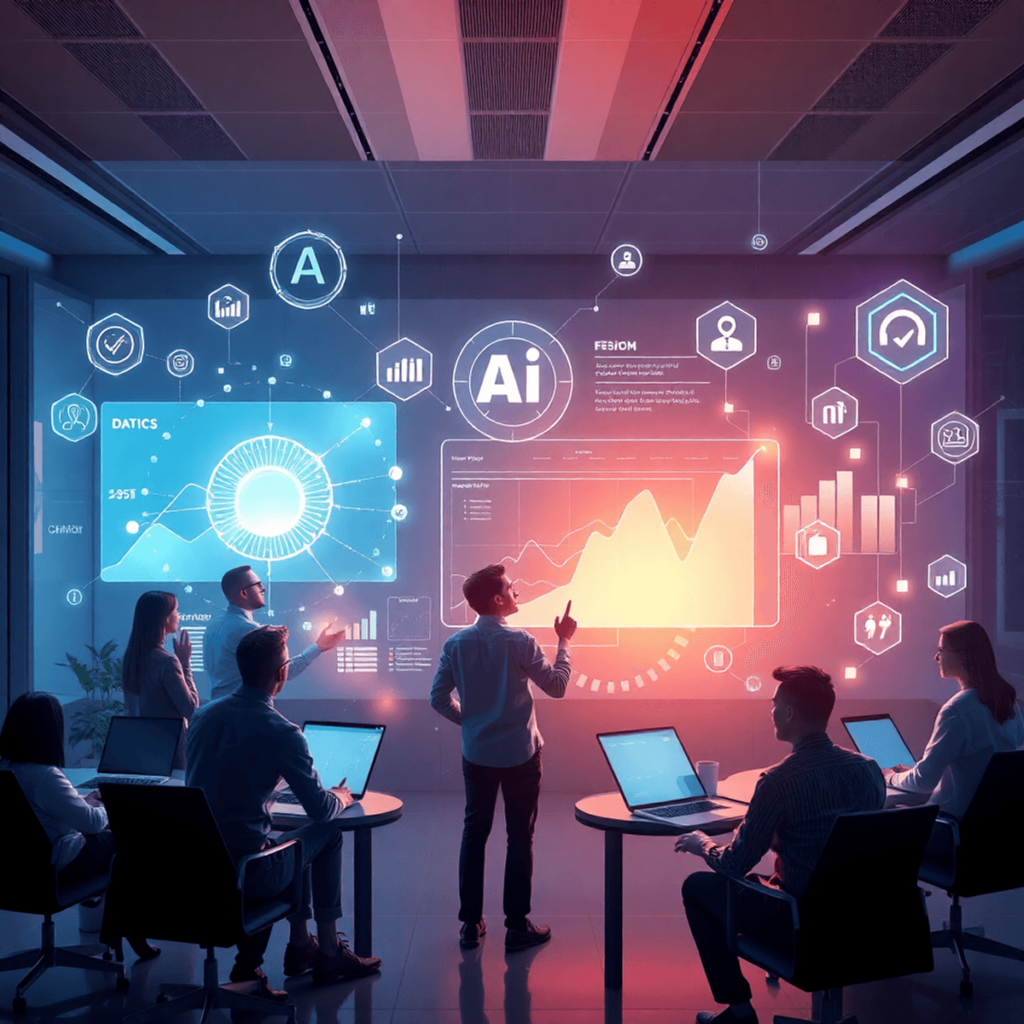

Artificial intelligence (AI) has transformed the world of marketing by enabling smarter, data-driven decisions and automating routine tasks. AI marketing refers to the use of technologies such as machine learning, natural language processing, and predictive analytics to analyze large amounts of data, uncover customer insights, and optimize marketing campaigns with precision.
The growing importance of AI in modern marketing strategies comes from its ability to handle complexity and deliver measurable results faster than traditional methods. Businesses that use AI-driven approaches have an edge over their competitors in understanding consumer behavior, optimizing ad spend, and increasing return on investment (ROI).
This article explores the benefits of integrating AI into your marketing efforts, common use cases where AI excels, best practices for successful adoption, and a step-by-step guide to implementing AI technology within your marketing strategy. Whether you’re just starting out or looking to improve an existing approach, these insights will help you effectively use artificial intelligence to transform your marketing outcomes.
Key Benefits of Implementing AI in Marketing
Implementing AI in marketing unlocks numerous advantages that enhance efficiency, accuracy, and profitability. The integration of AI technologies delivers significant improvements across various dimensions:
1. Faster Decision-Making Through Real-Time Data Analysis
AI systems process vast volumes of data instantly, enabling marketers to make quick, informed decisions based on up-to-the-minute insights. Sentiment analysis tools interpret customer emotions from social media, reviews, and feedback to adjust campaigns dynamically. This agility helps brands respond promptly to market changes and customer preferences.
2. Improved ROI by Optimizing Media Buying and Identifying Actionable Insights
AI-driven algorithms analyze performance metrics continually to optimize ad spend allocation. By pinpointing which channels, creatives, or audience segments yield the highest returns, marketing budgets are directed toward the most effective strategies. This granular insight reduces wasteful spending and maximizes the impact of each dollar invested.
3. Enhanced KPI Measurement with AI-Powered Dashboards
Traditional reporting often involves manual aggregation of data from multiple platforms. AI-powered dashboards automate this process and enrich it with predictive analytics and anomaly detection. These dashboards provide clear visualizations of key performance indicators (KPIs), facilitating deeper understanding of campaign outcomes and faster identification of areas needing attention.
4. Automation and Personalization in Customer Relationship Management (CRM)
CRM automation elevates customer engagement by combining routine task automation with personalized communication. AI analyzes customer histories, preferences, and behaviors to tailor messages at scale—whether through email campaigns or chatbot interactions—improving satisfaction and retention rates. Additionally, AI can flag at-risk customers early for targeted re-engagement efforts.
5. Predictive Analytics for Forecasting Customer Behavior and Optimizing Strategies
Leveraging machine learning models, predictive analytics anticipates future customer actions such as purchase likelihood or churn risk. Marketers can proactively adjust strategies based on these forecasts—refining targeting criteria, optimizing content delivery times, or tweaking pricing models—to capitalize on emerging opportunities or mitigate potential losses.
These core AI benefits transform marketing operations into data-driven ecosystems where enhanced customer insights fuel smarter decisions, elevated marketing ROI, and seamless CRM automation. Each advantage reinforces one another to create a robust foundation for advanced marketing strategies powered by artificial intelligence.
Common Use Cases of AI in Marketing
AI use cases in marketing span a diverse range of applications, each designed to enhance efficiency, precision, and customer engagement. Understanding these practical implementations helps marketers harness the full potential of AI technologies.
1. Audience Segmentation
AI-driven data analysis enables highly granular audience segmentation beyond traditional demographics. By processing vast amounts of behavioral, transactional, and social data, AI models identify unique customer clusters with shared interests or purchase patterns. This precision targeting allows campaigns to deliver personalized messages that resonate deeply with specific groups, improving engagement rates and conversion.
2. Content Generation
Generative AI technologies have transformed content creation by automating the production of blogs, emails, social media posts, ad copy, and even multilingual translations. Marketers leverage AI to generate relevant and creative content rapidly while maintaining brand voice consistency. This accelerates campaign execution cycles and frees creative teams to focus on strategy and refinement rather than initial drafts.
3. Customer Service Automation
AI-powered chatbots and virtual assistants streamline customer interactions by providing instant responses to inquiries around the clock. These systems utilize natural language processing (NLP) to understand intent and context, delivering personalized answers or escalating complex issues to human agents. The result is improved response times, higher engagement levels, and consistent service quality across channels.
4. E-commerce Personalization
Recommendation engines driven by AI analyze past behaviors, preferences, and purchase history to tailor product suggestions dynamically for each shopper. This personalization enhances the online shopping experience by presenting relevant options that increase average order value and foster brand loyalty. Continuous learning algorithms adapt recommendations based on evolving user interactions.
5. Predictive Analytics
Predictive models forecast trends such as seasonal demand shifts, emerging product popularity, or potential churn risks. Lead scoring powered by AI identifies prospects with the highest likelihood of conversion by evaluating multiple attributes simultaneously. These insights enable marketers to allocate resources efficiently and proactively adjust strategies based on anticipated outcomes.
6. Programmatic Advertising
Automated ad placement uses real-time bidding algorithms informed by customer data patterns to optimize media spend across platforms. Programmatic systems select optimal channels, timing, and creative variations that maximize campaign performance while reducing manual intervention. Continuous feedback loops enable rapid adaptation to market changes or audience behavior shifts.
7. SEO Enhancements
AI tools analyze search engine algorithms and competitor content to recommend keyword optimizations, topic relevance improvements, and technical SEO fixes. Content optimization guided by AI increases organic search rankings by ensuring alignment with user intent and evolving search trends. These enhancements contribute to sustained visibility and traffic growth without excessive manual effort.
Each use case exemplifies how integrating AI into marketing workflows drives smarter decision-making, operational efficiency, and a more personalized customer experience tailored at scale. These applications collectively represent a paradigm shift towards data-driven marketing strategies powered by intelligent automation.
Best Practices for Using AI in Marketing Effectively
Implementing AI in marketing requires attention to key elements that maximize its potential. The success of AI-driven marketing initiatives depends on several core best practices focused on data, governance, infrastructure, and workforce readiness.
Maintain High-Quality and Accurate Datasets
- Data quality is crucial for training effective AI models. Inaccurate or incomplete data leads to biased outcomes, misinformed decisions, and poor customer experiences.
- Regularly audit datasets to remove duplicates, fix inconsistencies, and fill gaps.
- Incorporate diverse data sources—customer interactions, social media sentiment, sales metrics—to enrich the dataset and improve model robustness.
- Employ validation techniques such as cross-checking with historical trends or real-time feedback loops to ensure ongoing accuracy.
Example: A retail company using AI-powered recommendation engines saw a significant drop in conversion rates when outdated product information caused incorrect suggestions. After improving their data hygiene processes, recommendation relevance increased markedly.
Build Robust Data Infrastructure for Seamless Integration
- Establish a scalable and secure infrastructure that supports smooth data flow between CRM systems, analytics platforms, content management systems, and other marketing tools.
- Use cloud-based solutions and APIs for flexibility and real-time access.
- Ensure interoperability between legacy systems and new AI technologies to avoid silos.
- Implement data pipelines that automate extraction, transformation, and loading (ETL) processes to keep datasets current without manual intervention.
Example: An enterprise with fragmented data struggled to unify customer profiles. By investing in a centralized data warehouse connected via APIs to their marketing stack, they enabled AI algorithms to generate holistic insights.
Implement Strong Data Governance Policies
- Protect consumer privacy by adhering strictly to regulations such as GDPR, CCPA, or industry-specific standards.
- Develop clear policies around data collection consent, usage boundaries, retention periods, and anonymization where applicable.
- Foster transparency with customers about how their data is used in AI-driven marketing efforts to build trust.
- Monitor compliance continuously through audits and automated controls embedded into workflows.
Example: A financial services firm prevented potential regulatory fines by establishing an AI ethics board that oversaw marketing-related data governance practices ensuring all AI applications operated within legal frameworks.
Prioritize Employee Upskilling and Continuous AI Optimization
- Equip marketing teams with training on AI concepts, tools, and interpretation of AI-driven insights so they can confidently leverage these technologies.
- Encourage collaboration between marketers, data scientists, and IT specialists to align technical capabilities with strategic goals.
- Establish feedback mechanisms where users report anomalies or suggest improvements based on campaign outcomes.
- Continuously optimize AI models by feeding them updated datasets reflecting shifting market dynamics and customer preferences.
Example: A B2B software company created internal workshops teaching marketers how to use predictive analytics dashboards effectively. This led to more informed campaign adjustments and measurable ROI improvements.
By following these best practices creates a solid foundation for integrating AI into marketing strategies. Emphasizing data quality alongside governance ensures responsible use while robust infrastructure enables operational efficiency. Empowered teams drive ongoing improvement through active engagement with evolving AI tools.
Step-by-Step Guide to Incorporating AI into Your Marketing Strategy
Successfully integrating AI into your marketing requires a structured approach focused on clear goal setting and measurable outcomes. This guide outlines essential steps to align AI initiatives with your broader marketing objectives.
1. Define Clear Marketing Objectives and Goals
Identify specific business challenges or opportunities where AI can add value. Establish measurable goals that directly support overall company strategy. Examples include improving customer segmentation accuracy, increasing content engagement, or boosting campaign ROI.
“Goal setting is the foundation for successful AI deployment in marketing, providing direction and purpose.”
2. Select Relevant KPIs to Track Impact
Choose key performance indicators closely tied to your established goals. KPIs might include conversion rates, customer lifetime value, cost per acquisition, or click-through rates. Use these metrics to quantify AI’s effectiveness and justify ongoing investment.
3. Assess Data Quality and Infrastructure Readiness
Ensure data sources are accurate, clean, and comprehensive enough to train AI models effectively. Confirm integration capabilities across marketing platforms for seamless data flow. A strong data foundation supports reliable insights and automation outcomes.
4. Acquire the Right Talent or Partnerships
Engage data scientists, AI specialists, or experienced vendors who understand marketing nuances. Internal teams benefit from training programs to adapt skills for AI-enhanced workflows. Collaborations accelerate deployment while minimizing technical risks.
5. Choose Appropriate AI Solutions Aligned with Goals
Evaluate tools based on how well they meet defined marketing objectives and integrate with existing systems. Options range from predictive analytics platforms to generative content engines and programmatic advertising software. Pilot projects enable testing before full-scale implementation.
6. Implement AI with Change Management Strategies
Communicate clearly across teams about new processes and expected benefits. Address resistance by demonstrating quick wins and continuous support. Establish governance frameworks ensuring ethical use of customer data.
7. Monitor Performance and Iterate Continuously
Regularly review KPI trends to assess impact on marketing results. Feed fresh data back into models for ongoing learning and refinement. Optimize workflows by incorporating stakeholder feedback and emerging technologies.
AI integration transforms marketing by enabling smarter decisions rooted in data-driven insights. Setting well-defined goals combined with robust measurement through KPIs ensures your strategy remains focused and accountable. This disciplined approach empowers marketers to harness AI’s full potential while adapting dynamically to evolving business needs.