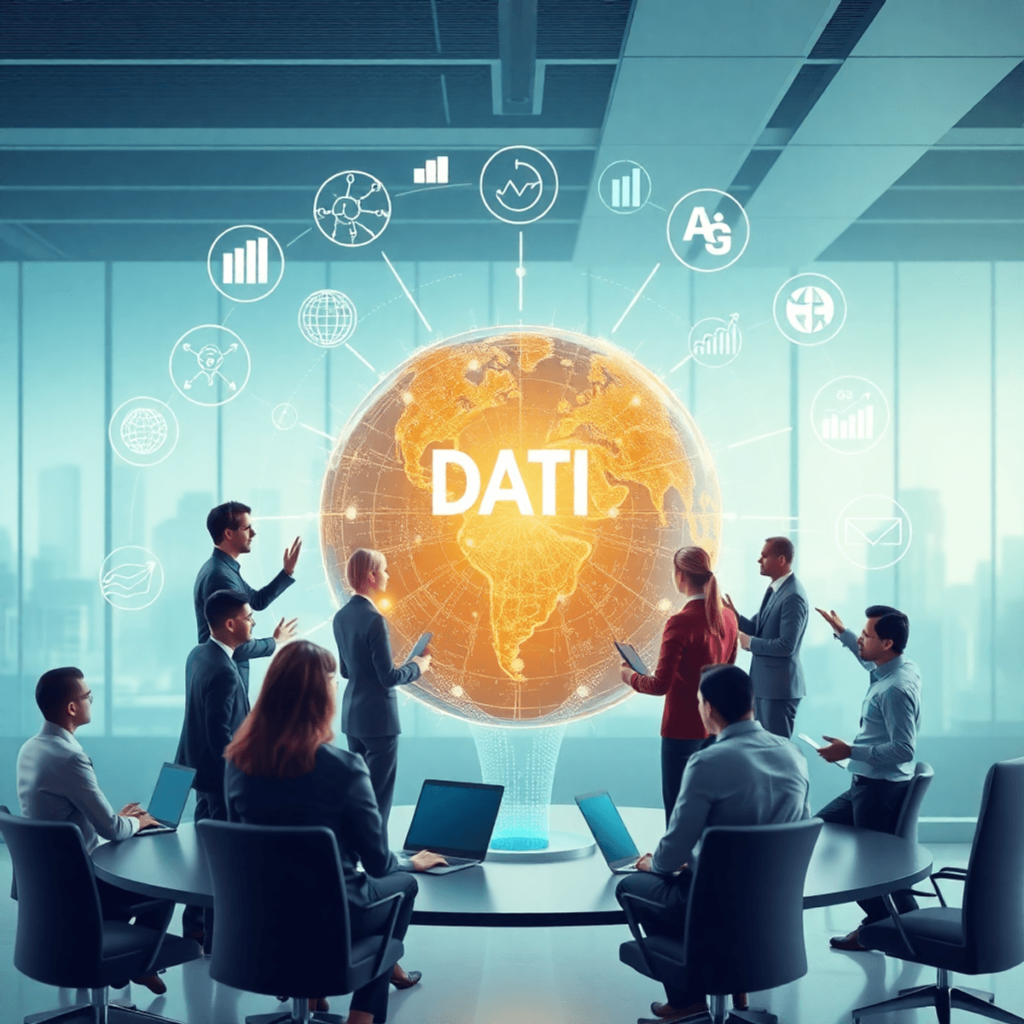
Artificial intelligence has become a cornerstone in modern marketing, driving a profound transformation in how businesses engage with their audiences. The infusion of AI in marketing operations enables unprecedented levels of personalization, efficiency, and insight. You witness AI reshaping marketing workflows by automating routine tasks, enhancing audience segmentation, and powering predictive analytics that inform smarter decisions.
This article dives into the real results of AI’s impact on marketing operations. You will explore:
- Enhanced segmentation and targeting that allow for pinpoint precision in reaching the right customers with the right message.
- Automation of routine marketing tasks that liberate marketers to focus on strategy and creativity.
- Advanced predictive analytics enabling data-driven forecasting and customer behavior anticipation.
- Integration of agentic AI workflows streamlining content creation and campaign orchestration at scale.
- Ethical considerations crucial for balancing innovation with responsible data use and consumer trust.
Designed specifically for those passionate about AI and its applications within the marketing industry, this exploration offers practical insights and concrete examples. You will gain a clearer understanding of how AI continues to revolutionize marketing, shaping both current practices and future possibilities.
1. Enhanced Segmentation and Targeting with AI
AI data analysis is changing the way marketers segment their audience. It can quickly and accurately process large amounts of customer data, something traditional methods can’t do. This means marketers can now divide broad markets into very specific segments based on detailed characteristics, behaviors, and preferences.
Key Factors Driving Precision in Segmentation
Here are some key factors that contribute to this level of precision:
- Behavior Pattern Recognition: AI algorithms can identify subtle patterns in how customers interact with brands—such as their browsing habits, content engagement, and when they make purchases. This allows marketers to pinpoint micro-segments that share similar behaviors.
- Purchase History Analysis: By looking at past transactions, AI can predict future buying tendencies. This helps marketers tailor their offers to resonate with individual customers.
- Real-Time Data Integration: Streaming data from social media, websites, and mobile apps continuously feeds into AI models. This means customer profiles are instantly updated to reflect current interests and intent.
The Impact on Personalized Marketing
The impact of AI on personalized marketing is significant:
- Improved Relevance: Marketers can now deliver content and ads that match each segment’s specific needs and desires. This boosts relevance significantly.
- Higher Click-Through Rates: Because the messages being sent are more relevant, click-through rates are expected to improve.
- Enhanced Customer Satisfaction: Customers will be happier because they’re receiving messages that feel custom-made for them rather than generic ones.
Real-World Examples of AI-Driven Segmentation Success
Here are a couple of examples demonstrating the success of AI-driven segmentation:
- E-Commerce Platform Revamping Email Campaigns: A leading e-commerce platform used AI-driven segmentation to improve its email campaigns. By analyzing user behavior across the site along with purchase history, the platform created dynamic segments that were updated daily. As a result, open rates increased by 25% and conversions lifted by 30% compared to standard segmentation methods.
- Global Streaming Service Recommending Personalized Content: A global streaming service employed AI-powered customer targeting to recommend personalized content. The system evaluated viewing habits and engagement signals, segmenting users into taste-based groups. This approach led to longer user sessions and reduced churn by 15%, demonstrating how precise targeting enhances both user experience and business outcomes.
Optimizing Ad Spend with AI-Powered Segmentation
AI-powered segmentation also helps marketers optimize their ad spend:
- Focusing on High-Value Segments: Marketers can concentrate their resources on high-value segments that are most likely to convert.
- Making Ads More Relevant: Ads become more relevant as they incorporate real-time insights about audience preferences.
- Decreasing Wasted Impressions: By showing ads to people who are genuinely interested, wasted impressions decrease.
- Increasing Return on Investment: With better targeting comes higher returns on investment.
Positioning Campaigns for Higher Engagement Rates
By using AI for audience segmentation and personalized marketing strategies based on in-depth data insights:
- You set up your campaigns for higher engagement rates.
- You build stronger customer loyalty.
This foundation also supports other AI-driven marketing operations like automation and predictive analytics discussed in later sections.
2. Automation of Routine Marketing Tasks
AI-driven marketing automation transforms the way marketers handle repetitive and time-consuming tasks. By automating content creation, scheduling, and distribution, AI frees up your team to focus on strategy, creativity, and deeper customer engagement.
AI-Powered Content Creation and Scheduling
- Tools like Jasper.ai and Copy.ai generate blog posts, social media content, and email copy quickly with minimal input.
- Automated scheduling platforms such as HubSpot and Buffer use AI to determine optimal posting times based on audience activity patterns.
- This reduces manual effort while maintaining consistent brand messaging across channels.
Programmatic Advertising Efficiency
AI algorithms automate the buying and placement of ads in real time through programmatic advertising platforms like The Trade Desk or Google DV360.
- These systems analyze vast amounts of data to bid for ad space dynamically and target audiences more precisely.
- Marketers experience improved cost-efficiency by reducing wasted impressions and focusing spend on high-performing segments.
- Campaigns can adjust instantly based on performance metrics without human intervention.
Virtual Assistants and Chatbots for Customer Interaction
AI-powered virtual assistants and chatbots provide scalable, personalized communication 24/7:
- Platforms like Drift, Intercom, or Zendesk’s Answer Bot interact with customers instantly to answer queries, guide purchases, or resolve issues.
- Natural language processing allows these bots to understand context and sentiment, enhancing the customer experience.
- Businesses report higher engagement rates and faster response times compared to traditional support channels.
Statistics reveal that companies using marketing automation see a 14.5% increase in sales productivity and a 12.2% reduction in marketing overhead. (Source: Nucleus Research)
Real-World Success Stories
- A global e-commerce brand implemented AI-driven email campaign automation with Salesforce Marketing Cloud. They increased open rates by 25% by automatically personalizing subject lines based on recipient behavior.
- A B2B software company leveraged chatbots to qualify leads before passing them to sales reps. This reduced lead response time by 50%, boosting conversion rates significantly.
- Social media teams using AI tools like Lately.ai cut content production time by 65%, allowing more focus on creative campaigns aligned with business goals.
Marketing automation powered by AI is not just about efficiency gains; it enhances precision in execution while enabling marketers to dedicate energy toward innovation and relationship-building activities. This shift elevates marketing operations from tactical execution toward strategic growth drivers.
3. Advanced Predictive Analytics Driving Data-Driven Decisions
AI’s ability to analyze large amounts of past data is changing how marketing teams predict results and make choices. Predictive analytics uses machine learning algorithms to find patterns and trends that humans might overlook, allowing for highly accurate sales forecasting and campaign performance prediction.
Accurate Forecasting of Sales and Campaign Outcomes
- AI models examine previous sales data, seasonal patterns, customer engagement metrics, and external factors like market conditions.
- This examination produces dependable forecasts that assist marketers in effectively allocating resources and setting realistic goals.
- For instance, retail brands utilize AI-driven sales forecasting to adjust inventory levels, minimizing both overstock and stockouts during busy seasons.
- In campaign planning, predictive analytics estimates which channels and creatives will deliver the best ROI before launch.
Anticipating Customer Behaviors for Proactive Marketing
Predictive analytics excels at interpreting customer behavior patterns over time:
- Churn prediction identifies customers at risk of leaving by analyzing engagement frequency, purchase decline, or support interactions.
- Marketers can use this insight to design targeted retention campaigns or personalized offers aimed at increasing customer lifetime value.
- Predicting upselling opportunities becomes more precise by spotting customers likely to upgrade or purchase additional products based on their historical behavior.
These proactive measures improve customer loyalty and revenue without relying solely on reactive strategies.
Optimizing Marketing Spend with Data-Driven Insights
Marketing budgets benefit significantly from predictive models:
- AI quantifies the expected impact of different campaigns, allowing teams to prioritize efforts with the highest predicted returns.
- Cost efficiency improves by reducing spend on underperforming segments or ineffective channels identified through data analysis.
- Media buying becomes smarter when programmatic platforms incorporate predictive signals for bid adjustments in real-time.
Companies embracing predictive analytics report measurable improvements in campaign ROI. For instance, a global e-commerce firm increased conversion rates by 15% after integrating churn prediction into their email marketing workflows.
By grounding decisions in data rather than intuition alone, marketing operations become more strategic and results-driven. Predictive analytics shifts the focus from guesswork to measurable outcomes—empowering marketers to act confidently on insights that drive growth.
4. Integration of Agentic AI Workflows in Marketing Operations
Agentic AI represents a significant leap in how marketing operations are managed, acting as an autonomous orchestrator that handles end-to-end marketing processes. Unlike isolated AI tools, agentic AI integrates various functions—content creation, campaign management, data analysis—into a cohesive workflow. This integration allows marketing teams to operate with greater agility and precision.
How Agentic AI Works in Marketing
Generative AI models lie at the heart of these workflows, powering scalable content production without sacrificing creativity or relevance. These models generate diverse assets like copy, images, videos, and personalized messages tailored to specific audience segments. By embedding generative AI within integrated marketing workflows, brands can maintain consistency across channels while rapidly adapting to market demands.
Real-world Example: WPP and Adobe Partnership
A leading example of this integration is the partnership between WPP and Adobe. Together, they leverage generative AI to streamline content creation at scale within a unified platform that coordinates media planning and execution. This collaboration exemplifies how agentic AI workflows enable faster campaign turnaround times and optimize media spend by aligning creative production directly with performance data.
Benefits of Integrating Agentic AI into Marketing Operations
Key benefits of integrating agentic AI into marketing operations include:
- Accelerated campaign production: Automating repetitive creative tasks reduces bottlenecks and speeds up time-to-market.
- Brand consistency: Centralized control ensures messaging remains aligned across all customer touchpoints.
- Media spend optimization: Data-driven insights guide budget allocation toward the highest-performing channels and creatives.
- Seamless collaboration: Teams work within an interconnected system where AI supports decision-making from ideation through deployment.
The fusion of agentic AI and generative models is transforming marketing from a series of fragmented activities into a streamlined, intelligent ecosystem. This transformation empowers marketers to focus on strategy and innovation while relying on AI-driven workflows for execution efficiency and enhanced impact.
5. Ethical Considerations in AI-Powered Marketing
Using AI ethically in marketing isn’t just a recommendation; it’s essential. As tools powered by AI delve deeper into consumer data, the responsibility of marketers increases significantly. Finding a balance between technological progress and ethical duties means making sure that AI improves marketing without violating consumer rights or trust.
Key Ethical Challenges
- Consumer Privacy: AI relies on data—such as behavioral patterns, preferences, and demographics. The more personalized the experience, the higher the chance of invading someone’s privacy. Many consumers are still unaware of how much data is being collected or how it is being used.
- Responsible Data Handling: Collecting and processing large amounts of personal data requires strict protocols. Marketers must be transparent about where the data comes from, why it is being used, and how it is being stored. This openness builds trust and reduces skepticism towards campaigns powered by AI.
- Avoiding Bias and Discrimination: Algorithms used in AI can unintentionally reinforce biases present in the training datasets, resulting in unfair targeting or exclusion of certain groups. Ethical use of AI requires regular audits and adjustments to prevent discrimination.
Building Consumer Trust Through Transparency
Consumers expect brands to handle their information with care. You can foster this trust by:
- Clearly communicating what data you collect and why
- Offering easy opt-out options for personalized marketing
- Complying rigorously with regulations like GDPR and CCPA
- Implementing robust cybersecurity measures to protect sensitive information
Being transparent not only meets legal requirements but also sets your brand apart as socially responsible in a competitive market.
The Role of Marketers in Ethical AI Use
Marketers play a crucial role in ensuring ethical practices when using AI technologies. This includes:
- Regularly assessing your AI tools for fairness and accuracy
- Educating teams about ethical implications and proper data management
- Working together with legal and compliance experts to align strategies with evolving standards
Adopting ethical practices in using AI helps maintain your brand’s reputation while empowering consumers through respect and fairness.
Artificial intelligence brings incredible possibilities to marketing operations but also requires careful consideration of ethical issues. By directly addressing these concerns, we can ensure responsible innovation that resonates positively with audiences.
Conclusion
AI is driving marketing innovation through ethical use of AI, reshaping how businesses connect with their audiences and optimize operations. You have seen the tangible benefits AI brings—from precise segmentation and targeted messaging to automating routine tasks and delivering predictive insights that sharpen decision-making.
This transformation is not just about adopting new tools but about embracing a mindset that balances innovation with responsibility. Ethical considerations must remain central as you implement AI-driven strategies. Protecting customer data, ensuring transparency, and fostering trust are essential components for sustainable success.
Key takeaways for your marketing practice:
- Harness AI’s power to enhance personalization and efficiency without compromising ethical standards.
- Use predictive analytics not only to boost performance but also to respect consumer privacy and data rights.
- Integrate agentic AI workflows thoughtfully, maintaining brand integrity while accelerating campaign execution.
- Prioritize transparency in AI usage to build lasting relationships with your customers.
By combining the transformative potential of AI with a strong ethical foundation, you position your organization at the forefront of marketing innovation. This approach creates value that resonates with both your business goals and your audience’s expectations, setting the stage for long-term growth in an increasingly competitive landscape.