
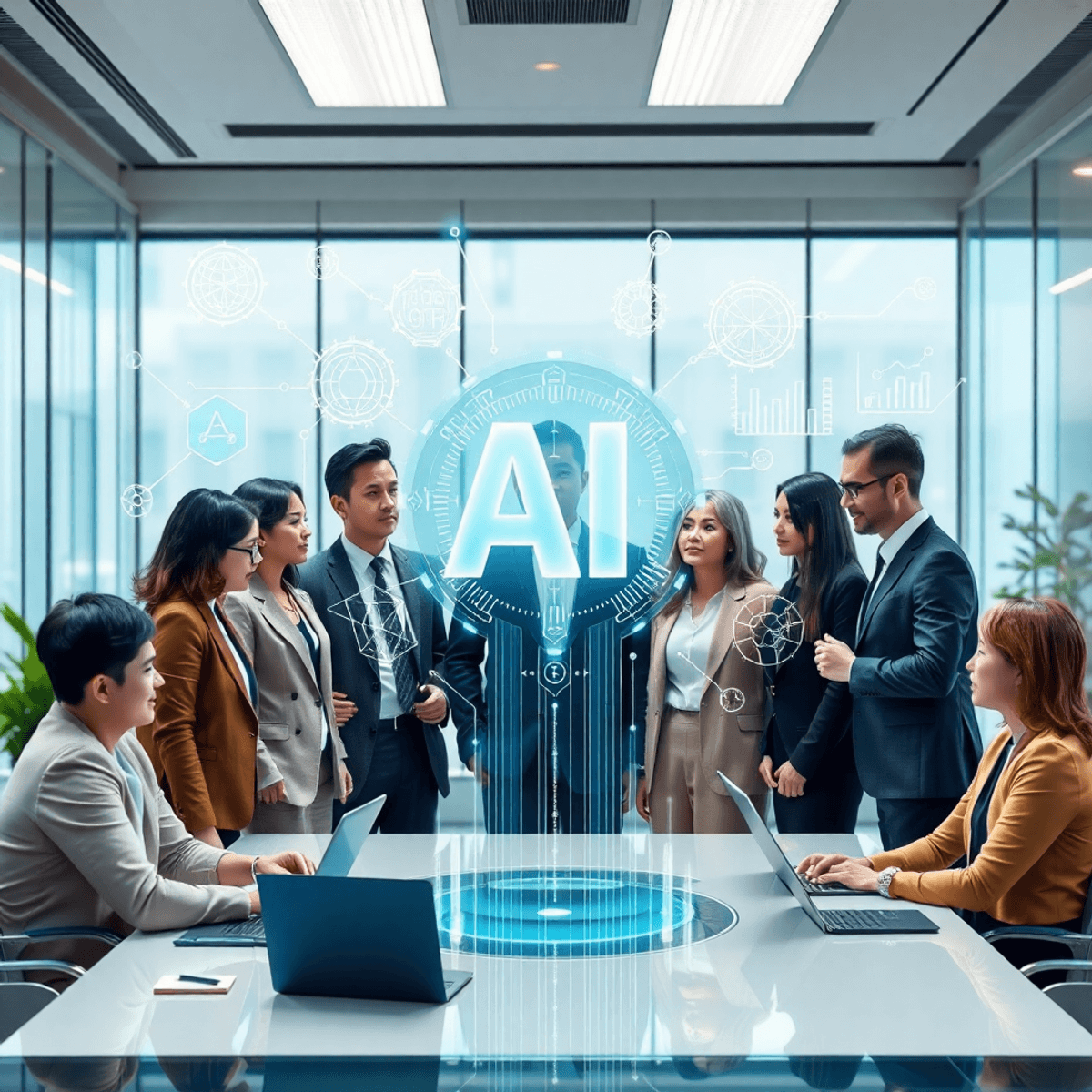
Operations are the essential activities that create value and efficiency in both business and technology settings. In business operations, this means managing workflows, coordinating teams, and effectively allocating resources to achieve organizational goals. Technology operations, on the other hand, focus on maintaining and improving IT infrastructure, software systems, and digital processes that support business functions.
Effective management of workflows and resources is crucial for staying competitive and achieving growth. When operations are streamlined, costs go down, errors are minimized, and project timelines are shortened—all of which directly affect profitability and customer satisfaction.
AI-powered solutions have become game-changers in how operations are carried out. With the ability to automate repetitive tasks, analyze large amounts of data instantly, and offer practical insights, artificial intelligence boosts productivity and improves decision-making accuracy. This technological advancement enables organizations to quickly adapt to market changes while also optimizing their internal processes.
This blog focuses on the best AI-powered operations tools in 2026. We will explore their features in various operational areas such as revenue generation, sales management, cybersecurity, and workflow automation. We encourage readers to check out these groundbreaking solutions to improve their operational efficiency and stay ahead in a world driven by data.
Understanding AI-Powered Operations Tools
Artificial intelligence has become a cornerstone in transforming how businesses manage operations. The integration of AI in operations brings forth capabilities that augment routine workflows and elevate decision-making processes through advanced technologies.
Automation of Routine Tasks
- Streamlining repetitive processes: AI-powered tools automate mundane tasks such as data entry, scheduling, and report generation. This reduces human error and frees up valuable time for employees to focus on strategic activities.
- Dynamic task management: Intelligent bots and workflow engines adjust to changing priorities by reallocating resources automatically based on real-time inputs.
- Self-learning automation: Machine learning models continuously improve automation rules by analyzing past outcomes, leading to more efficient process execution over time.
Data Analytics Driving Decision-Making
- Actionable insights from vast datasets: AI systems process large volumes of operational data that are otherwise impossible for humans to analyze quickly. These insights help managers identify bottlenecks, predict demand fluctuations, and optimize resource allocation.
- Predictive analytics: Leveraging historical trends combined with current signals enables forecasting future scenarios such as sales performance or supply chain disruptions.
- Real-time monitoring and alerts: AI platforms provide dashboards with up-to-the-minute information complemented by automated alerts when predefined thresholds or anomalies are detected.
Impact on Business Efficiency
Implementing AI-powered operations tools produces measurable improvements:
- Increased productivity: Automation accelerates task completion and minimizes manual intervention, allowing teams to achieve more within the same timeframe.
- Cost reduction: Eliminating redundant manual work and optimizing resource usage lowers operational expenses significantly.
- Enhanced accuracy: Machine-driven processes reduce errors that could lead to costly delays or compliance issues.
- Improved agility: Real-time data insights empower organizations to respond swiftly to market changes or internal disruptions.
Businesses adopting AI-enhanced operational solutions report faster workflows, smarter allocation of resources, and a stronger competitive edge.
Revenue Operations (RevOps) Tools
Revenue operations, or RevOps, refers to the strategic alignment and management of all revenue-generating functions within a business. It integrates sales, marketing, and customer success teams to streamline processes, optimize resource allocation, and accelerate revenue growth. RevOps aims to break down silos between departments by unifying data and workflows under a common operational framework.
AI-powered RevOps tools have transformed this discipline by automating complex and repetitive tasks that once required manual oversight. Key capabilities include:
- Data Gathering Automation: AI collects, cleanses, and consolidates data from multiple sources such as CRM platforms, marketing automation systems, and customer databases. This reduces human error and accelerates insights generation.
- Real-Time Analytics: Advanced analytics powered by machine learning provide actionable insights into pipeline health, deal progress, customer engagement trends, and forecast accuracy. These insights enable agile decision-making.
- Seamless CRM Integration: Integration with CRMs like Salesforce is essential for syncing customer data across touchpoints. This ensures sales and marketing teams operate from a single source of truth with up-to-date information.
- Collaboration Features: AI tools support interdepartmental collaboration through shared dashboards, communication channels, and automated workflow triggers that keep teams aligned on revenue objectives.
- Customer-Centric Functionalities: AI enhances personalization in outreach efforts by analyzing customer behavior patterns to optimize engagement timing and messaging relevance.
Leading Revenue Operations Platforms
Inventive AI
Inventive AI specializes in automating the generation of responses for Requests for Proposals (RFPs) and crafting tailored sales proposals. By leveraging natural language processing (NLP) techniques, Inventive AI dramatically shortens proposal turnaround times while increasing win rates through precision targeting of client requirements. Its seamless CRM integration allows automatic updating of deal stages linked to proposal activities.
Salesforce CRM
As a cornerstone in revenue operations technology, Salesforce offers an expansive ecosystem combining robust CRM capabilities with AI-powered tools like Einstein Analytics. These features deliver predictive lead scoring to prioritize opportunities, intelligent pipeline management to forecast revenues accurately, and automated workflows that reduce administrative burdens on sales reps.
Apollo.ai
Apollo.ai excels in predictive lead scoring by applying machine learning algorithms to vast datasets encompassing firmographics, intent signals, and interaction history. The platform helps sales teams focus efforts on prospects with the highest conversion potential. Apollo.ai also enhances prospecting through enriched contact data and outreach automation.
Other notable platforms contributing unique strengths to the RevOps landscape include:
- Chorus – Specializes in sales call analysis using voice recognition and sentiment analysis to surface insights from conversations that improve coaching and deal strategy.
- Clari – Focuses on pipeline forecasting with AI models that monitor deal risk factors in real time.
- Gong – Tracks customer conversations across channels to identify buying signals and competitive intelligence.
- HubSpot – Offers integrated CRM with marketing automation geared towards inbound lead management.
- InsightSquared – Provides comprehensive analytics dashboards for sales performance tracking.
- Drift – Utilizes conversational AI chatbots for proactive lead engagement.
- Cognism Intelligence – Supports prospecting with enriched B2B contact data powered by AI.
AI-driven RevOps solutions are evolving rapidly as they weave deeper into core operational processes. Their ability to unify data flows while automating critical yet mundane activities empowers companies to sharpen their revenue focus without expanding headcount unnecessarily.
Sales Operations Tools
AI has transformed sales operations automation by greatly reducing manual tasks and improving data accuracy. The main areas benefiting from AI are CRM updates, post-call task automation, and better sales forecasting using machine learning algorithms. These improvements result in more precise pipeline management and actionable insights for sales teams.
Key Benefits of AI in Sales Operations
- Automated CRM Updates: AI-powered tools capture details from sales calls, meetings, and emails, automatically updating CRM records without the need for manual entry. This reduces errors and ensures data is fresh and comprehensive.
- Post-Call Task Automation: Follow-up tasks such as sending emails, scheduling meetings, or updating deal status are streamlined with AI assistants, freeing up sales reps to focus on high-value activities.
- Enhanced Sales Forecasting: Machine learning models analyze historical data, deal progression, and external factors to generate more accurate forecasts. This helps sales leaders allocate resources effectively and anticipate market trends.
Popular Sales Operations Applications
AskElephant stands out for its ability to automate CRM updates directly from voice calls. Using advanced natural language processing (NLP), it transcribes conversations and extracts key information such as next steps, commitments, and contact details. This automation:
- Eliminates the need for reps to manually log call notes.
- Improves CRM data quality by capturing nuanced conversation details.
- Accelerates sales cycles through timely follow-ups based on call insights.
Gong and Chorus are leaders in conversation intelligence platforms that analyze sales calls to provide deep insights into customer sentiment, objection handling, and rep performance. Features include:
- Real-time call transcription paired with sentiment analysis.
- Identification of conversational patterns linked to successful deals.
- Coaching recommendations derived from AI-driven call analytics.
Both platforms integrate seamlessly with CRM systems, enriching sales data while enabling managers to optimize team training and strategy.
These AI-enhanced solutions enable organizations to maintain an up-to-date CRM effortlessly while using analytics-backed intelligence to improve forecasting accuracy and pipeline health. The combination of automatic data capture tools like AskElephant and conversation analytics platforms such as Gong or Chorus creates a powerful ecosystem for smarter sales operations management.
Cybersecurity Operations Tools
Cybersecurity operations are crucial for managing modern businesses and technology. To protect against constantly changing cyber threats, we need to monitor continuously, detect threats quickly, and respond efficiently to incidents. AI-powered Security Information and Event Management (SIEM) systems have transformed this field by automating the analysis of large amounts of security logs, network traffic, and user behavior patterns. These platforms can identify unusual activities in real-time, greatly minimizing the potential damage.
Key Features of AI-Powered SIEM Tools
Here are some important features that set AI-powered SIEM tools apart:
- Machine learning-driven threat detection: These tools go beyond traditional rule-based systems by using pattern recognition to identify subtle signs of compromise.
- Automated incident response workflows: By triggering predefined containment or remediation steps, these tools reduce the need for manual intervention.
- Comprehensive compliance management: AI-powered SIEM tools collect audit logs and generate reports that align with regulatory standards such as GDPR, HIPAA, or PCI-DSS.
- User behavior analytics (UBA): These tools create profiles of normal activities in order to highlight insider threats or compromised credentials.
- Centralized dashboards for SOC teams: Intuitive visualizations provided by these dashboards enhance situational awareness and speed up decision-making processes.
Leading SIEM Platforms in 2026
The market for cybersecurity operations offers several top SIEM solutions that stand out due to their integration of advanced AI capabilities, user-friendliness, and readiness for enterprise use.
1. SentinelOne Singularity™ AI SIEM
SentinelOne Singularity™ AI SIEM stands out with its unique features:
- Integration of endpoint detection and response (EDR) with SIEM functionality for unified threat visibility.
- Continuous analysis of telemetry data using deep learning models for proactive threat hunting.
- Reduction of alert fatigue for Security Operations Center (SOC) analysts through automated risk prioritization.
- User-friendly dashboard supporting customizable views tailored to different roles within cybersecurity teams.
2. Splunk
Splunk is known for its ability to handle large datasets across complex IT environments. Its key features include:
- Combination of machine learning toolkits with anomaly detection algorithms to identify sophisticated attacks.
- Inclusion of compliance frameworks facilitating regulatory reporting and audit readiness.
- Extensive integration options with third-party security tools enhancing overall security posture.
3. IBM QRadar SIEM
IBM QRadar SIEM utilizes embedded AI engines for correlation analysis linking seemingly unrelated events indicative of multi-stage attacks. Its other notable features are:
- Support for automated workflow orchestration enabling faster incident containment.
- Robust compliance reporting modules addressing diverse industry standards.
- Intuitive interface designed for rapid investigation and root cause analysis.
4. LogRhythm
LogRhythm focuses on streamlined deployment with pre-configured AI analytics tailored for various industries. Its key offerings include:
- Real-time monitoring coupled with forensic capabilities to reconstruct attack timelines.
- Enhancement of SOC efficiency through smart alerting mechanisms prioritizing critical incidents.
- Comprehensive reporting tools support adherence to regulatory requirements.
5. Trellix Helix Connect
Trellix Helix Connect offers an integrated platform combining threat detection, response, and compliance management powered by AI insights. Its standout features are:
- Emphasis on rapid integration with existing security infrastructure minimizing operational disruption during implementation.
- Advanced correlation rules help reduce false positives improving analyst productivity.
- Customizable dashboards enable dynamic visualization suited to organizational needs.
These platforms demonstrate how the integration of machine learning elevates security monitoring from reactive approaches to predictive strategies. Additionally, the compliance management features embedded within these tools ensure organizations remain audit-ready amidst evolving regulations. Usability of dashboards continues to be a priority as it empowers SOC teams with actionable intelligence presented through clear interfaces that simplify complex information without sacrificing depth. The ongoing development of cybersecurity operations tools reflects a commitment towards protecting digital assets while optimizing operational workflows.
Workflow Automation Tools
AI-driven workflow automation platforms are changing the way businesses handle repetitive tasks in different departments. These tools eliminate manual bottlenecks and speed up processes that usually take a lot of time and resources.
Key applications of AI-powered workflow automation include:
1. Approvals Processing
Automated routing and validation of approval requests reduce delays and human errors. AI systems apply predefined rules or learn from past decisions to expedite approvals for expenses, contracts, or project milestones.
2. Notifications Handling
Intelligent notification systems prioritize and distribute alerts to relevant stakeholders based on context and urgency. This streamlines internal communications by reducing noise and ensuring timely responses.
3. Data Entry Automation
Optical character recognition (OCR) combined with natural language processing (NLP) enables extraction and input of data from invoices, forms, emails, or documents without manual intervention. This improves accuracy while freeing employees for higher-value work.
Examples of popular workflow automation platforms using AI capabilities:
| Platform | AI Features | Use Cases |
| UiPath | AI-based document understanding, task mining | Invoice processing, HR onboarding |
| Zapier | Conditional logic with AI triggers | Cross-app notifications, data sync |
| Automation Anywhere | Cognitive automation with NLP | Customer support ticket routing |
| Microsoft Power Automate | AI Builder for form processing and prediction | Sales approvals, report generation |
These platforms often provide low-code or no-code interfaces enabling business users to design custom workflows tailored to specific operational needs without deep technical expertise. Integration with existing enterprise systems such as ERP, CRM, or communication tools ensures seamless data flow across functions.
Companies adopting AI-powered workflow automation report benefits including:
- Significant reduction in processing times
- Improved compliance through consistent application of rules
- Enhanced employee productivity by minimizing mundane tasks
- Better visibility into process bottlenecks via analytic dashboards
The ability of AI to learn from historical patterns also allows continuous improvement of workflows over time. As organizations grow, these intelligent automation solutions become critical in maintaining flexibility while managing increasing operational complexity.
Challenges in Adopting AI-Powered Operations Tools
Implementing AI-powered solutions within operations presents a distinct set of hurdles that organizations must navigate to maximize benefits. These AI adoption challenges span technical, financial, and human factors.
1. Ensuring High-Quality Data for Accurate Insights
AI systems rely heavily on data quality to generate meaningful insights.
Inconsistent, incomplete, or biased data can lead to flawed automation outcomes and misguided decisions.
Organizations often need to invest in thorough data cleansing, validation processes, and ongoing monitoring.
Establishing strong data governance frameworks becomes essential for sustaining reliable AI performance.
2. Managing Diverse System Integrations Smoothly
Operations departments typically use multiple software platforms across sales, marketing, cybersecurity, and workflow management.
Integrating AI tools seamlessly with existing infrastructure involves overcoming compatibility issues and data silos.
APIs and middleware solutions help but require skilled IT resources and continuous updates as systems evolve.
Failure to achieve smooth integration results in fragmented workflows and reduced user trust.
3. Balancing Costs With ROI Expectations
Upfront expenses for AI-powered operations tools include licensing fees, implementation costs, and training expenditures.
The return on investment may take months or longer to materialize depending on the complexity of deployment and operational scale.
Decision-makers face pressure to justify these investments against competing budget priorities.
Careful cost-benefit analyses with realistic performance metrics assist in aligning expectations.
4. Customizing Solutions to Fit Unique Business Requirements
Off-the-shelf AI tools may not fully address specific operational nuances or industry regulations.
Tailoring features, workflows, and user interfaces demands collaboration between vendors and internal stakeholders.
Customization also impacts maintenance efforts and upgrade cycles.
Flexibility during tool selection supports future adaptability as business needs evolve.
5. Driving User Adoption Via Effective Change Management
“Technology alone doesn’t guarantee success; people must embrace it.”
Resistance to new AI tools can arise due to fear of job displacement or unfamiliar workflows.
Comprehensive training programs coupled with transparent communication ease anxieties and build confidence.
Involving end-users early in the implementation process fosters a sense of ownership and practical feedback incorporation.
Leadership commitment plays a critical role in modeling positive attitudes toward AI integration.
Addressing these challenges requires a strategic approach combining technology readiness assessments, stakeholder engagement initiatives, and ongoing performance evaluations to ensure that AI-powered operations tools deliver sustained value across the organization.
Future Trends in AI-Powered Operations
The future of operations 2026+ reveals several transformative trends reshaping how businesses harness AI to optimize processes and drive growth. These trends highlight the increasing sophistication and integration of AI technologies across operational domains.
Unified Data Ecosystems
AI-powered platforms will converge into unified data ecosystems that break down silos between departments.
Centralized data repositories enable holistic forecasting models by correlating diverse datasets such as sales metrics, customer behavior, supply chain logistics, and financial performance.
Enhanced decision-making comes from AI algorithms analyzing interconnected data streams, empowering leaders with real-time insights into operational bottlenecks and market opportunities.
Example: A retail company combining inventory management data with customer purchasing patterns to predict demand spikes and optimize stock levels proactively.
Enhanced Forecasting and Decision-Making
Machine learning models will advance beyond historical trend analysis to incorporate predictive and prescriptive analytics.
Predictive analytics forecast future outcomes such as sales growth or risk events, while prescriptive analytics recommend optimal actions based on multiple scenarios.
Adaptive AI systems continuously learn from new data inputs, improving accuracy and responsiveness to changing market conditions.
Decision intelligence platforms will integrate seamlessly with workflow tools, enabling automated adjustments in resource allocation, pricing strategies, or marketing campaigns triggered by AI insights.
Increased Focus on Customer Retention Through Revenue Intelligence
Revenue intelligence tools will evolve into crucial assets for customer retention strategies, shifting some focus from mere lead generation to deepening existing client relationships.
These platforms analyze customer interactions across channels (calls, emails, support tickets) using natural language processing to detect satisfaction signals or churn risks early.
Automated recommendations guide account managers on personalized engagement tactics tailored to individual customer needs and sentiment.
Businesses deploying advanced revenue intelligence report higher renewal rates and improved upsell success by proactively addressing client concerns before they escalate.
Fully Integrated AI-Driven Operational Environments
The move toward fully integrated AI-driven environments means AI capabilities embedded natively within core business applications rather than standalone tools.
Integrated systems facilitate continuous process automation—from order processing through delivery—while dynamically optimizing workflows based on real-time feedback loops.
Cross-functional collaboration is enhanced as AI coordinates tasks across teams with minimal manual intervention, reducing errors and accelerating cycle times.
Cloud-native architectures support scalability and flexibility, allowing quick adaptation to fluctuating demands or new regulatory requirements without disruption.
Adapting to Dynamic Market Demands
Agile AI frameworks enable organizations to respond swiftly to volatile market conditions through scenario planning and rapid reconfiguration of operations.
Real-time monitoring dashboards powered by machine learning alert decision-makers about emerging risks such as supply chain disruptions or competitive moves.
Companies adopting these adaptive approaches outperform peers by maintaining operational resilience while pursuing growth initiatives despite uncertainty.
These directions define a landscape where future of operations 2026+ is marked by deeper data integration, smarter predictive capabilities, intensified efforts on customer retention powered by revenue intelligence, and seamless embedding of AI into every aspect of the operational fabric. Businesses embracing these innovations position themselves at the forefront of efficiency, responsiveness, and sustainable competitive advantage.
Conclusion
Choosing the right combination of AI-powered operational tools can speed up workflows and allow businesses to concentrate on important strategic areas like increasing revenue and improving security. These tools offer clear benefits by:
- Making complex processes simpler through automation, which saves time on manual tasks
- Improving decision-making with real-time data analysis and predictions
- Enhancing data quality for better forecasting and risk management
- Fortifying security measures using AI-driven threat detection and response
Every organization has its own unique operational environment, influenced by industry requirements, current technology systems, and business objectives. To get the most value from AI investments, it’s important to carefully assess tool features against specific organizational needs. Here are some factors to consider:
- Compatibility with existing systems for smooth integration
- Scalability to adapt to changing operational requirements
- Flexibility in customization to meet specific workflows or compliance needs
- User adoption potential supported by easy-to-use interfaces and effective training
By embracing these advanced AI-powered solutions, businesses can navigate increasingly unpredictable markets with agility. The benefits summary of AI-powered operational tools highlights how they can transform operations into more efficient, insightful, and secure functions. Organizations that are ready to harness this transformative power will be better positioned for long-term success.