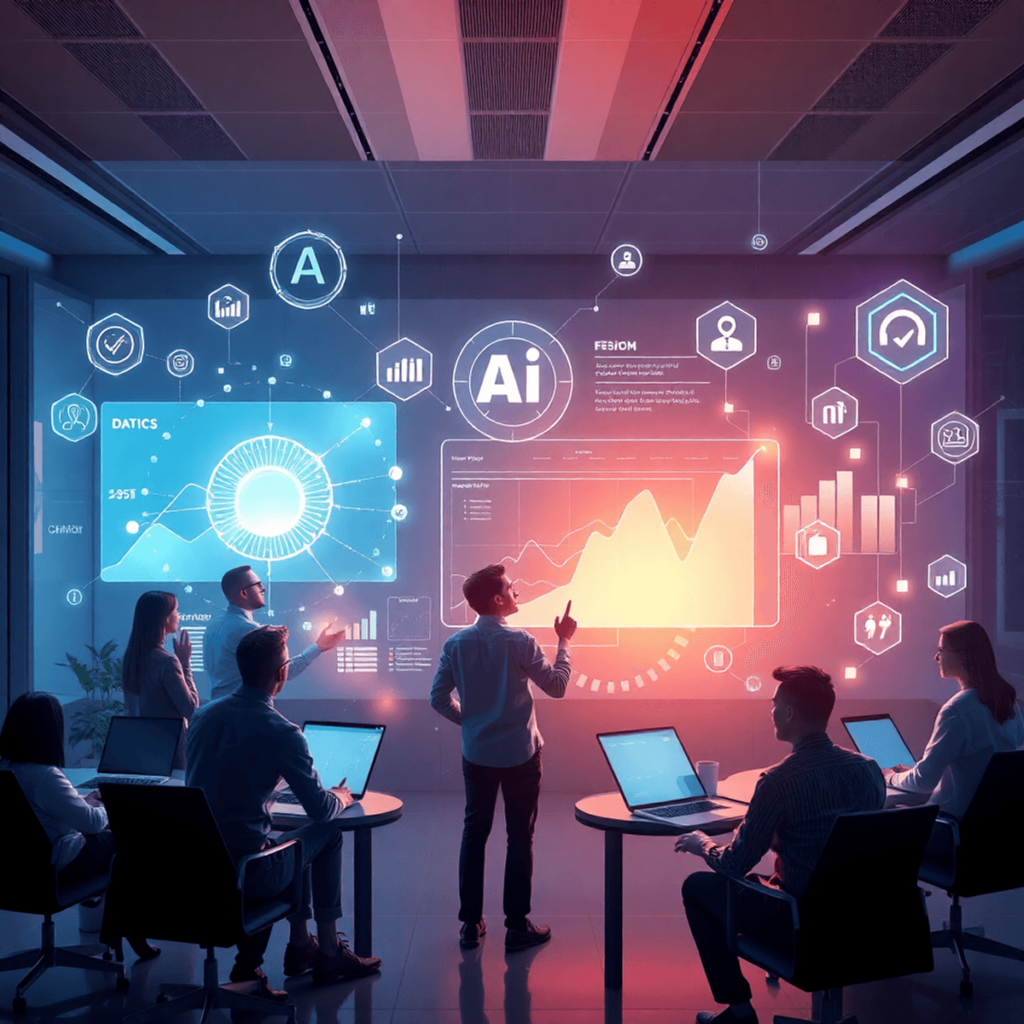

Artificial Intelligence (AI) has generated a lot of excitement among technology enthusiasts and innovators. Its potential to completely change processes and open up new opportunities is fascinating for those who are passionate about shaping the future.
In the field of operations, AI is no longer just a concept for the future; it is actively driving significant change today. AI is transforming the way businesses operate in various industries by:
- Automating repetitive tasks
- Improving decision-making
- Increasing operational efficiency
This shift represents a fundamental shift in how operations work, where intelligent systems assist humans in achieving more with less effort.
The adoption of AI technologies in operations is happening at an unprecedented pace. Companies understand that integrating AI is crucial not only for making workflows more efficient but also for staying ahead of the competition. Operational excellence increasingly relies on how effectively organizations leverage AI transformation to optimize processes and foster continuous innovation.
This new era of operations is defined by several key factors:
- Growing enthusiasm for AI among technology professionals and business leaders
- The transformative impact of AI across various operational functions
- Increasing adoption rates indicating the strategic significance of AI for business success
By understanding these trends, we can better appreciate the real-world outcomes that showcase the essential role AI plays in modern operations.
The Rise of AI in Operations
Artificial Intelligence is no longer a futuristic concept; it has become an integral part of operational strategies worldwide. The scope of AI adoption statistics reveals that about 85% of Fortune 500 companies have integrated Microsoft AI technologies into their operations. This high percentage reflects a clear recognition among leading enterprises that AI can deliver tangible improvements in productivity, decision-making, and customer engagement.
CEOs increasingly report measurable benefits from generative AI initiatives. These benefits include accelerated product development cycles, improved customer personalization, and enhanced problem-solving capabilities. For example:
- Many executives note that generative AI tools streamline content creation, reducing time spent on repetitive tasks.
- Companies observe faster innovation through AI’s ability to generate new ideas or solutions based on vast data analysis.
- Enhanced collaboration is reported as AI assists teams by offering insights and automating routine work.
This growing confidence in generative AI is directly linked to the rising investment levels. Businesses are allocating more resources toward AI research and deployment, driven by the success stories and measurable returns they witness firsthand.
The trust placed in AI technologies signals a shift towards embracing intelligent automation as a core component of operational efficiency. Organizations no longer view AI as an experimental tool but as a strategic asset critical to maintaining competitive advantage in dynamic markets.
Key points on the rise of AI in operations:
- Widespread implementation: Adoption extends beyond tech firms into manufacturing, finance, healthcare, and public sectors.
- CEO endorsement: Leadership acknowledges clear ROI from generative AI applications.
- Investment growth: Increased funding for AI development reflects belief in its transformative potential.
- Operational impact: Efficiency gains arise from automating repetitive tasks and enabling smarter decisions.
The momentum behind AI adoption underscores its role as a catalyst for reshaping how businesses operate at every level.
Economic Impact of AI on Business Operations
Artificial Intelligence is proving to be a game-changer not only for operational processes but also for the broader economic landscape. The scale of AI’s influence is captured by projections estimating an astonishing $22.3 trillion increase in global economic value by 2030. This figure reflects the cumulative impact of AI-driven productivity improvements, innovation acceleration, and new market opportunities.
You can quantify the financial power of AI investments through the lens of return on investment (ROI). For every $1 invested in AI, businesses are expected to generate approximately $4.9 in global economic value. This ratio underscores the efficiency and effectiveness of AI as a strategic investment, far exceeding typical technology ROI benchmarks. It’s a compelling argument for companies considering where to allocate resources in a competitive environment.
This economic uplift transforms how organizations approach growth and competitiveness:
- Market Expansion: AI enables companies to innovate faster, personalize offerings, and enter new market segments with data-backed confidence.
- Cost Optimization: Automation and predictive analytics reduce operational costs, allowing reinvestment into core business areas.
- Agility: Businesses can respond quickly to changing conditions by leveraging real-time insights powered by AI algorithms.
- Talent Utilization: By automating routine tasks, employees focus on higher-value activities that contribute directly to revenue generation.
The magnitude of these benefits signals a shift where AI is not just a tool but a foundational element driving economic success. Companies embracing AI stand to gain significant advantages in productivity and market positioning as they harness this powerful technology to fuel their business strategies.
Enhancing Employee Experience through AI
Artificial Intelligence is transforming the employee experience by not only improving efficiency but also directly influencing how work feels and flows in organizations. At the heart of this transformation is task automation powered by AI.
How AI Task Automation is Reshaping Work
Here’s how AI-driven task automation is reshaping the way employees work:
- Eliminating Mundane Tasks: Mundane, repetitive tasks that once consumed valuable employee time are now handled seamlessly by AI tools. This shift frees employees from routine activities such as data entry, scheduling, and basic reporting.
- Empowering Focus on Higher-Value Work: With these burdens lifted, employees can concentrate on strategic, creative, and higher-value work that demands human insight and innovation.
- Boosting Job Satisfaction: Increased focus on meaningful tasks contributes to greater job satisfaction and a sense of purpose within the workplace.
Personalized Training Programs Powered by AI
In addition to task automation, personalized training programs powered by AI further enhance employee development. Here’s how:
- Tailoring Training Content: AI analyzes individual learning styles, skill gaps, and career goals to tailor training content uniquely suited to each employee.
- Dynamic Adaptation of Training: Continuous learning becomes more effective as training adapts dynamically based on progress and feedback.
- Upskilling Teams for Agility: Organizations benefit from upskilled teams capable of adapting quickly to new technologies and evolving business demands.
Real-World Examples of Transformation
Examples from real-world operations illustrate this transformation:
Scottish Water implemented AI solutions that automated routine workflows, enabling employees to dedicate more time to problem-solving rather than administrative duties.
Tüpraş leveraged AI-powered insights to reduce daily manual effort among staff by over an hour per person, improving productivity while enhancing work-life balance.
Strengthening Organizational Culture through Employee Experience AI
Incorporating employee experience AI into operations not only improves individual performance but also strengthens organizational culture. Here’s how:
- Supporting Growth Mindset: Employees feel supported by technology that enables growth rather than replaces effort.
- Fostering collaboration between humans and machines drives sustained innovation needed in competitive markets.
The integration of AI in enhancing employee experience signifies a shift towards a more holistic approach where technology complements human capabilities rather than superseding them.
Transforming Core Business Processes with AI
1. Marketing and Customer Engagement
AI marketing automation is changing the way companies interact with customers by taking over repetitive tasks that used to take up a lot of time and resources. You can automate email campaigns, social media postings, and ad targeting to ensure consistent communication without manual intervention. This frees your marketing team to focus on strategy and creative initiatives that require human insight.
Personalization at Scale
With AI, it becomes possible to create personalized experiences for a large number of customers. By analyzing customer behavior, preferences, and past interactions, AI systems can tailor messages and offers unique to each individual. This level of personalization increases engagement rates and builds stronger brand loyalty.
Data-Driven Decision Making
AI-powered analytics can extract valuable insights from large amounts of customer data collected across different channels. These insights can reveal trends, preferences, and potential issues that may not be obvious through traditional analysis methods. With this information, you can make informed decisions and optimize your marketing campaigns for better results.
Practical Applications of AI in Marketing
Here are some practical ways businesses are using AI in their marketing efforts:
- Predictive lead scoring: AI models prioritize prospects based on likelihood to convert, focusing sales efforts efficiently.
- Sentiment analysis: Natural language processing interprets customer feedback on social media or surveys to gauge satisfaction.
- Churn prediction: Identifying customers at risk of leaving enables proactive retention strategies.
- Dynamic pricing: Adjusting prices in real-time based on demand patterns maximizes revenue.
Enhancing Customer Support with AI
Client engagement improves as AI-powered chatbots and virtual assistants provide instant support 24/7. These tools handle common inquiries and guide users through purchasing funnels without human delay. When complex issues arise, AI routes customers to the right specialist quickly, reducing frustration.
Transforming Marketing Operations with AI
By integrating AI marketing automation with deep customer insights, businesses transform their marketing operations from broad-brush approaches into precise, responsive systems tailored to individual needs. This results in higher conversion rates, improved customer satisfaction, and more efficient use of marketing budgets.
The combination of automation and analytics enhances not just how you reach customers but what you offer them—delivering relevance at every touchpoint in the buyer journey through intelligent use of data.
2. Supply Chain Optimization
AI is changing the game for supply chain operations, bringing in advanced automation and predictive abilities that traditional methods just can’t compete with. More and more businesses are using predictive analytics algorithms powered by machine learning models to improve inventory management, streamline logistics, and boost overall efficiency.
Key impacts of AI in supply chain optimization include:
- Inventory Management AI: Predictive models analyze historical sales data, seasonal trends, and external factors such as market demand fluctuations or supplier performance. This allows companies to maintain optimal inventory levels—reducing costly stockouts while avoiding excess stock that ties up capital.
- Demand Forecasting: Machine learning models process vast amounts of real-time data from various sources—point-of-sale systems, social media trends, weather forecasts—to provide highly accurate demand predictions. These insights enable dynamic adjustments in procurement and production schedules.
- Logistics Efficiency: AI-driven route optimization tools consider variables like traffic patterns, fuel costs, and delivery deadlines to minimize transportation time and expenses. Automated scheduling ensures shipments move through the supply chain smoothly without unnecessary delays.
- Risk Mitigation: AI systems identify potential disruptions by analyzing supplier reliability scores, geopolitical events, or natural disasters. Early detection helps businesses proactively adjust their strategies to maintain continuity.
Companies implementing these technologies report significant reductions in operational waste and improvements in service levels. For example:
- Retailers using AI-based inventory management have reduced stockouts by up to 30%, directly impacting customer satisfaction and sales.
- Manufacturers employing predictive logistics tools cut delivery times by 20%, enhancing responsiveness and reducing costs.
- Distributors leveraging AI for risk assessment experience fewer supply chain disruptions thanks to timely interventions.
Using AI for supply chain automation is transforming traditional workflows into agile, data-driven operations. This change allows businesses to quickly respond to market fluctuations while optimizing resource allocation throughout the entire supply chain network.
The integration of supply chain automation with other AI-powered business processes—such as marketing automation for customer insights and client engagement—creates a unified system where operational efficiency gives a competitive edge on multiple fronts.
3. Finance and Risk Management
Financial institutions are using AI-driven technologies to redefine traditional processes, especially with the use of natural language processing (NLP) techniques. These techniques automate routine reporting tasks that once took a lot of time and resources. Automating these reports not only speeds up the workflow but also improves accuracy, reducing human error in complex financial documents.
How AI is Transforming Finance
Here’s how AI is transforming various aspects of finance:
- Reporting Automation: AI-powered tools scan through large amounts of data, extract relevant information, and generate compliant reports consistently.
- Financial Analytics: Platforms analyze market trends, transaction histories, and customer behavior patterns to provide actionable insights.
- Risk Assessment: Tools powered by machine learning models evaluate different dimensions of financial risk by processing structured and unstructured data sources.
- Client Engagement: AI enhances client engagement by enabling personalized communication based on data-driven customer insights.
Benefits of AI in Finance
The key benefits realized through AI applications in finance include:
- Faster generation of accurate regulatory reports
- Improved compliance adherence with reduced manual oversight
- Enhanced detection of fraud and operational risks
- Data-driven credit scoring and loan approvals
- Personalized client services boosting satisfaction and retention
This transformation shows how various AI applications like marketing automation, customer insights, client engagement, financial analytics, reporting automation, and risk assessment tools collectively improve operational efficiency in finance while maintaining strict regulatory standards.
Conclusion
AI has transformed how businesses operate, making it essential for companies looking to succeed in a competitive market. The future of operations with AI goes beyond just automating tasks; it opens up new opportunities for improving efficiency, fostering innovation, and driving growth.
Here are the key points to remember:
- Improved Operations: AI makes processes smoother, minimizes mistakes, and speeds up decision-making across various industries.
- Economic Benefits: The impressive return on investment from AI shows its potential to drive scalable business growth.
- Empowered Employees: By taking over repetitive tasks, AI allows employees to concentrate on strategic and creative work that brings more value.
- Business Transformation: AI enables smarter strategies based on data in areas like marketing, supply chains, finance, and risk management, leading to better customer engagement and reduced operational risks.
“Organizations aiming for long-term success must now prioritize integrating AI into their operations.”
You can leverage the power of AI today to stay ahead in your industry. Embrace this change, make thoughtful investments in AI technologies, and prepare your workforce for a future where intelligent systems enhance every part of your operations. The journey towards achieving operational excellence through AI is ongoing—and the outcomes are already proving to be transformative.