Last month I promised a friend I’d “whip up” three promo graphics in 20 minutes. I opened Canva out of habit, then got tempted by Adobe Express’s shiny Firefly button, and—because I’m me—ended up in Midjourney’s Discord chasing a cinematic look I absolutely did not need. That tiny spiral is basically the modern design workflow: convenience vs control vs artistry. In this post I’m comparing Canva vs Adobe Express vs Midjourney in the messiest, most human way possible: by what actually happens when deadlines, brand assets, and picky stakeholders collide.
1) The “real-life brief” test (my messy setup)
When I compare Canva vs Adobe Express vs Midjourney (AI), I don’t start with perfect demo files. I start with the kind of messy request that lands in my inbox on a random Tuesday. To keep this AI design tools compared test fair, I created three mini-briefs that match what I actually ship.
My three mini-briefs
- Daily IG post: one square graphic with a short headline and a clear CTA.
- Paid ad variant set: the same ad in multiple sizes plus 3–5 text variations.
- Concept art mood board: a fast visual direction board for a campaign idea.
I forced myself to use the same inputs in every tool: one logo, two brand colors, and a 30-word prompt. That way, I’m not “winning” by feeding one tool extra context. My prompt stayed simple and practical, like:
“Create a clean, modern promo graphic for a productivity app. Use navy and mint, include my logo, bold headline, and a button-style CTA. Keep layout minimal and readable.”
What I tracked (the stuff that bites me later)
- Text rendering: Does the tool keep text sharp, aligned, and editable? Does it mess up spacing or fonts?
- Prompt adherence: When I ask for “minimal,” do I get minimal? When I specify colors, do they show up correctly?
- Workflow integration: Can I export the right formats fast, reuse brand assets, and hand files to a teammate without friction?
Because this is an AI comparison, I also noted how often I had to “fight” the tool: re-rolling outputs, retyping copy, or rebuilding layouts from scratch.
My stress metric: tabs opened
Quick aside: I ranked each tool on how many tabs I opened. If I’m bouncing between brand guidelines, font sites, resize tools, and export settings, my stress goes up and my speed goes down. This tiny metric sounds silly, but it mirrors real work.
2) Canva Designs + Dream Lab: the ‘deadline whisperer’
What surprised me
The biggest surprise with Canva Designs + Dream Lab was how the AI image generation happens inside the same canvas where I’m already placing text, logos, and brand colors. I didn’t have to jump between tools, export files, or rebuild layouts. I could generate a background, drop it behind a headline, and adjust spacing in one flow. For fast marketing work, that “all-in-one” feeling matters more than I expected.
Where Canva shines (especially under pressure)
When I’m racing a deadline, Canva feels like a quiet helper that keeps things moving. I can test ideas quickly, swap styles, and keep the design consistent without overthinking every detail.
- Quick iteration: I can generate a few AI options, pick one, and refine it in minutes.
- Templates that actually save time: They’re not perfect, but they give me a strong starting point.
- Resize for every platform: One design becomes a post, story, banner, or thumbnail with less manual work.
- Collaboration without drama: Comments, shared links, and simple edits make teamwork smoother.
Where I hit friction
Dream Lab’s artistic coherence is usually solid, but it can look a bit polished-generic if I don’t push the style. If I want something bold or strange, I often need to rewrite prompts, add clearer art direction, or layer extra elements on top. In other words, the AI helps me get “good” fast, but “unique” still takes effort.
Mini anecdote: the texture win… and the weird hand
I once used Dream Lab to generate a subtle background texture for a promo graphic. Nobody guessed it was AI. It blended in perfectly with my brand fonts and colors—until someone zoomed in and asked, “Why does that shadow look like a hand with six fingers?”
That’s my Canva + AI rule now: always zoom in before I hit publish.
3) Adobe Express + Adobe Firefly: brand-safe, but watch the paywalls
I’ll admit my Creative Cloud bias up front: Adobe Express feels like the front door to Adobe for people who don’t want Photoshop (which is most people). When I need a quick social post, a simple flyer, or a clean thumbnail, Express gets me moving fast without the “too many panels” feeling. It also fits nicely if your team already lives in Adobe fonts, colors, and shared libraries.
Why I use Firefly when “commercially safe” matters
The big AI reason I reach for Adobe Firefly is licensing comfort. When I’m creating assets for a client, a paid ad, or anything tied to a brand, I care less about wild creativity and more about commercially safe output. Firefly is positioned as brand-friendly AI, and that matters when the question is: “Can I use this image without worrying later?” In the AI tool debate, that’s a practical advantage.
- Best fit: client work, brand templates, internal marketing teams
- What I like: smoother path from idea to usable design
- What I watch: usage limits and plan restrictions
Where Express tripped me up (the subscription nudge)
My main frustration is that Express sometimes looks free… until it isn’t. I’ve clicked on a template, effect, or resize option thinking it’s included, only to hit the classic paywall moment. It’s not “bad,” but it can break momentum if you’re on a deadline or building a workflow for a team.
“If it’s urgent, assume the best-looking option might be locked.”
Tiny tangent: my “export early” rule
I keep a sticky note that says export early because surprises love deadlines. If I’m testing Express + Firefly for a project, I export a draft version right away to confirm formats, quality, and what’s actually included in my plan. It’s a small habit that saves me from last-minute scrambling.
4) Midjourney v7 in a Discord Interface: the art-school friend who’s always late
When I compare Canva vs. Adobe Express vs. Midjourney, Midjourney v7 is the one I keep returning to for pure AI image magic. It’s like that art-school friend who shows up late, ignores the plan, and still delivers something stunning.
Why I keep coming back
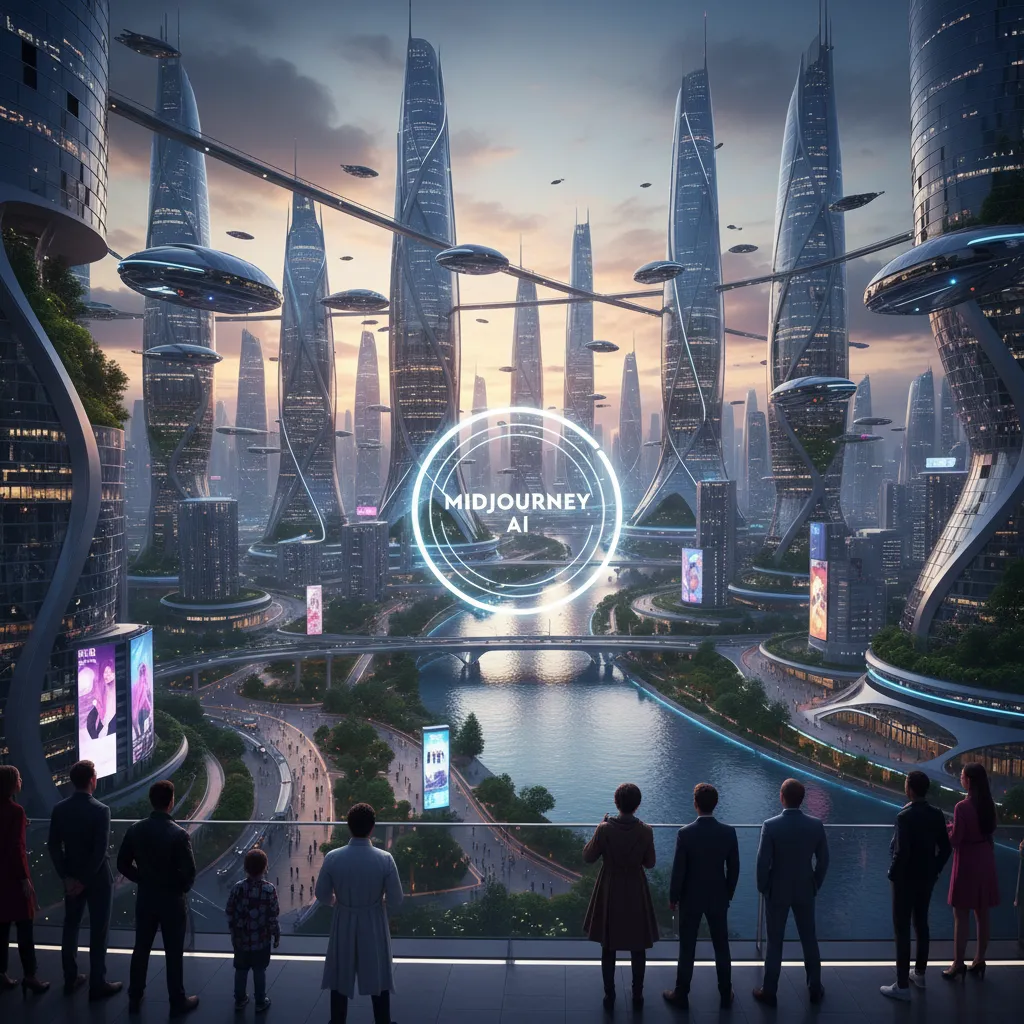
Midjourney’s biggest strength is artistic coherence. The images often feel “designed,” not just generated. If I need concept art, cinematic lighting, dramatic portraits, or a moody scene for a campaign idea, Midjourney is usually the fastest way for me to get a strong visual direction.
- Cinematic visuals: lighting, depth, and atmosphere are consistently strong.
- Style control: I can push it toward film stills, editorial looks, or surreal art.
- Idea generation: it helps me explore options before I commit to a layout tool.
The trade: Discord is powerful, but not “calm”
The Discord interface works, but it feels like designing inside a group chat. Commands, threads, scrolling, and other people’s generations can break my focus. I can use private channels and settings, but it still doesn’t feel like a clean workspace the way Canva or Adobe Express does.
Midjourney is powerful, but it’s not peaceful.
What I don’t trust it for
I don’t rely on Midjourney for precise text rendering or strict prompt adherence. If I need exact wording on packaging or a logo that must match brand rules, it can drift. To me, it’s more muse than intern: inspiring, but not always obedient.
- Unreliable small text and typography
- Loose interpretation of detailed requirements
- Extra cleanup often needed in another tool
Hypothetical scenario: 12 product shots by noon
If my boss asked for 12 consistent product shots by noon, I wouldn’t start in Midjourney. I’d use Canva or Adobe Express for speed and repeatability. But I might generate one Midjourney image to steal the lighting idea, then recreate that look in a controlled template.
5) AI Image Quality vs. text rendering: the unglamorous dealbreaker
When I compare Canva vs Adobe Express vs Midjourney, I separate “looks amazing” from “usable in marketing.” In real work, typography and legibility decide whether an AI image survives production. A beautiful background is nice, but if the headline is hard to read or the price looks wrong, the design fails.
My quick usability test (headline + price + CTA)
I run a simple test on any AI-generated visual: I add a headline, a price, and a CTA button. Then I watch what breaks first.
- Headline: Can I read it on mobile in two seconds?
- Price: Do the numbers stay clean and consistent?
- CTA button: Does it look clickable, aligned, and on-brand?
Where Midjourney shines (and where it struggles)
Midjourney often wins on pure AI image quality: textures, lighting, mood, and “wow” factor. If I need a striking hero image or a concept background, it’s hard to beat. The problem is text rendering. Midjourney can still produce warped letters, uneven spacing, or random characters—especially with small type or numbers. That makes it risky for ads, promos, and anything with pricing.
Why Canva and Adobe Express feel more “marketing-ready”
Canva and Adobe Express usually win on practical layout. Their strength is that I can keep text as editable layers, control fonts, and maintain brand styles. Even when I use their AI features, I’m still working inside a design tool built for legible type, alignment, and quick resizing for different channels.
- Midjourney: best for backgrounds and visual richness
- Canva/Express: best for readable text and fast production
- Reality: none are perfect at text-in-image reliability
My rule: if it contains numbers, don’t bake it into the image (future-me says thanks).
6) Pricing plans & the ‘hidden cost’ of switching tools mid-project
When I compare Canva vs Adobe Express vs Midjourney, the pricing looks simple at first: you pay a subscription (or you don’t). But the real cost of AI design tools often shows up when I switch tools halfway through a project and lose time, quality, or both.
Obvious costs: what you pay each month (or year)
| Tool | Free plan | Paid plan (typical) |
|---|---|---|
| Canva | Yes | $55/year |
| Adobe Express | Yes | $9.99/month |
| Midjourney (AI) | No (commonly) | $10–$120/month |
Sneaky costs: what I pay with time and rework
Here’s what usually hits me mid-project:
- Learning curve: even small UI differences slow me down when I’m on a deadline.
- Export limits and formats: I might export a PNG, then realize I need a layered file or a different size.
- Quality loss: resizing or re-exporting can reduce sharpness, especially for text-heavy designs.
- Brand consistency: fonts, colors, and spacing can shift when I rebuild layouts in another tool.
- Version chaos: I end up with “final_v7_reallyfinal” files across tools and folders.
My personal cost trap: paying for two tools
The biggest trap I’ve fallen into is paying for two subscriptions because one tool makes the AI images I want (Midjourney), while another tool makes the layouts fast (Canva or Adobe Express). The money adds up, but the bigger cost is the back-and-forth: generate, download, import, resize, adjust, repeat.
Switching tools mid-project rarely feels expensive in the moment, but it quietly taxes every revision.
Decision shortcut I use
I pick one home base tool for about 80% of my work (templates, resizing, brand kit, quick edits). Then I add one specialist tool for the remaining 20%—usually Midjourney for unique visuals—so my workflow stays stable and my costs stay predictable.
7) My “pick the tool” flowchart (and a tiny prediction for 2026)
When people ask me “Which AI design tool is best?” I don’t start with features. I start with the job. In my day-to-day work, I treat Canva, Adobe Express, and Midjourney like three different lanes on the same road. The fastest choice is the one that gets me to a finished asset with the least rework.
If I need daily content and smooth team collaboration, I go to Canva first. It’s the easiest place for repeatable social posts, quick edits, and shared templates that anyone on the team can update. For content calendars, simple animations, and “make 20 versions of this” tasks, Canva keeps the process moving. The AI features help, but the real win is speed plus consistency.
If I need brand-safe generation and a clean handoff into professional design files, I choose Adobe Express + Firefly. This is my pick when the work must match approved brand rules, or when I know the final step will happen inside Creative Cloud. I like that the workflow feels connected: generate, refine, then pass the asset into Photoshop or Illustrator without starting over. For marketing teams that live in Adobe, this reduces friction.
If I need cinematic concept art direction, I use Midjourney v7. It’s where I go when the goal is mood, lighting, and bold visual ideas—especially for campaign concepts, storyboards, or “what could this look like?” exploration. My rule is simple: I generate in Midjourney, then I export and rebuild elsewhere for final production, because concept images often need layout control, typography, and brand polish.
My tiny prediction for 2026: the winner isn’t one tool—it’s the workflow that prevents rework.
As AI design tools compared side by side keep improving, I think the smartest teams will stop arguing “Canva vs Adobe Express vs Midjourney” and instead design a pipeline: ideate fast, approve safely, and finish clean. That’s how AI becomes a real advantage, not just a cool demo.
TL;DR: If you need fast, on-brand marketing visuals: Canva’s Dream Lab + templates win. If you live in Creative Cloud and want “safer” commercial asset generation: Adobe Express + Adobe Firefly fits. If you want the highest artistic coherence for concept art and cinematic textures: Midjourney v7 is the vibe—just budget time (and patience for Discord).