
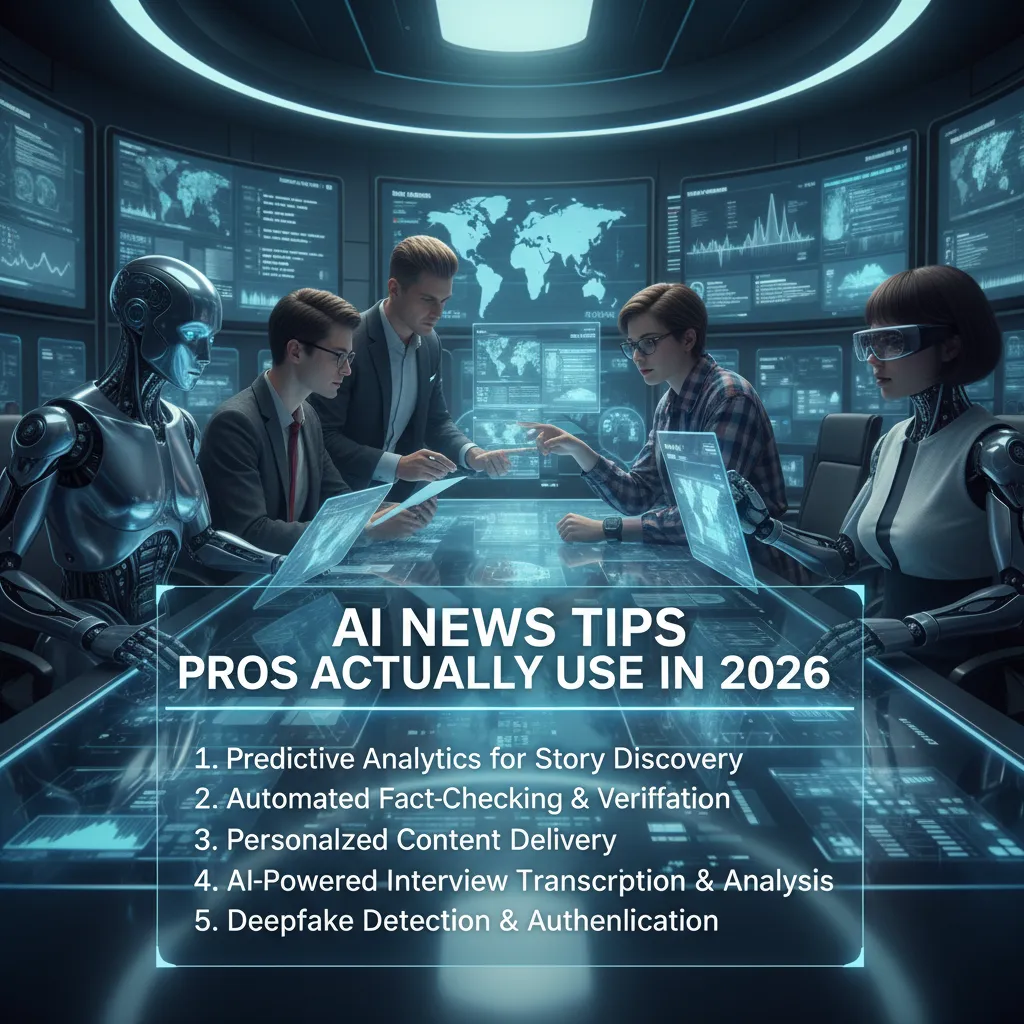
The first time I set up “real-time monitoring alerts,” I did it wrong—my phone buzzed so often during a client crisis that I started ignoring it (which is the one thing you can’t do in PR). That mini-disaster taught me something boring but true: AI doesn’t save you time unless you train it with boundaries. In this post I’m sharing the expert-ish tips I wish I’d had: which media monitoring platforms to trust, how I draft with AI news writing tools without drifting into nonsense, and the small verification rituals that keep my reputation (and my sleep) intact.
1) My “alert fatigue” fix: AI-powered media monitoring
I used to treat media monitoring like a firehose: more alerts must mean better awareness. In reality, it just trained me to ignore notifications. Now I treat monitoring like a smoke alarm: loud enough to notice, but not so loud I’m tempted to remove the batteries.
I pick platforms for coverage breadth, not a pretty dashboard
In 2026, most tools look polished. What matters is whether the platform actually “hears” the places your story breaks: mainstream news, niche blogs, podcasts, newsletters, Reddit, TikTok, YouTube comments, review sites, and regional outlets. I follow the Proven Expert AI News Tips Every Professional Should Knowundefined mindset here: prioritize signal access over UI.
- Language + region coverage: Can it track local press and non-English mentions?
- Source types: Social + web + broadcast + newsletters (not just X and Google News).
- Historical depth: Enough backfill to compare today vs. baseline.
How I tune real-time alerts: keyword hygiene + whitelists + the “one escalation rule”
My biggest win was cleaning up keywords. I keep a tight set of “must-catch” terms and push everything else into daily digests.
- Keyword hygiene: I remove vague terms and add exclusions (e.g.,
brandNOTstreetNOTsong). - Whitelists: I flag trusted sources (top reporters, key customers, regulators) so their mentions always notify me.
- One escalation rule: An alert can only escalate once—either to Slack or SMS, not both. If it escalates, it must include context (link + snippet + why it triggered).
My gut-check workflow before I react
I never respond based on a single spike. I do a fast check using AI sentiment analysis, then I read the surrounding context.
- Sentiment trend: Is negative sentiment rising, or is it just louder?
- Context scan: I open the top 3 sources and look for the original claim.
- Impact filter: Is this affecting customers, partners, or search results?
“If I can’t explain the story in one sentence with a link, I’m not ready to act.”
Mini tangent: the relief of volume flattening
After a messy day, I watch the discussion volume chart like a heartbeat monitor. When the line flattens, it’s oddly calming—not because the issue vanished, but because I can finally switch from firefighting to fixing.

2) Draft fast, don’t publish fast: AI content creation that stays sane
In 2026, AI helps me move fast, but I treat it like a drafting engine, not a publishing button. My rule is simple: speed in the first draft, patience in the final edit. That’s how I stay accurate when the news cycle gets loud.
My 3-tool stack (and why I don’t use one tool for everything)
- ChatGPT: best for structure, headline options, and turning my notes into a clean outline. I use it when I already trust my source material.
- Claude: best for long-form rewrites and tone control. I use it when I need a calmer, clearer version of a messy draft.
- Perplexity: best for finding sources fast and seeing links. I use it for “what’s the primary doc?” moments, not for final wording.
The “neutral first draft” trick: write boring on purpose
When I’m reporting, I ask AI for a neutral first draft. No jokes, no hot takes, no “this changes everything.” I want plain sentences that match the facts. Then I add my voice later, after I’ve verified details.
“Give me a neutral, source-first draft. Use short sentences. No opinion. Flag anything that needs verification.”
How I ask for citations (and what I do when the tool refuses)
I don’t accept “studies show” without receipts. I ask for citations like this:
List every factual claim with a source link. If you can’t source it, label it UNSOURCED.
If the tool can’t provide links, I treat the output as notes, not reporting. Then I verify manually: primary documents, official statements, filings, transcripts, and direct quotes. If I can’t confirm it, I cut it.
The small habit that saves me: paste the brief, not the whole internet
I keep AI grounded by pasting a tight brief: what we know, what we don’t, and the exact sources I’m using. I don’t dump 30 tabs. I give 5–10 key excerpts and ask the model to stay inside them.
Wild card: breaking news at 4:55 p.m.
- I automate: a quick outline, a “what we know/what’s next” box, headline variants, and a checklist of questions to confirm.
- I refuse to automate: the core facts, attribution, numbers, and any quote. I also won’t let AI “fill gaps” when a source is missing.
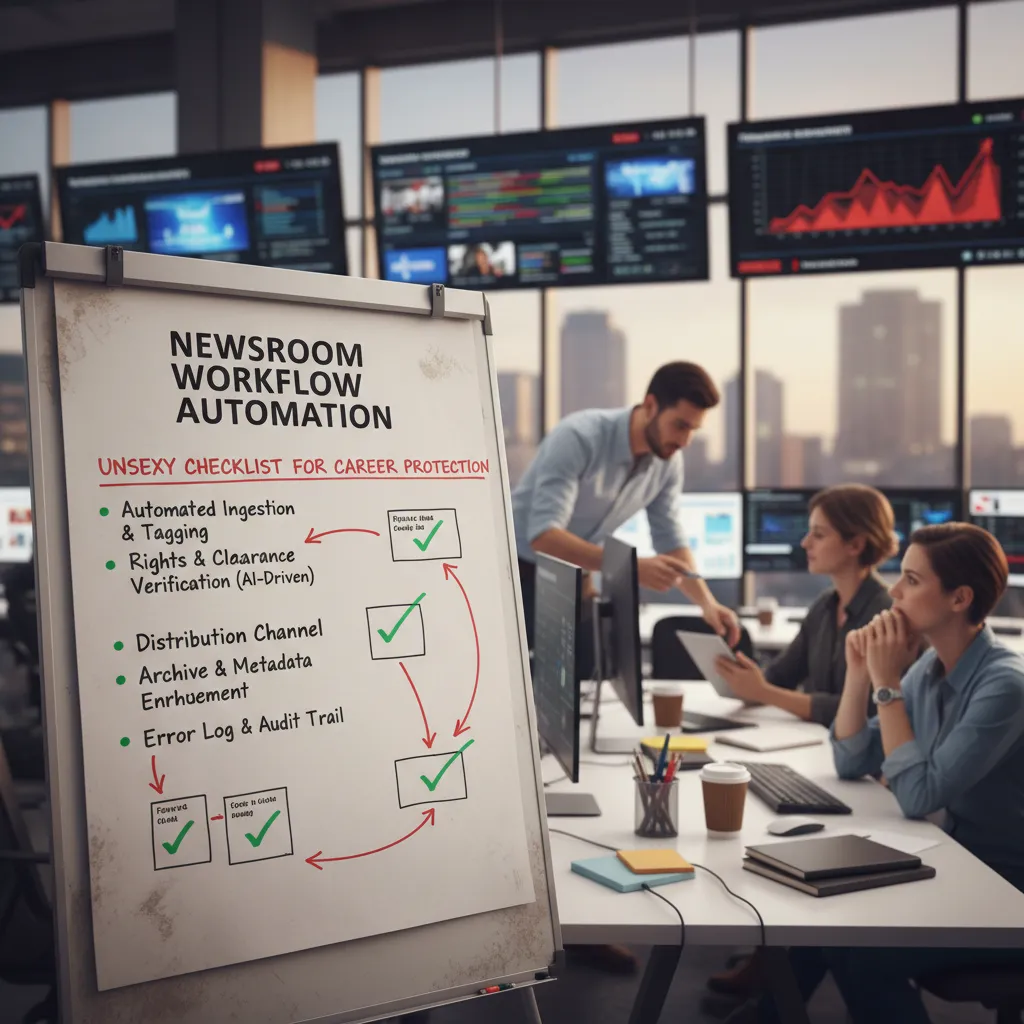
3) Newsroom workflow automation: the unsexy checklist that protects careers
In 2026, the fastest way to lose trust is still the oldest mistake: publishing something that’s wrong. My best “AI news tip” isn’t a prompt—it’s workflow automation that forces me to verify before anything goes live, even a 120-word update. I treat this like a seatbelt: not exciting, but it saves you when things move too fast.
My content verification process (before publish, every time)
I run the same checklist whether I’m filing a breaking alert or a long feature. I keep it in my CMS as a required pre-publish step, so I can’t “forget” when I’m tired.
- Names: spelling, titles, and affiliations (cross-check against official pages or past coverage).
- Dates: time zones, “yesterday” vs. “last night,” and whether a date is scheduled or confirmed.
- Numbers: totals, units, and what the number actually represents (estimate vs. audited figure).
- Quotes: match to the original audio/transcript; confirm context and speaker.
- Links: open every link, check it lands where I say it does, and archive key sources.
When I’m moving fast, I’ll literally paste the key claim into a note and write: “What would prove this wrong?” That one line catches a lot of sloppy assumptions.
The update log: corrections that don’t feel like cover-ups
I keep an internal update log from the first draft. It’s simple: timestamp, what changed, why, and the source. If we publish a correction, I can pull clean language from the log instead of scrambling.
| Time | Change | Reason + Source |
|---|---|---|
| 10:42 | Updated casualty figure | New official briefing link |
Where AI threat detection fits (and where it doesn’t)
I use AI tools to flag suspicious claims early: odd image metadata, recycled text patterns, or “too-perfect” quotes. It’s great for triage. But it doesn’t replace calling a spokesperson, checking a court docket, or reading the full report. AI can warn me; it can’t vouch for truth.
Imperfect aside: I still print timelines
If a story has a messy sequence—multiple agencies, shifting statements—I print the timeline on paper and mark it up. It slows my brain down in a good way. Honestly, it calms me down, and that calm is part of accuracy.

4) The money talk: enterprise pricing solutions & what I ask before signing
In AI news monitoring, “enterprise custom pricing” usually means the vendor won’t show a public price because the cost changes based on coverage, volume, and risk. It’s not just “bigger plan = bigger bill.” It’s: how many sources you need (global news, paywalled outlets, broadcast, podcasts, social), how many alerts you run, how much historical data you want, and whether you need legal-safe licensing for redistribution inside your company.
What teams actually pay (plain-English range)
In 2026, I see most serious media monitoring tools land in a few bands:
- $500–$2,000/month: small teams, limited sources, basic alerts and dashboards.
- $2,000–$8,000/month: comms/PR teams with broader coverage, better analytics, and integrations.
- $8,000–$25,000+/month: enterprise-wide monitoring, multiple regions, broadcast, and strict compliance.
The surprise cost is often per-user pricing. A “$150 per seat” add-on sounds fine until Legal, Exec Comms, and regional teams all want access. Seats multiply faster than your budget. I push for role-based access or shared viewer accounts when it fits policy.
My pre-contract questions (I ask these every time)
- Data sources: Which publishers are included? What’s missing? Can you show a source list by country and language?
- Licensing: Can we share full-text internally? What about newsletters, Slack, or client reports?
- Alert latency: What’s the typical time from publish to alert? What’s the worst case during peak news?
- Support response times: What are the SLA targets for P1 issues? Is support 24/7 or business hours?
The features overview I request (so demos don’t hypnotize me)
I ask for a one-page checklist before the demo:
- Search operators and query limits (boolean, proximity, language filters)
- Deduping and clustering quality
- Sentiment and entity accuracy (and how it’s trained)
- Integrations: Slack, Teams, email, API, webhooks
- Exports: PDF, CSV, scheduled reports, audit logs
My tiny confession: I once bought a tool because I liked the UI. I paid for that for a year.
5) 2026 journalism trends that changed my distribution plan (and my ego)
The search shake-up (why I stopped betting on Google like it was 2022)
In 2022, my distribution plan was simple: publish fast, rank well, collect referrals. In 2026, that mindset feels outdated. Search is still useful, but it’s less predictable because AI summaries, zero-click results, and “answer boxes” keep readers on the platform. I still optimize headlines and metadata, but I no longer treat Google as my main growth engine. This shift forced a small ego check: if my reporting is good, it should travel even when search traffic doesn’t.
Creator economy gravity: where attention is migrating
What replaced that old search certainty is a messy mix of YouTube, newsletters, and podcasts. People want a voice, a face, and a repeatable format. I now plan stories with distribution built in: a short video explainer, a newsletter “why it matters” section, and a podcast-ready quote list. This matches what I learned from Proven Expert AI News Tips Every Professional Should Knowundefined: AI helps speed up packaging, but humans still choose what to follow.
- YouTube: visual proof, quick context, strong search inside the platform
- Newsletters: direct reach, loyal readers, better feedback loops
- Podcasts: long attention, trust building, easier habit formation
From drive-by headlines to “sticky” contextual updates
I used to chase the single big headline. Now I build sticky coverage: a living thread of updates that keeps earning attention. My AI workflow helps me track changes, compare claims, and summarize what’s new, but I keep the reporting source-first. The trick is to publish context people can return to, not just click once.
“If it doesn’t help the reader understand what changed, it’s not an update—it’s noise.”
A practical shift: fewer generic posts, more investment signals
Generic news rewrites are easy for AI and cheap for everyone. So I publish fewer of them. Instead, I look for investment signals: hiring spikes, contract awards, regulatory filings, budget moves, and internal memos. Those lead to investigative angles and original sourcing—work that still stands out in 2026.
Wild card: AI answer engines are like office coffee
AI answer engines are like office coffee—convenient, always there, and fine for a quick boost. But the real conversations happen elsewhere: in communities, inboxes, comment threads, and live shows. So I treat AI answers as a discovery layer, not the destination, and I distribute where people actually talk back.
6) Stealing (ethically) from the NYT: AI report generation for humans
What impressed me most about real newsroom AI integration wasn’t some giant “AI newsroom” platform. It was the opposite: small tools that remove specific pain. In the best setups, AI doesn’t replace reporting. It clears the clutter so humans can see the story faster. That’s the part I “steal” (ethically): the workflow thinking, not the content.
Why the “boring” tools matter: Cheatsheet and Echo
Two ideas I keep coming back to are Cheatsheet and Echo—not as brand names you must copy, but as patterns. Cheatsheet is the kind of tool that turns messy inputs into clean, usable structure: names, dates, entities, themes, and quick context. Echo is the mirror: it helps you check what you think you heard by summarizing, clustering, and surfacing what’s repeated across sources. These are “boring” data transformations—cleaning, labeling, grouping—but they unlock better stories because they reduce the time spent wrestling spreadsheets and screenshots.
In 2026, this is one of the most practical AI news tips pros actually use: make AI do the sorting, not the deciding. When AI handles the repetitive steps, I can spend my time on judgment, nuance, and what to ask next.
How I’d adapt this for PR: a weekly AI report that people will read
If I’m running PR or comms, I’d build a weekly AI report generation habit that covers three things: coverage, sentiment, and risk flags. Coverage is simply “what got published and where.” Sentiment is “how it reads,” but only when it’s backed by examples and quotes. Risk flags are “what could become a problem,” like sudden spikes in negative framing, recurring claims, or a new critic gaining traction.
My rule is simple: if I can’t explain the output to a colleague, it doesn’t go in the deck. That means no mystery scores, no black-box charts, and no vague labels like “high risk” without showing the articles and the pattern behind it.
To close the loop, I keep it lightweight. I want a steady “risk reputation intelligence” habit that helps me act early, not a doom-scroll machine. AI should make me calmer and clearer—because it turns noise into a short, human report I can defend in a meeting.
TL;DR: Use AI-powered media monitoring to catch signals early, AI news writing tools to draft faster, and a non-negotiable content verification checklist to stay accurate. Budget realistically for enterprise pricing solutions, and plan for 2026’s shift away from search toward YouTube, newsletters, and direct audiences.