Last spring, I watched a PM friend try to “add AI” to a roadmap slide the night before an exec review. It looked impressive—until the first customer call the next week, when nobody could explain what the model would do, how it would fail, or who’d own the mess. That little cringe moment sent me down a rabbit hole: I started asking product leaders what’s actually working in the messy middle of AI product strategy. This outline borrows that interview energy—less hype, more habits.
Product Management Trends 2026: My “Roadmap Funeral”
In the Expert Interview: Product Leaders Discuss AI, one theme kept coming up: AI changed the cost of learning. That matched my own “roadmap funeral.” The moment AI prototypes got cheap, my old roadmap rituals broke. I used to spend weeks polishing quarterly slides, debating feature order like it was fate. Now a small team can build a working demo in days, sometimes hours. A promise on a slide can’t compete with a prototype you can click.
Why the old roadmap stopped working
My roadmap used to be a contract. In 2026, it became a guess. With AI product development moving fast, the biggest risk is not being wrong; it’s being slow to find out. When prototypes are cheap, the “plan” is less valuable than the proof.
What I replace slides with: principles, guardrails, weekly proof
Instead of feature timelines, I run on product principles and clear guardrails. This is what I share with stakeholders now:
- Principles: what we optimize for (user trust, time-to-value, measurable outcomes).
- Guardrails: what we won’t break (privacy, safety, latency, cost caps, brand voice).
- Weekly proof: demos, experiment results, and what we learned.
I keep it simple in one page, not ten slides. If it can’t fit, it’s not clear enough.
AI-first teams run tiny bets
In the interview, leaders described AI-first product teams as experiment engines. That’s how I work now: prototypes > promises. We place tiny bets, ship a thin slice, and measure real behavior. A “maybe” becomes a “yes/no” fast.
“Show me the workflow, not the roadmap.”
A quick tangent: OKRs arguing, not features
There’s a weird calm when OKRs do the arguing. If the objective is clear, feature debates get quieter. We stop asking “Is this on the roadmap?” and start asking “Does this move the metric?” I even write it like a check:
if (impact_on_OKR > cost_and_risk) ship_experiment();

AI Accelerators Tools Programs: The Squad That Saves You
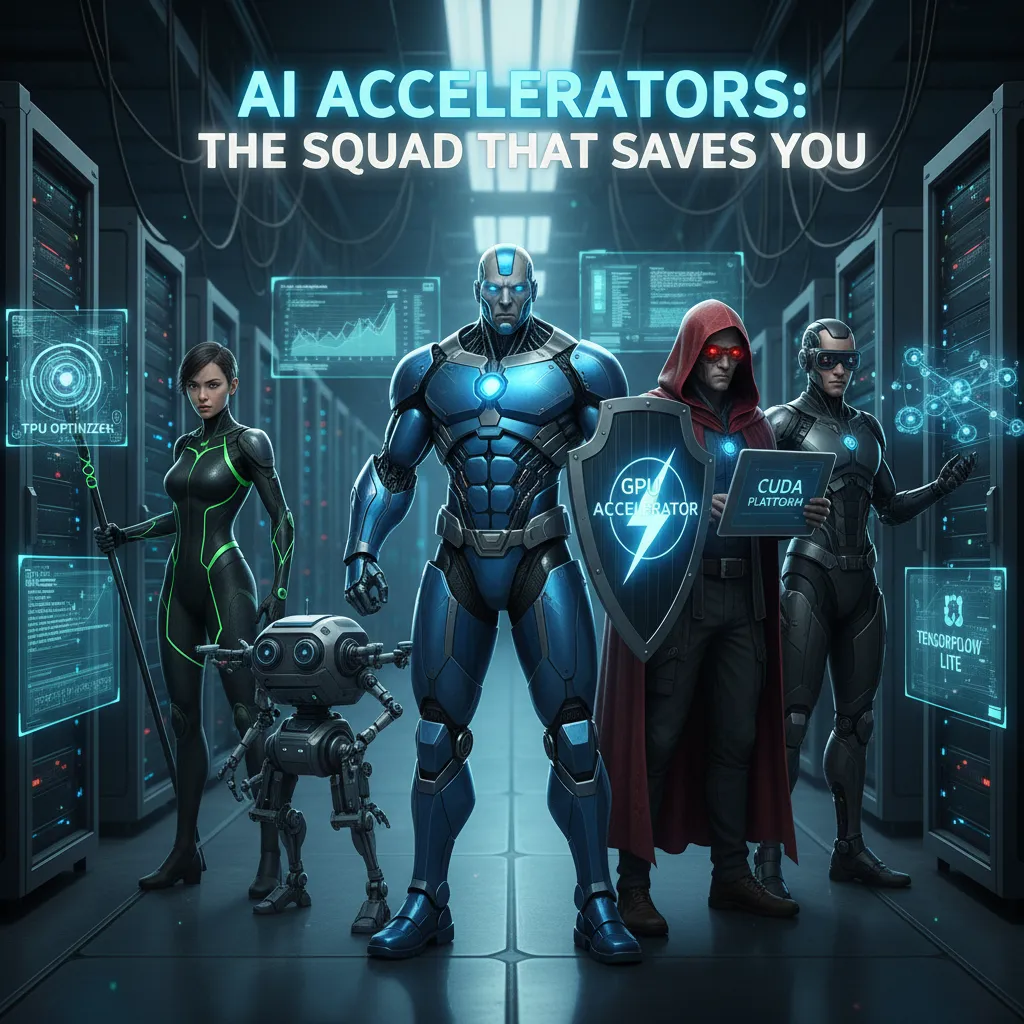
In the expert interview with product leaders, one theme kept coming up: AI work moves fastest when you stop treating it like a side quest. That’s where AI accelerator squads help. For me, an accelerator is a small, focused team that removes friction—shared tools, patterns, and coaching—so product teams can ship safer AI features.
What an AI accelerator squad is (and what it is not)
- Is: a enablement group that builds reusable components (prompt patterns, eval harnesses, guardrails) and supports teams in delivery.
- Is: a place to standardize “how we do AI” across products, without blocking speed.
- Is not: a central team that owns every AI roadmap item.
- Is not: a research lab chasing demos with no path to production.
How I’d staff one
I’ve learned that the best accelerator squads are cross-functional from day one. My baseline staffing looks like this:
- Product: sets the enablement roadmap and defines what “good” looks like for teams.
- Design: shapes AI UX, especially uncertainty, explanations, and user control.
- Engineering: builds the platform pieces (APIs, feature flags, logging, caching).
- Data/ML: owns model behavior, data quality, and evaluation design.
- “Risk buddy”: legal/privacy/security/compliance partner embedded weekly, not “at the end.”
My favorite low-stakes prototype rituals
To keep prototypes safe and fast, I run simple rituals:
- 48-hour sandbox: prototype with synthetic or approved data only.
- Red-team hour: everyone tries to break the feature with tricky prompts.
- UX truth test: watch 3 users; track where they over-trust the AI.
What I learned the hard way: evaluations aren’t a nice-to-have—they’re the product
If you can’t measure quality, you can’t lead the roadmap. I now treat evals as a first-class deliverable:
“If we don’t define success cases and failure cases, we’re not building a product—we’re shipping a guess.”
Even a simple table helps align teams:
| Eval | Why it matters |
|---|---|
| Accuracy on key tasks | Prevents silent quality drift |
| Safety/refusal rate | Reduces harmful outputs |
| Latency + cost | Keeps the feature usable |
AI Agent Orchestration: When One Model Stops Being the Hero
In the Expert Interview: Product Leaders Discuss AI, one theme kept coming up: the “single chatbot” era is fading. As a PM in 2026, I’ve learned that users don’t really want a smarter chat window—they want work to move forward. That’s where multi-agent orchestration shows up: a coordinated crew of agents, each with a job, working through a shared plan.
From one chatbot to a coordinated crew
Instead of asking one model to do everything, I now design workflows where agents specialize. One agent reads context, another drafts, another checks policy, and another executes actions in tools. The orchestration layer decides who does what, in what order, with what permissions.
- Planner agent: breaks a goal into steps
- Retriever agent: pulls facts from docs and systems
- Writer agent: creates drafts users can edit
- Executor agent: performs approved actions (tickets, invites)
Why orchestration becomes a competitive advantage
Enterprises care because orchestration is where reliability and control live. In the interview, leaders stressed that value comes from repeatable outcomes, not clever answers. I care now because orchestration lets me ship features that are safer, auditable, and easier to measure.
“The win isn’t the model. The win is the workflow you can trust.”
Hypothetical: onboarding a new employee across inbox, docs, and ticketing
Imagine I’m onboarding Sam. I trigger an “Onboard Engineer” flow. Agents coordinate across systems:
- Inbox agent drafts a welcome email and calendar invites.
- Docs agent creates a 30-60-90 plan from templates and team goals.
- Ticketing agent opens access requests and tracks approvals.
The user sees a checklist, not a wall of text. Actions require explicit approval, like:
approve: create_ticket(system="Jira", project="IT", summary="Laptop access")
My slightly unpopular opinion: the UX is the control plane
I don’t think the chat bubble is the product. The product is the control plane UX: permissions, previews, diffs, logs, and “undo.” Chat can be an entry point, but the real interface is how people steer agents with confidence.
Trust-First AI Baseline: The Boring Stuff That Sells
In the expert interview with product leaders, one theme kept coming up: enterprise AI buyers ask about trust before they ask about features. In 2026, the “wow” demo is table stakes. The real sales motion starts when security, legal, and ops join the call and ask, “Can we run this safely, prove what it did, and fix it fast?”
What enterprise buyers ask before features
I’ve learned to lead with the baseline: data handling, auditability, and operational control. Buyers want to know if my AI product can fit into their risk model without creating a new fire drill.
- Data boundaries: what goes to the model, what stays private, and what is retained.
- Access control: roles, permissions, and admin visibility.
- Audit trail: who prompted what, what the system returned, and what actions were taken.
My sticky-note checklist: governance, explainability, telemetry
I keep a simple checklist that maps to how enterprises buy:
- Governance: policy, approvals, and model/vendor inventory.
- Explainability: “Why did it answer that?” with sources, not vibes.
- Telemetry: logs, metrics, and alerts that make failures visible.
When I’m unsure what to build next, I ask: does it improve control, clarity, or operability?
How I explain explainability and monitorability (without sounding like a lawyer)
I avoid heavy terms and use plain promises: show your work and stay observable. “Show your work” means citations, retrieved snippets, and decision traces. “Stay observable” means I can answer, in minutes, not days:
- What changed after a model update?
- Which users are seeing failures?
- Which prompts trigger risky outputs?
The unresolved tension: hallucinations and the “confidence theater” trap
Hallucinations still happen in 2026. The trap is confidence theater: adding a fake certainty score that looks scientific but isn’t tied to real correctness. In the interview, leaders pushed for honest UX: label uncertainty, cite sources, and route high-risk cases to humans instead of pretending the model “knows.”
Enterprise AI Trends: Models Are Commodity, Systems Win
In the expert interview, one theme kept coming up: 2026 is not about finding a “magic model.” It’s about building the system that makes AI useful, safe, and repeatable inside an enterprise.
From the “model picker” era to the “system builder” era
I used to think my job was to pick the best LLM and ship features fast. That was the model picker era. Now, strong models are everywhere, and the gap between them is smaller for most business tasks. The winners are PMs who can design the full loop: data → workflow → evaluation → governance → feedback.
- Model picker: compare benchmarks, choose a vendor, hope quality holds.
- System builder: design retrieval, tools, guardrails, monitoring, and human review.
When models become a commodity, my roadmap changes
Commodity models change how I plan. Instead of betting the roadmap on one provider, I prioritize portability and measurable outcomes. Vendor choice becomes less about “best model” and more about enterprise fit: security, latency, cost controls, and deployment options.
“The model is only one component. The product is the system around it.”
- Build an abstraction layer so I can swap models without rewriting features.
- Invest in evals: task suites, regression tests, and red-team prompts.
- Track unit economics (tokens, tool calls, human review time) per workflow.
Agentic platforms converge in cloud-native ecosystems
Another trend from the interview: agentic platforms are converging into cloud-native stacks that connect data sources and tools. In practice, I see more demand for “connect once, use everywhere” patterns—CRM, ticketing, docs, and data warehouses—so agents can act with context.
agent = plan() + retrieve() + call_tools() + verify() + log()
Why PyTorch keeps popping up in serious conversations
Even with managed AI services, open-source frameworks matter. PyTorch shows up because teams want control: custom fine-tuning, faster research-to-prod handoff, and a large ecosystem. For me, it’s a signal to support hybrid builds: managed models for speed, PyTorch pipelines when differentiation matters.

Five Trends AI Data (Plus a Wild Card): Edge Chips & Physical AI
In the expert interview, one theme kept coming up: in 2026, AI product leadership is not just about prompts and models. It is also about where compute happens and what it runs on. I used to treat chips as “someone else’s problem.” Now I can’t.
1) The Edge AI hardware race (yes, PMs have to care)
As more AI products move on-device, latency, privacy, and cost stop being abstract. They become roadmap items. If my product needs real-time voice, vision, or safety checks, the edge chip is part of the user experience. In the interview, leaders framed this as a shift from “model choice” to system choice: model + runtime + hardware.
- Latency: edge inference can feel instant compared to round trips to the cloud.
- Data control: sensitive data can stay local, which changes compliance and trust.
- Unit economics: fewer cloud calls can mean lower cost per active user.
2) New chip classes I’m tracking in 2026
Product leaders in the interview talked about chips like a new platform layer. Three categories stood out:
- ASIC accelerators: purpose-built inference chips that trade flexibility for speed and power savings.
- Chiplet designs: modular components that let vendors mix CPU/GPU/NPU blocks faster, which can shorten hardware cycles.
- Quantum-assisted optimizers: still early, but showing up in planning for scheduling, routing, and portfolio-style optimization.
3) Robotics and Physical AI: the “software-only” era gets a roommate
Physical AI changes product work because the model is now tied to sensors, motors, and messy environments. The interview highlighted that reliability is not just accuracy; it is repeatability, calibration, and safe failure modes. I have to write requirements for things like battery drain, heat, and offline behavior.
Wild card: AI products are becoming like restaurants
Front-of-house is chat. Back-of-house is orchestration.
The UI may look like a simple assistant, but the real product is the kitchen: tools, workflows, policies, and monitoring. I now map features like a service line: order intake (chat), prep (retrieval), cooking (agents), and quality control (evals and guardrails).
AI Product Orgs: The 2030 Bet I’m Making (Now)
From the Expert Interview: Product Leaders Discuss AI, one theme stuck with me: the winners in 2030 won’t be the teams that “use AI tools.” They’ll be the teams that rebuild how work happens. My bet is simple: AI-first product organizations will run on humans + agents, with clear roles, fast feedback, and strong guardrails.
AI-first means workflows, not add-ons
In 2026, I still see AI bolted onto old processes: a chatbot here, a prompt library there. That’s not transformation. AI-first product leadership means redesigning the workflow so agents do the repeatable parts (drafting, summarizing, testing, monitoring), and humans do the judgment parts (strategy, ethics, customer truth, trade-offs). If I’m honest, the hardest shift is cultural: letting the system do “good enough” work quickly, then improving it through iteration.
My AI literacy checklist for executives
If a leader tells me they “own AI strategy,” I look for a few basics. Can they explain model limits in plain language? Do they know where data comes from and who can access it? Can they describe how quality is measured in production, not just in demos? And do they have a view on risk—privacy, bias, security, and brand harm—without freezing progress? In the interviews, the best leaders weren’t the most technical; they were the most clear.
How I’d organize AI strategy
I’d place governance close to the executive team, with a tight mandate: policies, approvals, and incident response. I’d build a small AI platform team to provide shared services—evaluation, observability, prompt and model management, and data pipelines. Then I’d keep product pods empowered: each pod owns outcomes, ships AI features, and partners with legal and security early, not at the end.
The Monday ritual I’d start
To build change fitness, I’d start a 15-minute weekly “agent review.” One person shows: what the agent did, where it failed, what we learned, and what we’ll change. No hype, no blame—just a steady loop that makes AI product orgs stronger every week.
TL;DR: In 2026, the edge isn’t “which model?”—it’s AI-first product organizations: faster AI-first product cycles, accelerator squads, multi-agent orchestration, and a trust-first AI baseline that enterprise buyers now expect.