
The first time I had to “lead” in a real way, it wasn’t a promotion—it was a Friday at 4:47 p.m. when a client escalated, our timeline imploded, and everyone suddenly went quiet on Zoom. I remember staring at the blinking cursor in Slack, thinking: I can either write a perfect message no one reads, or say something imperfect that gives people direction. I chose imperfect. That tiny choice—clarity over cleverness—became one of my most battle-tested leadership tips. This post is a grab bag of the stuff I wish someone had handed me earlier: how to make decisions under pressure, give feedback without creating enemies, and build trust when you’re not in the same room (or even the same mood).
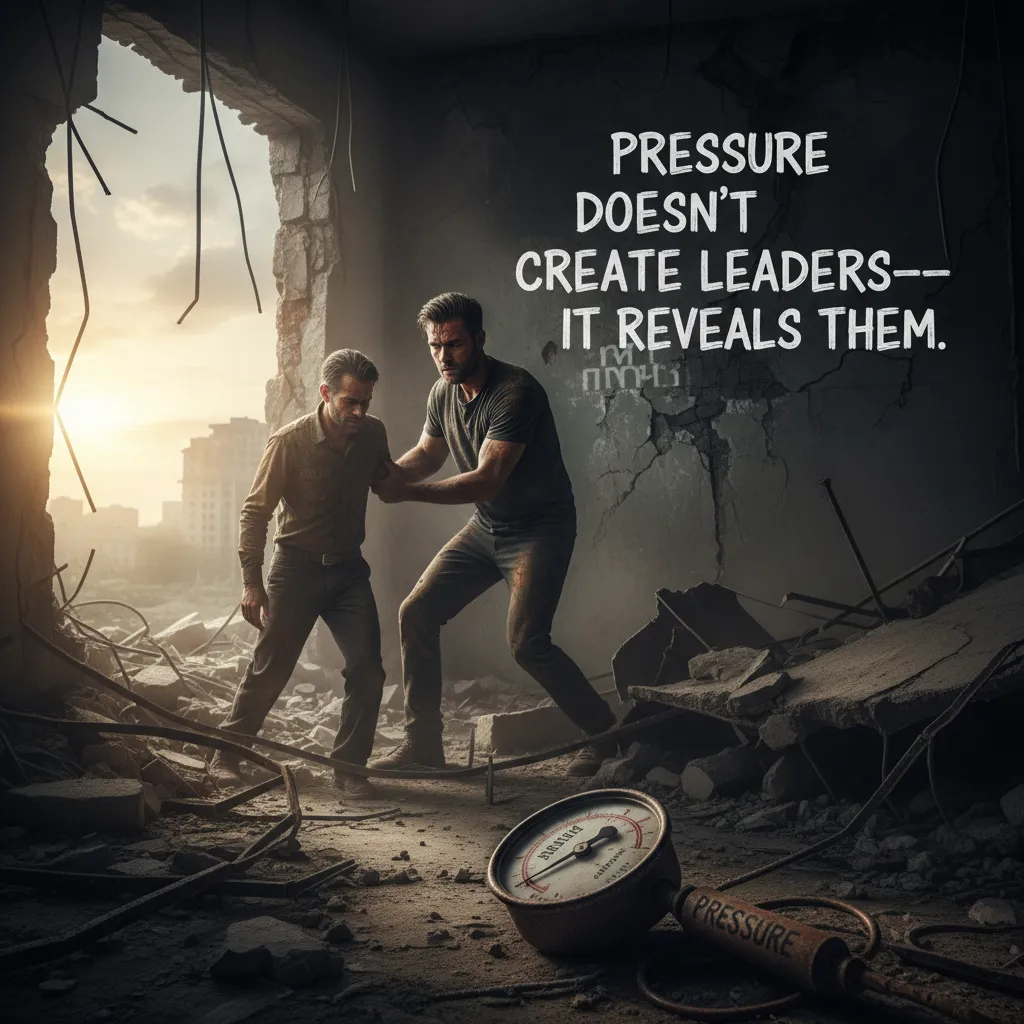
1) Pressure doesn’t create leaders—it reveals them
I used to think pressure made leaders. Now I believe it mostly reveals what was already there: how we think, how we speak, and how we treat people when the room gets hot. In the middle of a crisis, your team doesn’t need a hero speech. They need a steady signal they can follow.
My “4:47 p.m.” rule: default to clarity
I call it my “4:47 p.m.” rule because problems love to spike right before the day ends—when people are tired and the stakes feel higher. When that spike hits, I don’t try to sound smart. I default to clarity, using three short lines:
- What happened (facts only, no blame)
- What we’re doing (the next steps, not the perfect plan)
- Who owns what (names, deadlines, and check-in time)
This simple structure keeps “leadership under pressure” from turning into noise. It also reduces panic because everyone knows what to do next.
Decide faster by sorting reversible vs. irreversible
When time is tight, I separate decisions into two buckets:
- Reversible calls: we can undo them with limited cost (try, learn, adjust).
- Irreversible calls: hard to undo (big spend, public message, legal risk).
For reversible calls, I move quickly and set a review point. For irreversible calls, I slow down just enough to get the right voices in the room and confirm the risk. This keeps decision-making under pressure from becoming either reckless or frozen.
A tiny ritual: narrate your reasoning out loud
One habit changed my teams: I say my reasoning as I decide. Not a long speech—just a short “why.”
“I’m choosing option B because it protects the customer first, and we can reverse it in 24 hours if the data changes.”
When I do this, people stop guessing my motives. Trust goes up, and the team can execute without side conversations.
Leadership in stress is like driving in fog
In fog, you don’t speed up to “get through it.” You slow down, shorten the horizon, and keep the lane markers visible. That’s my mental model for calm leadership: focus on the next safe stretch, make priorities obvious, and keep roles clear so nobody drifts.
2) Trust is built in tiny deposits (not big speeches)
I used to think trust came from being impressive. I thought the best leaders were the ones with the sharpest answers, the strongest opinions, and the biggest speeches. But in real work—especially under pressure—I learned something simpler: trust comes from being predictable. People don’t need me to be perfect. They need me to be steady.
In my experience, trust is like a bank account. You don’t build it with one big deposit. You build it with small, repeated actions that tell people, “You can count on me.” Here are three micro-deposits I try to make every week.
Three micro-deposits that build trust
- Keep your promises. If I say I’ll follow up by Friday, I do it by Friday. If I can’t, I update early. A broken promise is not always about the task—it’s about reliability.
- Share context. I don’t just announce decisions. I explain the “why” in plain language. Context reduces confusion, stops rumors, and helps people make good calls without waiting for me.
- Give credit publicly. I name the person and the work in front of others. Praise in private is kind, but praise in public builds confidence and shows the team what “good” looks like.
Trust isn’t built when I sound smart. It’s built when my team knows what to expect from me.
Remote and hybrid leadership: over-communicate decisions, under-communicate panic
Remote and hybrid work changes the trust equation. People can’t “feel” what’s happening in the room, so silence gets filled with stories. I’ve learned to over-communicate decisions: what we decided, what it means, who owns what, and when we’ll review it.
At the same time, I try to under-communicate panic. If I’m stressed, I don’t dump that stress into Slack. I can be honest without being dramatic. I’ll say, “This is a tough week, and here’s our plan,” instead of broadcasting fear.
A quick self-audit I use
I check my calendar. If it shows only meetings, I’m probably not leading—just attending. Leadership requires space for follow-ups, written clarity, and small promises kept. Sometimes the most trust-building thing I can do is block 30 minutes to finish what I said I would.
3) Feedback that lands: the ‘warm truth’ method
I learned the hard way that blunt feedback isn’t honesty—it’s laziness dressed up as courage. Early in my career, I thought being “direct” meant saying the sharp thing and moving on. What I actually did was leave people confused, defensive, or quietly disengaged. Calm, clear leadership means I tell the truth and I make it usable.
The warm truth: clear message, human delivery
The “warm truth” method is how I give feedback that lands without turning it into a personal attack. I keep my tone steady, my words specific, and my intent obvious: we’re here to improve the work, not label the person.
My script (I write it down first)
When a conversation matters, I don’t wing it. I literally draft a few lines so I don’t drift into sarcasm or vague frustration. My script is:
- Observation (what I saw, no judgment)
- Impact (what it caused)
- Request (what I need going forward)
- Support (how I’ll help)
It sounds simple, but it keeps me calm and keeps the other person out of “fight or flight.” This is one of my most battle-tested leadership tips because it works under pressure.
Name the tension early
Difficult conversations at work get worse when we pretend everything is fine. I name the tension early so it stops leaking into side comments, missed meetings, and weird energy on calls. I’ll say:
“This might feel uncomfortable, but I want to talk about it directly so we can move forward.”
Mini role-play: missed deadlines (without making it personal)
Here’s what I say when someone misses deadlines:
“I want to talk about the last two deliverables. Observation: they came in after the agreed dates. Impact: it pushed the launch tasks and put the team in catch-up mode. Request: for the next two weeks, I need a status update every Tuesday and Thursday, and I need you to flag risks at least 48 hours early. Support: tell me what’s blocking you—scope, time, or clarity—and I’ll help remove it.”
If needed, I’ll add one calm line that protects standards:
“I’m confident you can fix this, and meeting deadlines is part of the role.”

4) Decision-making without drama: a lightweight ‘how we decide’ playbook
In my experience, people don’t fear decisions; they fear surprise decisions. The kind that appear in a calendar invite, a Slack message, or a new process doc with no context. Surprise decisions create rumors, second-guessing, and quiet resentment. Clear decisions—even tough ones—create movement.
My three-level decision model
To keep things calm and fair, I use a simple model that makes ownership obvious:
- I decide: High-risk, time-sensitive, or values-based calls (budget cuts, legal issues, hiring/firing, brand promises). I ask for input, then I own the final call.
- We decide: Cross-team choices where buy-in matters (roadmaps, major priorities, policy changes). We discuss options, trade-offs, and agree on a path.
- You decide (and I back you): Decisions closest to the work (implementation details, tooling within guardrails, customer fixes). I set the boundaries, then I support the owner publicly.
When I announce a decision, I label it. I literally say, “This is a we decide topic,” or “This is a you decide call.” That one sentence lowers tension because people know whether they’re being asked to contribute, align, or execute.
Make decisions visible with a shared decision log
I keep a simple decision log in a shared doc so new folks can catch up without rumors. It also reduces repeat debates because the “why” is written down.
| Date | Decision | Owner | Why | Revisit? |
|---|---|---|---|---|
| 2026-01-21 | Example: Standardize weekly status format | Ops Lead | Reduce confusion, speed up handoffs | In 30 days |
I keep entries short. If it takes more than five lines, I add a link to a longer doc. The goal is clarity, not paperwork.
A surprising connection: treat decisions like SEO
Here’s the mindset shift that changed my leadership: treat decisions like SEO. What ranks is consistency, not occasional genius. A team doesn’t need perfect calls; it needs a steady, repeatable way to decide, document, and learn.
“Consistency beats brilliance when the goal is trust.”
When we decide the same way every time—clear owner, clear level, clear log—drama drops. People stop guessing, and they start building.
5) Energy management is leadership (and yes, it’s awkward to admit)
Here’s my unpopular opinion: the best leaders are often just better at regulating their own nervous system. Not because they’re “zen” or never stressed, but because they notice what’s happening inside them and respond on purpose. That’s awkward to admit because we like to talk about strategy, metrics, and frameworks. But in real life, teams don’t just follow plans—they follow energy. If I walk into a room tense, rushed, and sharp, I can watch the whole conversation tighten up.
My one-sentence outcome habit
Before a tough meeting, I do something simple: I write the outcome in one sentence. It sounds almost too basic, but it keeps me from spiraling into worst-case stories.
“By the end of this meeting, we will agree on the next step and who owns it.”
That sentence becomes my anchor. When the discussion drifts into blame, side quests, or old arguments, I can bring us back without sounding controlling. It also helps me check my own motives. If my “outcome” is really “prove I’m right,” I rewrite it.
Conflict as data, not a verdict
When I feel defensive, I try to treat it like a dashboard light, not a verdict on my character. Defensiveness usually means something is at stake: respect, time, trust, or fear of being seen as wrong. Instead of reacting fast, I ask myself:
- What exactly feels threatened right now?
- What information might I be missing?
- What would “curious” sound like in my next sentence?
This doesn’t make conflict disappear. It makes it useful. I can stay in the conversation long enough to learn what the other person is really saying.
My “bad day protocol” (because leaders have bad days)
Personal aside: I keep a small bad day protocol. It’s not dramatic. It’s just a plan for when my patience is low and my brain is loud:
- Water (first, always).
- Walk for 10 minutes, even if I don’t want to.
- One honest message to the team, like:
“I’m a bit off today, but I’m here and I’ll be clear on priorities.”
That last step matters. It prevents people from guessing why I’m quiet or short. Energy management isn’t soft. It’s leadership hygiene.

6) The ‘quiet leader’ toolkit: influence without the title
Some of the best leadership I’ve seen (and tried to practice) is not loud. It’s not a big speech, a bold claim, or a fancy title. It’s being the person who follows through. In real teams, trust is built in small moments: you send the recap, you close the loop, you do what you said you’d do. Over time, people start to lean on you—not because you asked them to, but because you’re steady.
Follow-through is a leadership signal
When I want to lead without forcing it, I focus on three basics: show up prepared, respond on time, and finish what I start. That sounds simple, but it’s rare under pressure. Quiet leadership is often just reliability with good intent. If you want influence, be the person who makes progress visible and removes confusion.
Borrowed authority: make the team look good
I also use what I call borrowed authority. I don’t need to “own” the room to guide it. I summarize what I heard, clarify next steps, and make other people look good. After a messy discussion, I’ll send a short note that says: what we decided, who owns what, and when we’ll check in. I’ll also highlight a teammate’s idea by naming it clearly: “This approach came from Sam—credit to them.” That one habit builds goodwill fast, and it reduces politics.
Use one-slide leadership
When things get complex, I create a single page that keeps everyone aligned. I call it one-slide leadership, even if it’s just a doc. It includes the goal, constraints, risks, and next actions. Here’s the format I reuse:
| Section | What I write |
|---|---|
| Goal | What “done” looks like in one sentence |
| Constraints | Time, budget, tools, rules, dependencies |
| Risks | Top 3 things that could break the plan |
| Next actions | Owner + due date for each step |
The zero-meeting week test
Here’s a wild-card scenario I use as a final check: What if I had to lead this project with zero meetings for a week? I would tighten my written updates, make decisions in public threads, and replace status meetings with a clear daily checkpoint: what changed, what’s blocked, and what needs a decision. If your leadership only works when you’re talking, it’s fragile. If it works through clarity, follow-through, and shared visibility, it scales—and that’s the calm, clear, human kind of leadership I aim for.
TL;DR: Leadership isn’t vibes—it’s repeatable behaviors: make decisions with a visible process, communicate plainly, build trust in small deposits, and treat conflict like data. Use simple rituals to lead through uncertainty.