
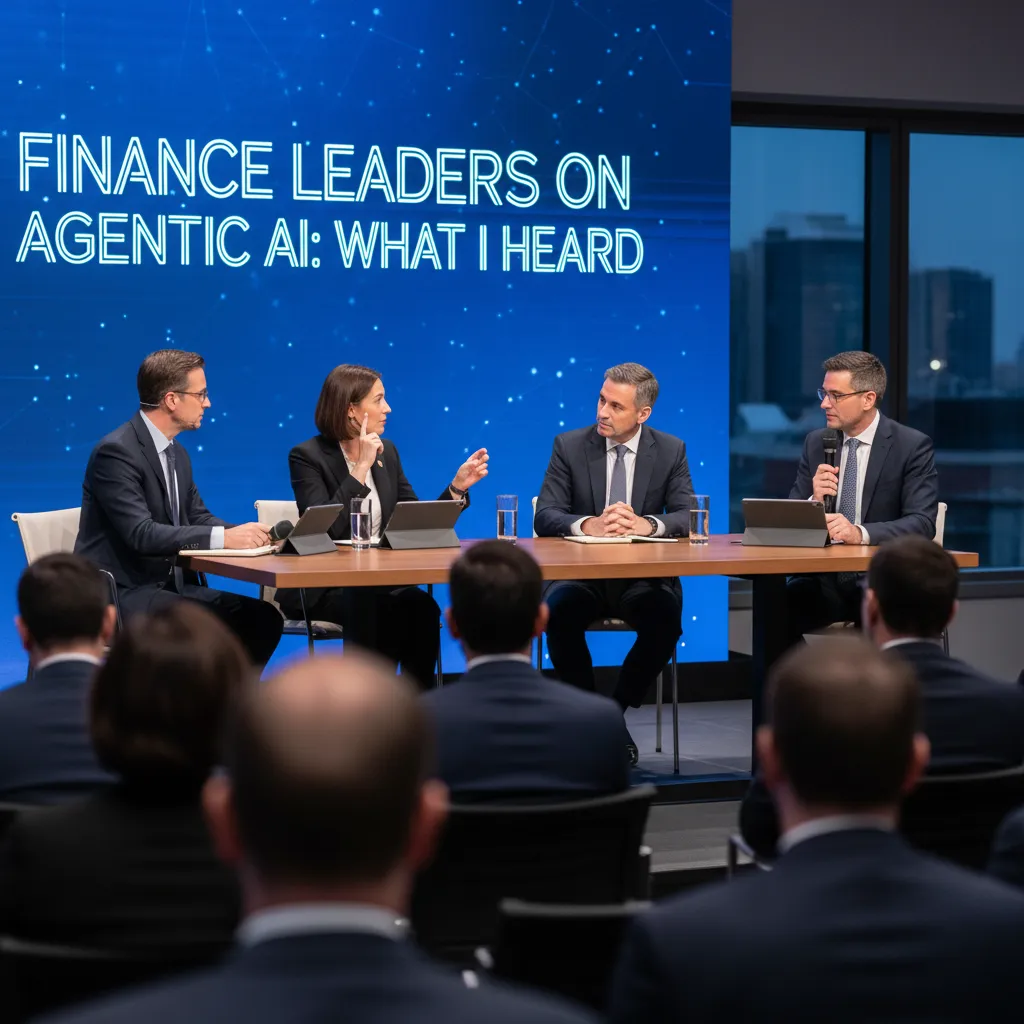
Last month, I sat in the back of a hotel ballroom with bad coffee and a surprisingly good notepad, listening to finance leaders talk about AI like it was both a lifeboat and a loaded confetti cannon. The funny part: nobody sounded like they were chasing “the future.” They sounded like they were chasing Tuesday—close the books faster, catch fraud earlier, and survive the next regulatory exam without living on spreadsheets and adrenaline.
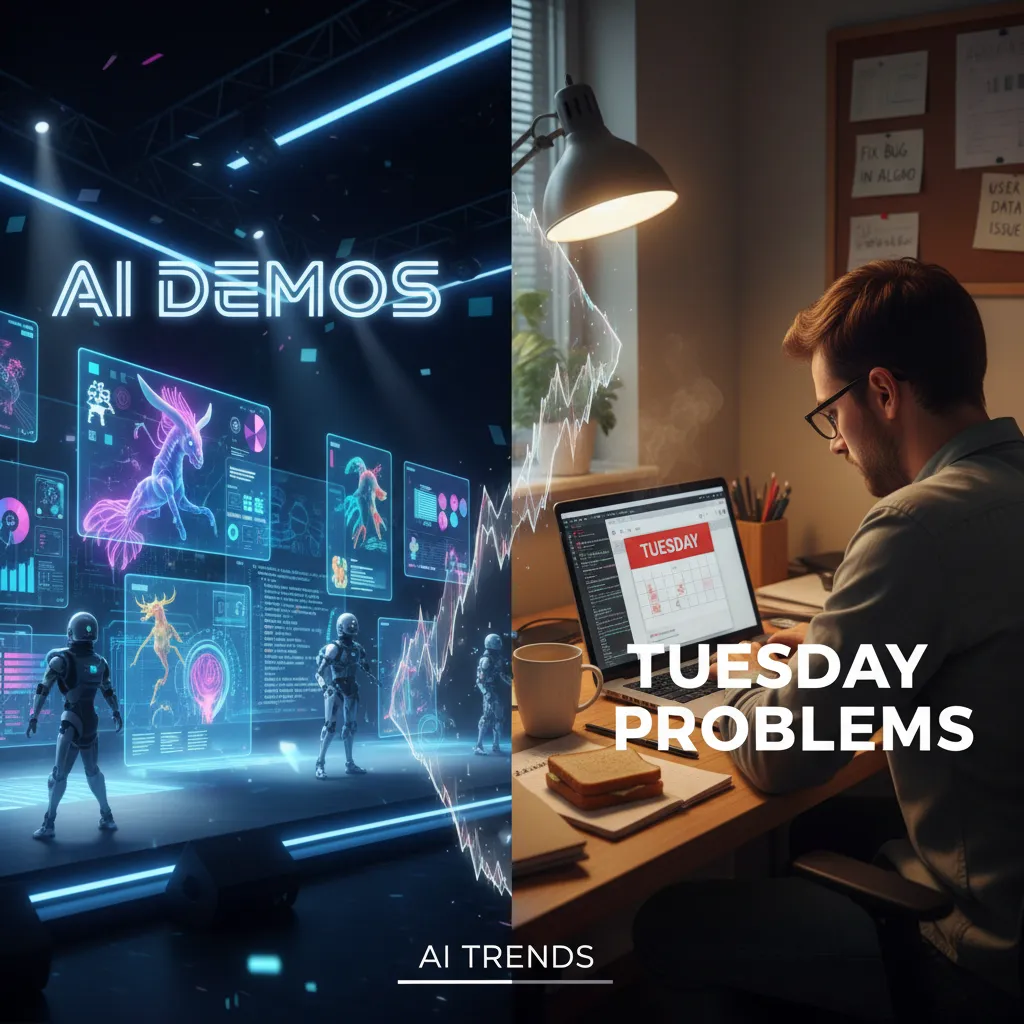
1) The vibe shift: from AI demos to Tuesday problems (AI Trends)
In the interviews, I noticed a clear vibe shift. Finance leaders are less impressed by flashy AI demos and more focused on what breaks on a normal Tuesday. When they say “AI Transformation”, they are not talking about replacing the finance team. They mean removing the swivel-chair work—those steps where people bounce between systems, copy data into spreadsheets, and re-check the same numbers in three places.
What finance leaders mean by “AI Transformation”
From what I heard, “transformation” is really about flow. Data should move from source to report with fewer manual handoffs. AI is valuable when it:
- pulls data from multiple tools without manual exports
- flags mismatches and missing fields early
- creates a clean trail of what changed and why
- lets humans focus on judgment, not data movement
My quick before vs after: from copy-paste to exceptions
I kept thinking about my own workflow. Before, a lot of my time went to gathering inputs: downloading reports, copying numbers, and formatting tables. After adding more AI support, my job shifts toward reviewing what the system thinks is “done.” The work becomes less about building the first draft and more about checking the outliers.
| Before | After |
|---|---|
| Copy-paste numbers across files | Review exceptions and anomalies |
| Chase missing inputs by email | Validate auto-collected inputs |
| Spend hours on formatting | Spend time on commentary and decisions |
Where agentic AI lands first in finance
Leaders were practical about early wins. Agentic AI shows up first where tasks are repeatable and the risk is manageable:
- Customer service triage: sort tickets, draft replies, route issues to the right team
- Financial reporting prep: gather support, reconcile line items, build first-pass narratives
- Lightweight financial planning: update forecasts, run simple scenarios, explain drivers
Wild-card analogy: the intern who never sleeps
Agentic AI felt like a reliable intern who never sleeps—but still needs a manager.
It can do the busywork fast, but finance leaders stressed the same point: humans still set the rules, approve the outputs, and own the results. In other words, the “agent” helps, but accountability stays with the team.
2) Agentic AI in Financial Services: the “do-er,” not the “talk-er”
In the interview, one idea kept coming up: agentic AI is different from the AI most of us have tested so far. It’s not just a “talk-er” that answers questions. It’s a do-er that can move work forward. In plain English, agentic AI is a system that can plan a task, take steps across tools and data, and pause to ask for approval when the rules say it should.
I heard leaders describe it as “AI with a workflow.” Instead of giving you a summary, it can draft the journal entry, pull the backup, route it for review, and log what happened. The key is that it operates inside guardrails, with clear permissions and checkpoints.
Three finance-friendly agent patterns I heard most often
- Close assistant (financial reporting): An agent that gathers reconciliations, flags unusual variances, drafts roll-forwards, and prepares a close checklist. It can also nudge owners when inputs are late and keep an audit trail of what changed.
- Spend sentry (compliance monitoring): An agent that watches spend in near real time, checks it against policy, and routes exceptions. For example, it can detect split purchases, missing approvals, or vendor risk signals, then open a case with the right documentation attached.
- Cash-forecast buddy (financial planning): An agent that pulls AR/AP, bank data, and pipeline signals, then proposes forecast updates. It can run “what-if” scenarios (like delayed collections) and ask the FP&A owner to approve the new assumptions.
A small caution: your approvals become the agent’s habits
One warning felt very practical: if your approvals are messy, your agents will inherit the mess. If nobody knows who approves what, or if exceptions are handled in side chats, the agent will either get stuck or learn the wrong path. Before scaling agentic AI in finance, I’d tighten approval rules, define escalation paths, and standardize evidence requirements.
Where value shows up first
Finance leaders were clear that early wins are not “magic insights.” They’re operational:
- Cycle time: faster month-end close, quicker exception handling, shorter quote-to-cash steps.
- Fewer handoffs: less back-and-forth between finance, procurement, and business owners.
- Better customer experience: faster dispute resolution, clearer billing responses, and fewer delays caused by internal routing.
3) Fraud Detection isn’t glamorous—until it saves you
In the interviews, I noticed finance leaders kept circling back to fraud detection. Not because it’s exciting, but because it’s measurable, urgent, and—this came up more than once—politically easier to fund. When you can show “we stopped $X in losses” or “we reduced false positives by Y%,” the budget conversation gets simpler. Nobody wants to be the leader who said no to fraud prevention and then had to explain a headline.
“Fraud is one of the few AI use cases where the ROI story writes itself.”
Why leaders keep funding it
Fraud detection is also a clean entry point for agentic AI in finance: clear signals, lots of data, and a direct link to risk. Leaders told me it’s easier to align compliance, operations, and IT around fraud than around “innovation” projects that feel optional.
- Measurable outcomes: prevented loss, reduced chargebacks, fewer manual reviews.
- Urgency: fraud patterns change fast; static rules fall behind.
- Internal support: fewer political fights than customer-facing experiments.
Banking trends I keep hearing
In banking, the pattern I heard was a three-part push: targeted marketing, streamlined lending, and advanced fraud analysis. Leaders want growth, but they want it with guardrails. Agentic AI shows up as a “doer,” not just a “predictor”—it can route cases, request documents, and trigger step-up verification when something looks off.
- Targeted marketing: reduce promo abuse and synthetic identity sign-ups.
- Streamlined lending: faster approvals with automated checks and exception handling.
- Advanced fraud analysis: network links, device signals, and behavior patterns.
Insurance corner: claims automation meets fraud detection
In insurance, leaders described claims management automation colliding with fraud detection in a very real way. Yes, adjusters have opinions. Some love fewer repetitive tasks; others worry the system will “over-flag” and slow down honest customers. The best teams, I heard, use AI to triage: fast-track low-risk claims and focus humans on the messy ones.
Hypothetical: an agent flags an unusual trade execution pattern
Here’s how leaders described the “what happens next” flow when an agent detects a suspicious trading pattern:
- Detect: the agent spots abnormal timing, venue choice, or repeated partial fills.
- Explain: it generates a short rationale and supporting evidence links.
- Act safely: it opens a case, raises monitoring, and suggests controls (notifies compliance, limits certain actions).
- Human review: a supervisor confirms, escalates, or clears the alert.
- Learn: outcomes feed back to improve thresholds and reduce noise.

4) Regulatory Compliance: the part everyone skips… until the exam
In the interviews, the finance leaders kept coming back to the same point: agentic AI is not “just automation”. The moment an agent can take actions, compliance becomes part of the product design, not a checklist at the end.
Compliance monitoring with agents: what I’d automate first (and what I wouldn’t touch yet)
If I were starting tomorrow, I’d automate the monitoring before I automate the decision. Agents are great at scanning, tagging, and escalating. They are not yet great at being the final authority on gray areas.
- Automate first: policy checks on invoices and expenses, KYC/AML alert triage, vendor risk refreshes, and evidence collection for audits.
- Hold off (for now): final approvals for payments, regulatory filings, and anything that changes customer status without a human sign-off.
How regulatory compliance changes the design
Several leaders said compliance requirements reshape the whole workflow. You don’t “add controls later” when an agent is involved. You build them in:
- Audit trails: every agent step needs a timestamp, inputs, outputs, and the reason it acted. I like the idea of logging an “agent receipt” for each task.
- Approvals: clear gates where humans must review, especially for exceptions and threshold breaches.
- Model risk management: versioning, testing, and documented limits. If the model changes, the control story changes.
- Segregation of duties: the agent that prepares a payment should not be the same agent that approves it. This came up repeatedly.
“If legal and risk aren’t in the room, your timeline is fiction.”
That line stuck with me. The leaders weren’t being dramatic—they were describing reality. Legal, compliance, and risk teams define what “safe to ship” means, and they also define what evidence you must keep when regulators ask.
My quick governance “starter pack”
- Policies: what the agent can do, cannot do, and when it must escalate.
- Thresholds: dollar limits, exception rules, and confidence cutoffs (example:
if confidence < 0.85 then route_to_human). - Human-in-the-loop: mandatory review for high-risk actions and all edge cases.
- Incident playbooks: what to do if the agent misroutes a payment, leaks data, or creates a bad audit trail.
5) Money talk: ROI Gains, budget fights, and Frontier Firms
When finance leaders in the interview started saying “ROI,” it didn’t sound like a cold headcount math problem. It sounded like throughput, fewer errors, and faster cycles. In other words: close the books sooner, fix fewer mistakes, answer more questions from the business without adding chaos. The most practical ROI stories were about removing friction—especially in repeatable work like reconciliations, variance explanations, and policy checks.
What “ROI” sounded like in the room
I heard a consistent theme: agentic AI value shows up when it reduces rework and speeds up decisions. Not “we replaced people,” but “we stopped wasting people.” That shift matters because it changes how finance leaders defend budgets.
- Throughput gains: more analyses completed per week, more scenarios tested, more tickets resolved.
- Error reduction: fewer manual copy/paste issues, fewer broken spreadsheets, fewer compliance misses.
- Cycle time: faster month-end, faster approvals, faster responses to leadership requests.
Frontier Firms vs slow adopters: the 3x gap
The “Frontier Firms” idea came up as a useful label: companies that treat AI like a core operating change, not a side experiment. The interview framed a big ROI gap—often described as up to 3x—and what stuck with me is that the gap may be culture, not code. Frontier Firms tend to standardize processes, clean up data ownership, and let teams redesign workflows. Slow adopters buy tools but keep the same messy handoffs, then wonder why results are small.
“The winners weren’t the ones with the fanciest model. They were the ones who changed how work moves.”
The PE angle: checklist item and deal narrative
Private equity came through clearly in the discussion: AI investments are becoming a portfolio-company checklist item. Sometimes it’s operational (prove faster reporting and better controls). Sometimes it becomes part of the deal story (“we can expand margins by modernizing finance operations”). Either way, finance leaders are being asked to show measurable progress, not just pilots.
A tiny confession about ROI spreadsheets
I used to hate ROI spreadsheets because they felt like theater. But I changed my mind when I learned to tie them to business outcomes. A simple template helped:
ROI = (hours saved × loaded cost) + (errors avoided × cost per error) + (cycle time reduced × decision value) - tool + change costs
Once ROI was linked to real outcomes—speed, accuracy, and control—the budget fights got easier to navigate.

6) My messy playbook for 2026: picking use cases that won’t embarrass you (AI Predictions)
After hearing finance leaders talk through what worked (and what quietly failed), I’m keeping my 2026 plan simple: start where the value is clear, the risk is contained, and the team can actually own the outcome. Agentic AI is exciting, but in finance, excitement is not a control.
My practical shortlist to start (then expand)
If I had to place a few safe bets first, I’d begin with customer service (billing questions, payment status, dispute routing), fraud detection (triage and pattern spotting with human review), financial planning (scenario drafts, variance explanations, narrative support), and close support (reconciliations, flux analysis, checklist follow-ups). These came up again and again in the conversations because they are high-volume, time-sensitive, and already full of repeatable steps. Once those are stable, I’d expand into vendor management, collections prioritization, and internal policy Q&A—still with clear guardrails.
The decision rule I use
My filter is blunt: I pick workflows with clear owners, repeatable inputs, and manageable regulatory compliance. Clear owners means one accountable leader who can say, “This is my process, my metrics, my risk.” Repeatable inputs means the agent isn’t guessing from messy emails alone; it has structured data, defined documents, and a known system of record. Manageable compliance means we can explain the decision path, log actions, and keep sensitive data where it belongs. If any of those three are missing, I treat the use case as a research project, not a rollout.
A two-speed model so you don’t freeze the org
One theme I heard: teams either move too fast and scare everyone, or they move so slow that nothing ships. My answer is a two-speed model. Speed one is an innovation sandbox: limited data, fake money, tight scope, fast learning. Speed two is production: change control, audit trails, access reviews, model monitoring, and clear escalation paths. This way, we can test agentic workflows without turning every experiment into a compliance event.
To close this series, here’s what I’ll ask the next finance leader I interview: Which agentic AI use case did you kill on purpose—and what signal told you it would embarrass you in production?
TL;DR: Agentic AI is quickly becoming the pragmatic choice in financial services: it boosts operational efficiency, tightens fraud detection and compliance monitoring, and can deliver outsized ROI gains—if leaders treat it as a business program (not a science project) and design for risk management from day one.