Last spring I stood in a big-box aisle watching a price tag change twice in the same week—once because of a promo, once because the shipment cost changed. It wasn’t dramatic, but it was telling: sales in 2025–2026 feels less like a straight line and more like a weather system. In this post, I’m mapping the pressure fronts I keep seeing—AI spending that’s getting almost reckless, consumers tightening up in uneven ways, and a quiet power shift from heritage brands to private label and scrappy upstarts. I’ll keep it practical, a little opinionated, and yes, I’m going to defend malls for a minute.
Retail trends watch: why 2026 feels “K-shaped”
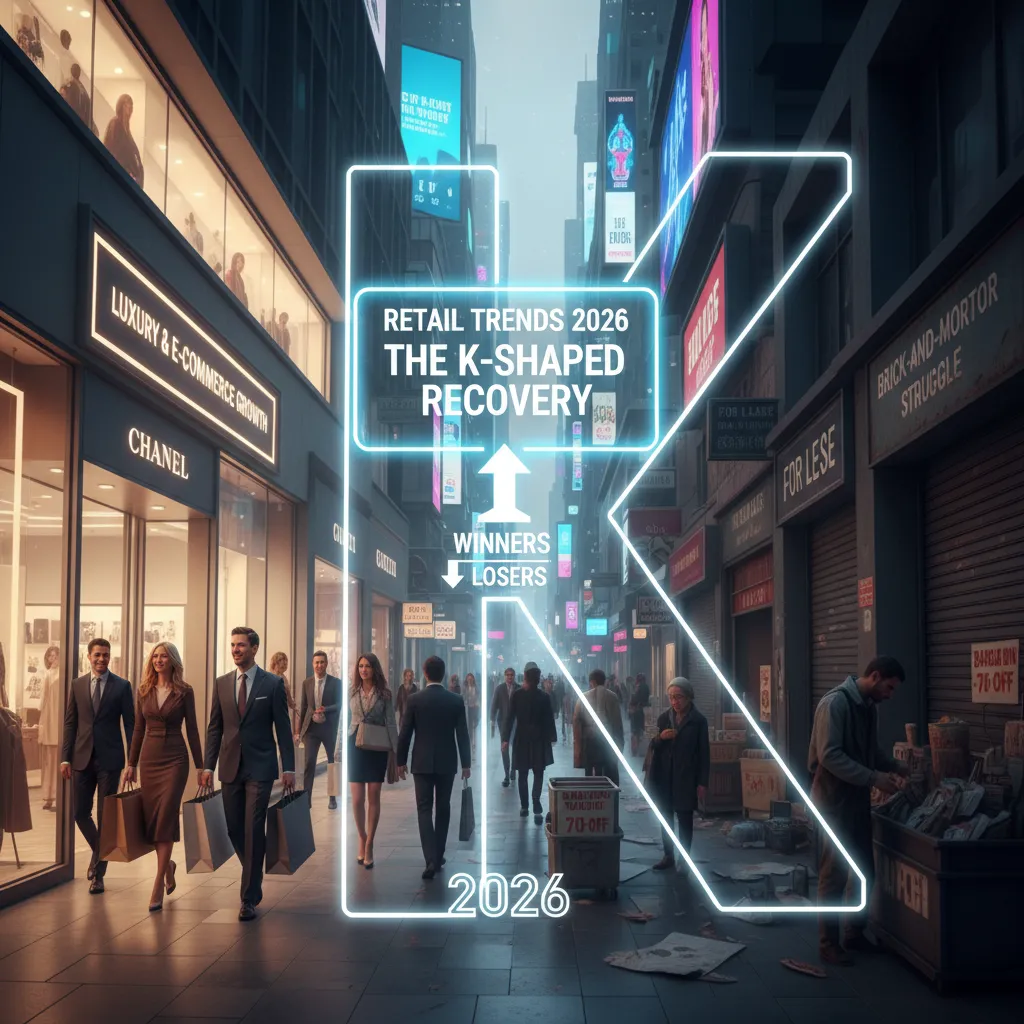
When I look at the latest signals from Sales Trends 2025-2026, 2026 doesn’t feel like one clean story. It feels K-shaped: some shoppers keep trading up, while others trade down—often in the same trip.
My quick mental model: two shoppers, one cart
I picture two shoppers sharing one cart. One adds a premium “little treat” (better coffee, a top skincare item, a higher-end pet food). The other swaps to a cheaper pack size, a store brand, or a promo bundle. This is why premium splurges and bargain swaps can happen in the same aisle, within the same basket.
What the K-shaped economy means for assortment
My rule: keep hero products, but build credible trade-down paths. Heroes protect brand trust and margin. Trade-down paths protect volume and loyalty when budgets tighten.
- Hold the hero: don’t over-discount your best-known items.
- Offer a step-down: smaller sizes, entry tiers, or strong private label.
- Make swaps easy: clear shelf labels like “best value” and “same quality, lower price.”
Slowdown isn’t a vibe—plan for it
Consumer spending slowdown shows up in conversion, units per transaction, and promo sensitivity. I plan for it in:
- Forecasting: wider demand ranges, faster re-forecast cycles.
- Staffing: flex hours around promo peaks, not “average weeks.”
- Promo cadence: fewer random discounts, more predictable value moments.
A small tangent: I stopped trusting “average customer” metrics
I segment by stress level instead:
- Price-stressed: needs savings, trades down, responds to bundles and private label.
- Time-stressed: will pay for speed, convenience, and “done-for-me” solutions.
AI retail transformation: from ‘cool demo’ to budget line
In the 2025–2026 sales trend data, I see a clear shift: AI is no longer a “nice-to-have” pilot. It’s becoming a default budget line. My simple litmus test is this: can it save time and make money? If the answer is only “it’s interesting,” it won’t survive the next planning cycle.
Where retail AI actually sticks
The AI use cases that keep showing up in real plans (not just slide decks) are the ones tied to daily retail pressure: inventory, speed, and conversion.
- Demand forecasting analytics: better predictions for what sells, when, and where—so I can reduce stockouts and avoid over-ordering.
- Supply chain optimization: smarter replenishment, routing, and vendor timing to cut delays and shrink waste.
- Customer personalization tools: product recommendations, tailored offers, and next-best-action prompts that lift basket size without adding headcount.
Chatbots are about to feel “normal”
Retail chatbots are moving from “experimental” to expected. Whether we like it or not, customers are getting used to instant answers on shipping, returns, sizing, and order status. For me, the value is simple: fewer repetitive tickets for staff, faster response times for shoppers, and more consistent service across channels.
“If AI can’t reduce workload or increase revenue, it’s still a cool demo.”
The wild card: the never-sleeps AI salesperson
The most disruptive scenario is an AI agent that acts like my best salesperson—always on, always learning, and able to handle thousands of conversations at once. The upside is 24/7 selling and support. The risk is brand voice drift, wrong advice, and over-automation. My rule: keep humans in the loop for edge cases and high-value customers, and measure performance like any other sales channel.
Emerging brands competition vs retail giants concentration
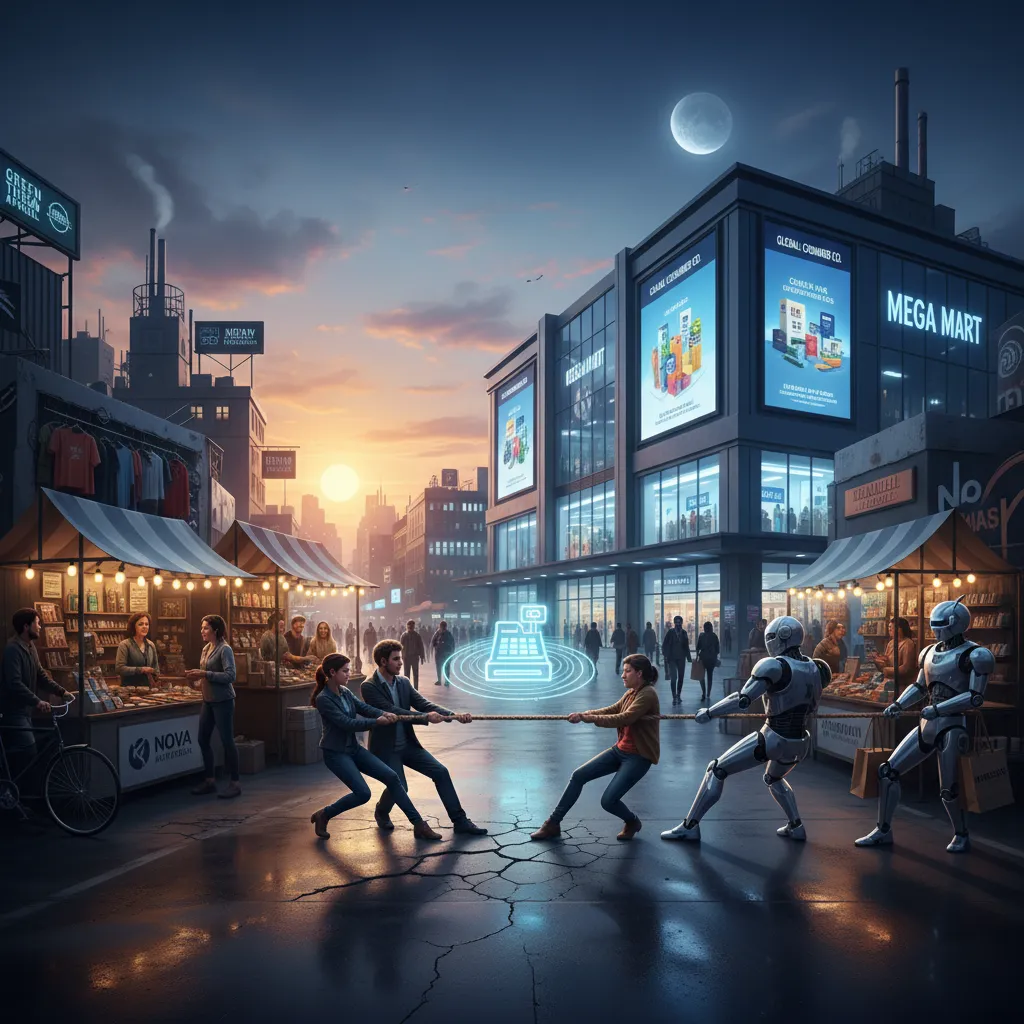
In the 2025–2026 sales data I’m tracking, retail is concentrating: big chains and big marketplaces keep taking share. But here’s the twist I can’t ignore—growth is leaking out to weird little brands (in a good way). These are the small, specific products that feel made for a niche group, then suddenly show up everywhere because shoppers talk about them, gift them, and post them.
Why pressure on established brands is rising
When a few giants control more shelf space and more traffic, the “middle” gets squeezed. I see that pressure show up as:
- Higher ad costs: bidding wars for the same audiences, especially on social and retail media networks.
- Faster product cycles: more limited drops, more refreshes, less time to “wait and see.”
- Less forgiveness for boring launches: if it’s not new, useful, or clearly better, it disappears fast.
Manufacturers flirt with DTC—then boomerang back
I’m seeing more makers test direct-to-consumer to learn faster: pricing, messaging, repeat rate, and what people complain about. Then many of them boomerang back to retailers for scale, because retailers still win on reach, convenience, and trust. The pattern looks like:
- Launch DTC to prove demand and tighten the offer
- Use that proof to win retail meetings
- Shift spend from pure acquisition to in-store and retail media
My biased take: sell the supply chain, not the logo
The best “emerging brand” pitch I hear is a supply chain story: how you source, how you make it, how you keep it in stock, and how you protect quality as volume grows.
“A brand is a promise. In 2026, the promise has to survive the supply chain.”

Private label growth and the ‘trust reset’ in shopping
Private label used to mean cheap. In 2026, I see it more as “good enough, reliably”—and that is a huge shift in how shoppers decide. The “trust reset” is simple: people want fewer surprises. If a store-brand pasta sauce tastes the same every time, that consistency becomes the brand. This lines up with what I’m seeing across sales trends for 2025–2026: shoppers are more careful, more value-led, and less patient with hype.
How I’d defend margin without annoying customers
When private label grows, the risk is turning every aisle into a price fight. Instead, I’d protect margin with a tiered value architecture and clearer quality cues, so customers can trade up without feeling tricked.
- Value tier: simple basics, sharp price, limited choices
- Core tier: best “reliable” option, consistent quality, strongest availability
- Premium tier: better ingredients, better design, clear reason to pay more
Then I’d add quality cues that reduce doubt: easy labels, short ingredient lists, and “compare to national brand” notes where it’s fair. Even small cues like resealable packs or better portion sizes can signal care.
Where personalization tools help private label
Customer personalization should make private label feel helpful, not pushy. I’d use it for:
- Smarter bundles: “weeknight dinner kit” with store-brand staples
- Repeat-purchase nudges: reminders based on real usage cycles
- Fewer random promos: targeted offers instead of constant blanket discounts
Quick aside: I’ve caught myself buying store-brand snacks just because the packaging looked calmer. Marketing works on me too.
Tariff pricing impact, electronic shelf labels, and ‘price motion’
In the Sales Trends 2025-2026 research, one theme keeps showing up in my notes: tariffs are making pricing feel jumpier. Even when the final shelf price is not shocking, shoppers still react to price motion—the sense that prices keep moving. That perception can hurt trust faster than a single increase.
Tariffs are not “fully baked in” yet
The stat that made me pause: only part of tariff costs have hit shelves so far. In plain terms, more price changes may be coming as inventory turns and new costs flow through. That means I can’t treat today’s price points as stable; I have to plan for ongoing adjustments across key categories.
Electronic shelf labels make pricing a real-time lever
Connected surfaces technology—especially electronic shelf labels (ESLs)—turns pricing into something I can change quickly and consistently across stores. Done well, this helps me respond to cost shifts, competitor moves, and local demand without messy manual relabeling.
- Useful: faster updates, fewer errors, better price compliance.
- Risky: too many changes can train customers to wait, doubt, or switch.
Managing “price motion” without abusing the lever
If I use ESLs like a day-trading tool, shoppers will feel it. Instead, I aim for clear rules and simple communication:
- Set guardrails (e.g., max changes per SKU per week).
- Use explainer signage when tariffs drive adjustments.
- Protect KVIs (known value items) to anchor trust.
A living promo calendar (hypothetical)
What if my promo calendar becomes a living document updated daily by demand signals? With ESLs, I could shift offers based on sell-through, weather, or regional events—while keeping the customer experience steady by limiting visible churn.
Omnichannel commerce integration and the mall foot traffic plot twist
Ecommerce sales growth is still real, and I see it in every dashboard I touch. But in my notes from Sales Trends 2025-2026: What’s Changingundefined, the bigger shift is that the physical store is sneaking back into the conversation—not as “the place to buy,” but as a service hub. Pickup, fast exchanges, repairs, sizing help, and same-day problem solving are becoming the store’s quiet superpower.
The foot traffic rebound that changed my tracking
The mall foot traffic rebound surprised me. I expected flat visits and more online-only behavior, yet I’m seeing more people show up in person. The plot twist is how I measure it: I’m watching visit duration as much as visit counts. A shorter, purposeful trip for pickup can be a win. A longer trip that includes browsing, support, and add-on purchases can be an even bigger win.
What “good” omnichannel looks like in my notebook
When omnichannel is working, customers stop thinking about channels at all. They just get what they need, fast, with no surprises. My checklist is simple:
- Consistent inventory truth: the website, app, and store associate all see the same stock reality.
- Painless returns: buy online, return in store (or the reverse) without extra steps or judgment.
- Offers that don’t contradict: the promo in email matches the cart, the POS, and the receipt.
Agentic shopping agents: the ultimate omnichannel test
Agentic shopping agents might become the ultimate omnichannel test. A bot won’t “understand” exceptions—it will flag them. If your catalog data, stock status, and policies don’t line up, the agent will route demand elsewhere.
“If a shopping agent can’t reconcile your price, inventory, and return rules, it won’t recommend you.”
Retail media networks: the in-house pivot (and my gripe)
One of the biggest shifts I’m seeing in the 2025–2026 sales cycle is how much marketing is moving in-house. Retailers and brands want control over placements, speed to test and change creative fast, and attribution that doesn’t feel like a magic trick. When the store owns the data, the inventory, and the checkout, it can connect ad spend to sales with fewer gaps—and fewer “trust me” dashboards.
Retail media networks are now ad platforms
Retail media networks turn retailers into media companies. Sponsored listings, onsite display, offsite retargeting, and even in-store screens can all be sold like ad inventory. Done well, it’s useful: shoppers discover relevant products, brands get measurable reach, and retailers fund better experiences.
My gripe: billboard soup in search
Here’s my issue: I’ve watched marketplace search results get cluttered with paid placements that push the best match down the page. When that happens, the customer experience becomes billboard soup. The best retailers keep relevance sacred—ads support discovery, not replace it.
“If shoppers can’t trust search, they won’t trust the store.”
Practical move: treat retail media like a product
If you’re building or buying into a retail media network, I’d manage it like a product team would:
- Clear standards: define where ads can appear, how many, and what “relevant” means.
- Measurement you can explain: consistent definitions for ROAS, incrementality, and new-to-brand.
- No dark patterns rule: no misleading labels, no forced clicks, no hiding organic results.
- Speed with guardrails: fast testing, but with customer trust as the main KPI.
Conclusion: my 2026 sales trends forecast checklist
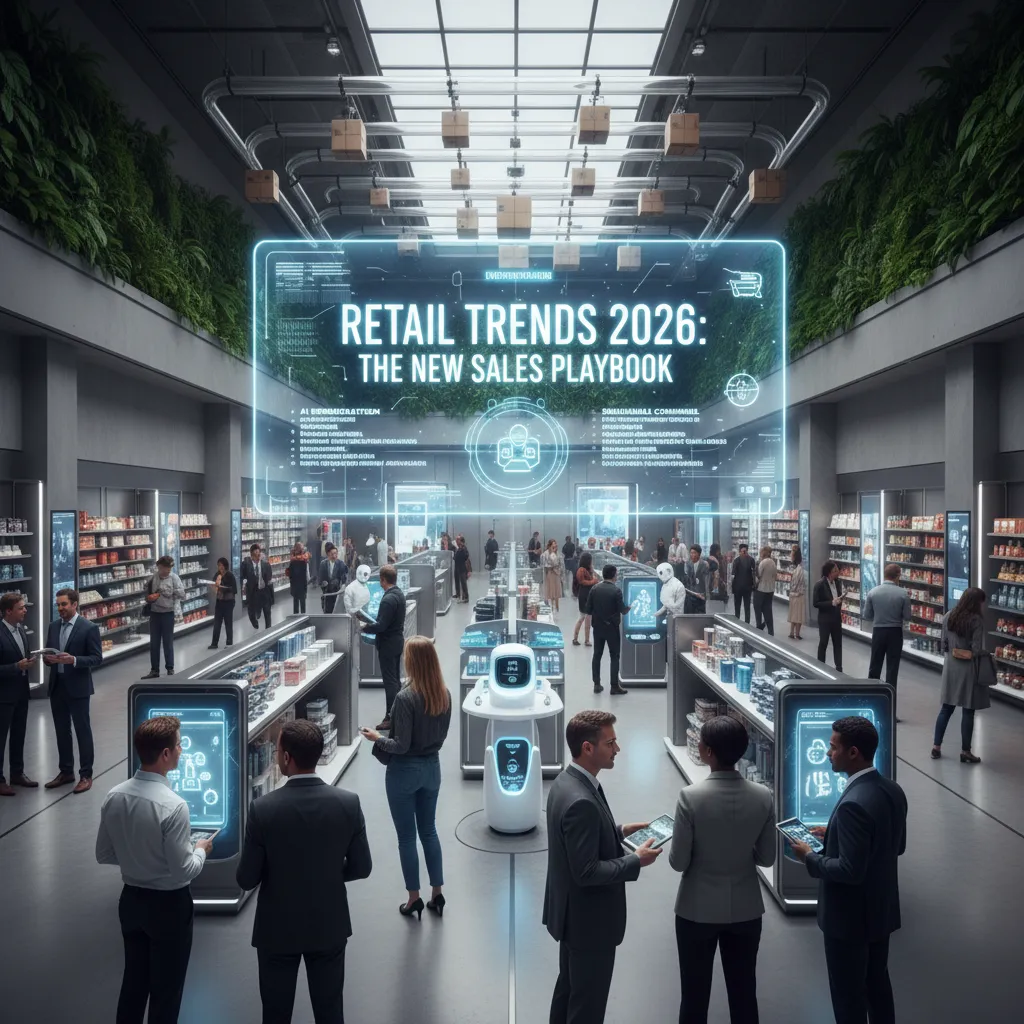
If I had to bet on one winning trio for Retail Trends 2026: The New Sales Playbook, it’s this: AI retail transformation, a clear value strategy, and real experience discipline. From the shifts I’m tracking across 2025–2026, the retailers pulling ahead aren’t chasing every new tool. They’re using AI to predict demand, pricing, and inventory needs faster, while staying sharp on what “value” means for their customer right now—price, quality, convenience, or all three.
To make this practical, I recommend a simple weekly ritual. I keep it tight: one dashboard for demand forecasting analytics, one dashboard for customer friction, and one dashboard for margin leakage. The first tells me where demand is moving before it shows up in the store. The second shows where shoppers get stuck—search, checkout, delivery promises, returns, or out-of-stocks. The third forces honesty about what’s quietly eating profit: discount creep, shipping costs, shrink, supplier changes, and promo mechanics that look good on paper but fail in the aisle.
The “unsexy” takeaway from every sales trends report I read is the same: supply chain optimization is still the quiet hero behind every great promo and every calm aisle. Better forecasting is useless if replenishment can’t keep up. A strong value message falls apart when availability is shaky. And even the best customer experience breaks when delivery dates slip or substitutions feel random.
Retail in 2026 is less a map and more a compass—direction matters more than certainty.
My checklist is simple: invest in AI where it improves decisions, protect value without racing to the bottom, and run experience like a discipline. Then let operations do the hard, steady work that makes it all real.
TL;DR: Sales in 2025–2026 is defined by surging AI investment (and real ROI expectations), a K-shaped consumer economy, tariff-linked price pressure, private label momentum, and a rebound in physical experience—especially when omnichannel execution is tight.