
AI Transformation in Financial Services: A 2026 Playbook

Implementing AI in finance works best when you (1) choose a painful, measurable workflow, (2) fix data and controls early, (3) pilot with humans-in-the-loop, (4) scale via intelligent automation and AI agents, and (5) prove value with governance, security, and compliance monitoring—especially for fraud detection and regulated decisions.
AI Integration in HR: A Practical 2026 Playbook

Start with one high-friction HR process, clean the data, pilot with HR-IT collaboration, set AI governance guardrails, train managers, measure impact (time, cost, experience), then scale into skills-based processes and agentic AI—without treating employees like dataset rows.
AI Sales Tools: A Step-by-Step Rollout Plan

Treat AI sales tools like a phased rollout: Phase 1 prep (Weeks 1–2) to pick one urgent pain and clean data, Phase 2 (Weeks 3–6) to configure + run structured pilots (5–10 users, 30–60 days), and Phase 3 (Weeks 7–12+) to roll out, train, and optimize with forecasting, deal intelligence analysis, and post-purchase AI transformation like client health scoring. Measure adoption + revenue impact, not just “emails sent.”
AI in Operations: A Messy, Practical Playbook

Implementing AI in operations works when I start with a painful, measurable workflow (like staff scheduling or demand forecasting), build trustworthy data pipelines, pilot fast, measure productivity gains, then scale with execution discipline, governance, and human-friendly change management.
AI Leadership Trends 2026: Notes From a Candid Chat
AI adoption is high, AI maturity is low, and leadership (not models) is the bottleneck. Build AI-ready structures, overhaul performance management to reduce bias, invest in AI fluency development, and treat agentic AI as a capability to govern—not a magic trick.
AI Leaders 2026: Newsroom Meets the C‑Suite

AI remains a top priority in 2026, with 90% of C-suite executives planning to increase AI investments. The conversation is shifting from hype to AI ROI measurement focus, while enterprise AI adoption accelerates. Agentic AI and connected intelligence workplace tools are emerging, but AI talent shortages, data management, governance, infrastructure scaling, and AI cybersecurity threats will decide who wins.
AI Automation Leaders: Notes From the Room

Automation leaders aren’t chasing magic models—they’re stitching together RPA, process mining, copilots, and enterprise platforms. Winners pair strong compute (NVIDIA H100/Blackwell) with real workflows (ServiceNow, UiPath, Appian). Manufacturing interest is massive (98% exploring AI) but readiness is lagging (20%). By 2028, expect AI agents in 58% of business functions daily—if governance and value proof keep pace.
AI Product Leadership: What PMs Learn in 2026
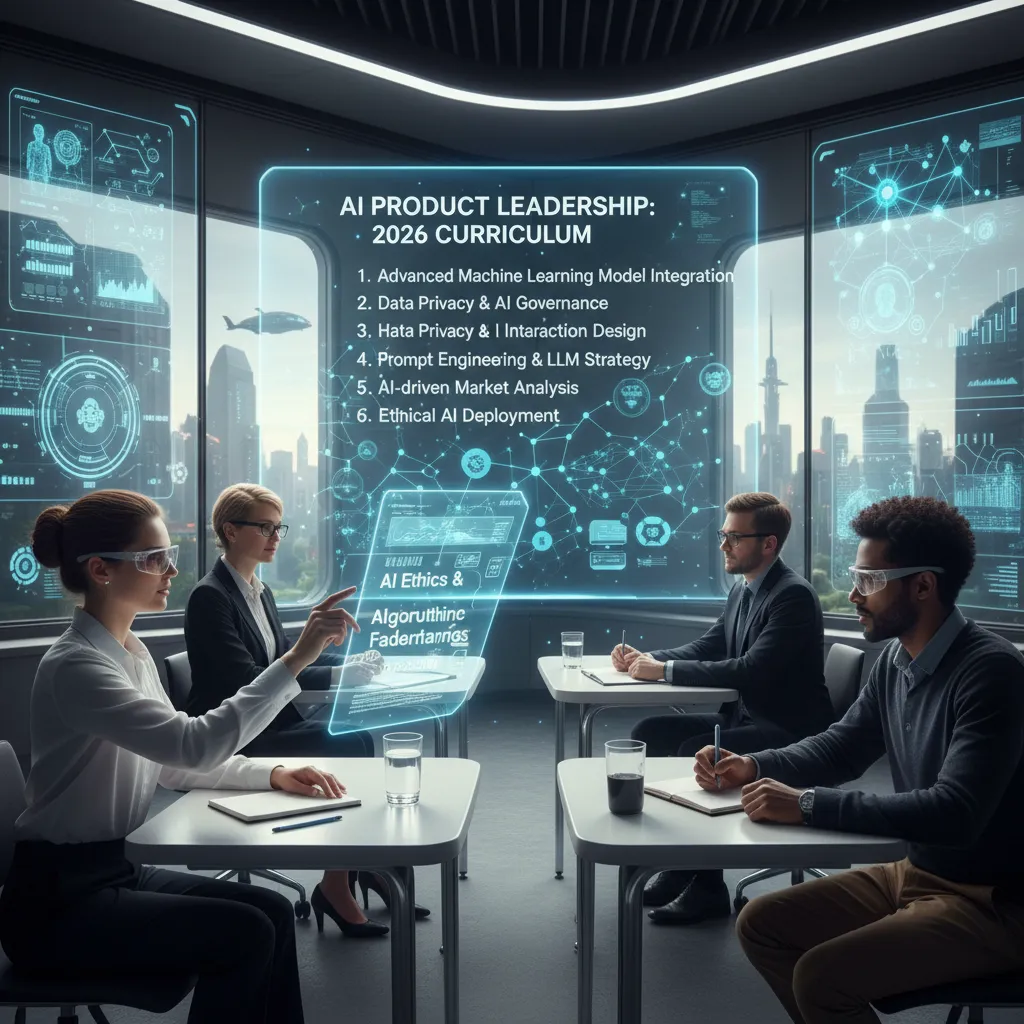
In 2026, the edge isn’t “which model?”—it’s AI-first product organizations: faster AI-first product cycles, accelerator squads, multi-agent orchestration, and a trust-first AI baseline that enterprise buyers now expect.
Marketing Leaders on AI: Tools, Plans, and Truths
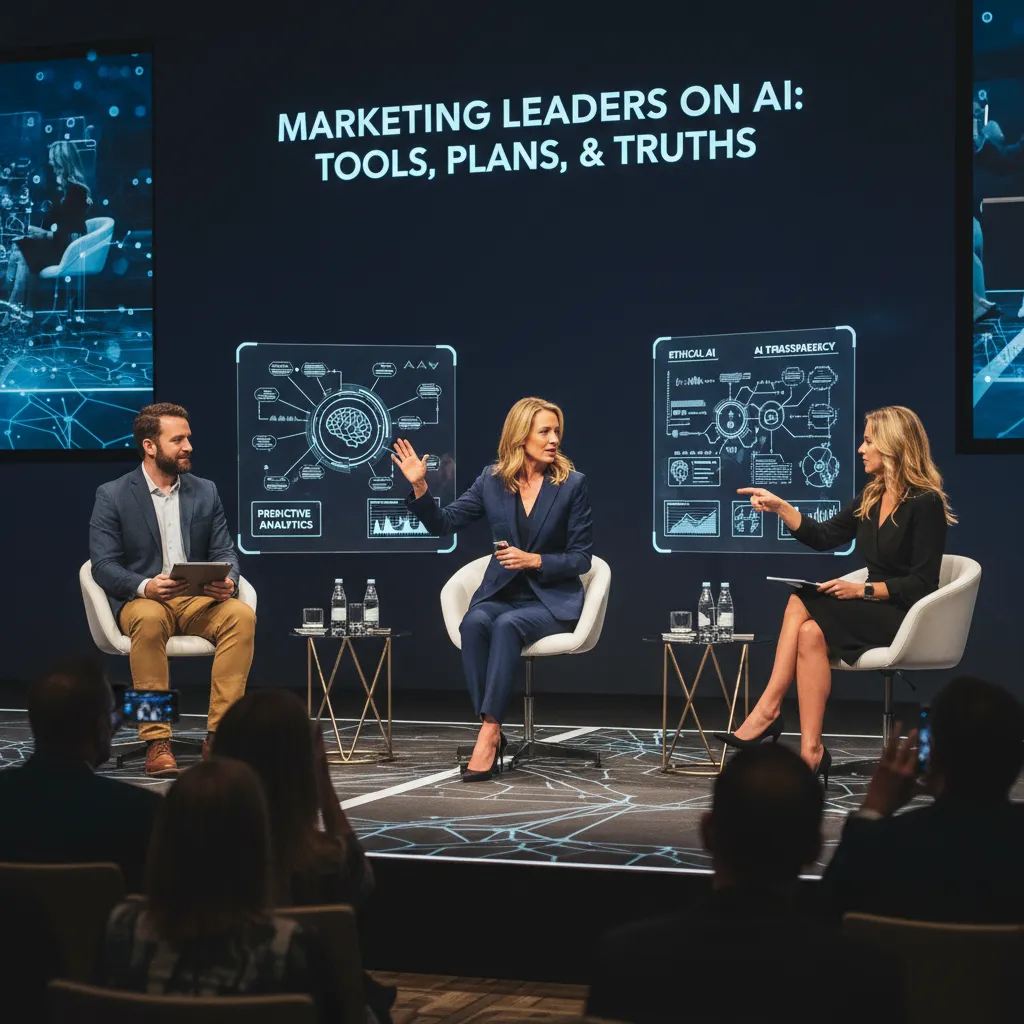
Marketing leaders aren’t anti-AI—they’re anti-mystery. Start with a clear job-to-be-done, pressure-test AI marketing tools via free trial or free plans, compare pricing plans honestly (per user, per contact, or per ad spend), and protect brand voice with guardrails like custom GPTs and review workflows.
AI Trends 2026: Notes From Data Science Leaders

AI trends 2026 feel less like “bigger models everywhere” and more like “smarter systems with better inputs.” Expect generative AI to focus on data quality, agentic AI and multi-agent AI to handle workflows, edge AI to mature via smaller models, and AI infrastructure (even quantum computing experiments) to become a competitive lever—especially in AI healthcare and AI research.