
Operations AI Strategy Guide for Real-World Wins

If you remember nothing else: start with high-ROI, rules-and-rework-heavy workflows; put an enabling AI governance framework in place; get your data platform readiness honest; run business-led AI deployment with clear owners; and prove value with ROI tracking measurement (an “AI P&L”) every quarter.
AI Leadership Ops: Real Results, Less Chaos
AI can reclaim 10–25% of weekly leadership effort, but most teams stall when use stays informal. Pair basic AI assistance with AI leadership training, governance/security frameworks, and a clear path from low-risk value adoption to agentic AI operations and multi-agent orchestration. Protect human judgment, measure outcomes, and treat stress/burnout as a metric—not a rumor.
How AI Will Reshape Newsrooms by 2026

AI reshape news 2026 by shifting audiences to chatbots, pushing verification to the top of the to-do list, and moving newsrooms from simple automation to agentic AI autonomous systems—if we invest in infrastructure, routing, and skills without pretending the risks don’t exist.
Ops Automation Reimagined: AI Results in 2026
In 2026, enterprise AI automation is shifting from solo bots to multi-agent systems automation managed through agent control planes. Governance as code agents and regulatory compliance data sovereignty requirements are now non-negotiable. Measure Agentic automation ROI with trust + risk metrics, modernize data quality AI enabler foundations, and move physical AI production systems from pilot to production—without losing sleep.
AI-Powered Product Ops: Real Results, No Hype
AI in product operations is shifting from personal productivity hacks to team-level workflow orchestration. Expect agentic runtimes, stronger AI risk governance, hybrid infrastructure, and a rise in physical AI—plus a new “agentic operating system” layer to keep it all sane.
AI Marketing Ops, Real Results (No Hype)
AI is moving from “experiments” to core marketing operations: decision intelligence + AI agents + autonomous execution can speed work, cut ops costs (up to 30% for aggressive adopters), and enable always-on experimentation—if you protect authenticity, data ownership, and measurement.
AI-Boosted Data Science Ops: Real-World Wins

AI is pushing data science ops from training-centric to inference-first. The biggest wins come from hybrid architectures (SLMs + RAG), decoupled observability, AI-SRE capability, and hardened governance + data quality programs—before agentic workflows make complexity explode.
AI Finance Ops, Real Results (No Fairy Dust)

AI is transforming finance operations through workflow automation, compliance automation (AML/KYC), fraud detection, and AI-driven forecasting. Reported gains include 70–96% compliance cost reduction, 75% less manual effort, 5× faster loan approvals, 90% faster reconciliations, and 3-day faster month-end close—when the rollout is scoped, governed, and measured.
AI In Action: HR Digital Transformation Wins
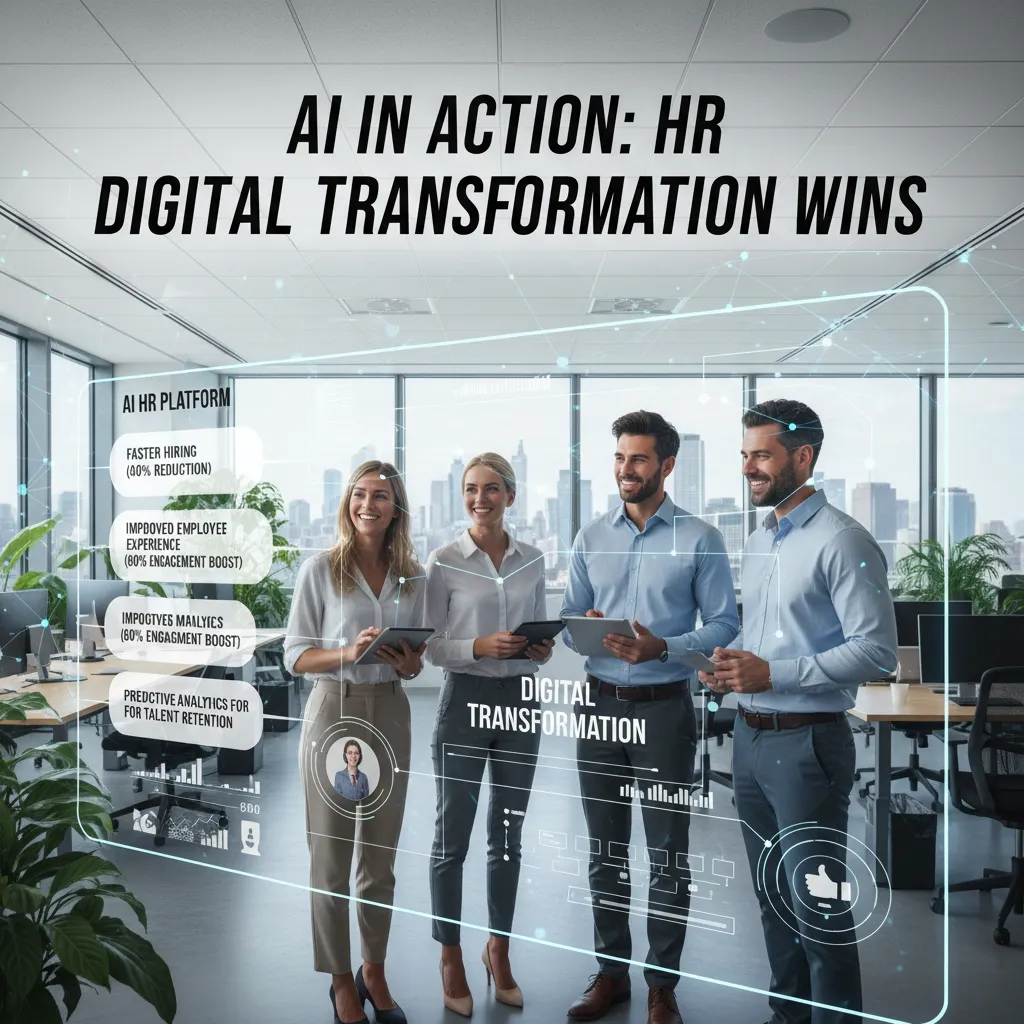
AI innovations in HR operations deliver real results when they’re aimed at boring-but-painful work: ticket deflection, self-service support, and onboarding automation. The winners pair enterprise-grade AI with governance, data privacy, and a deliberate “human touch” for exceptions. 2026 trends point to boards demanding people intelligence—talent risks, skill gaps, and productivity forecasting—so HR teams should invest now in analytics, reskilling, and change management.
Sales Trends 2026: AI Sales Tools, Real Results

AI sales tools are starting to act like extra teammates: they automate follow-ups, sharpen smart lead scoring, and improve forecast revenue accuracy when fed clean CRM data. Real-world benchmarks show up to 30% productivity lift, 13–15% revenue gains, 10–20% better sales technologies ROI, and up to 68% shorter sales cycles. The 2026 wave is less “one magic model” and more multi-agent systems embedded in everyday apps—so the winners will be teams that redesign their workflows, not just buy software.