AI Transformation in Operations: Real Results

AI Transformation in operations works when I tie it to business goals, prepare data, choose cloud-native tooling, and manage change—then measure results (trust, cost, cycle time, revenue impact).
AI Leadership Tools: A Practical Comparison

If you want fast skill growth, prioritize AI leadership tools with role-playing simulations, personalized coaching, and real-time feedback—then validate with performance tracking and HR analytics. Watch GDPR compliance, integrations, and pricing (free to $2,398/user/month).
AI News Writing Tools 2026: My Real-World Picks

If you’re choosing AI news tools in 2026, I’d start with Perplexity AI for cited research, ChatGPT or Google Gemini for drafting and multimodal help, and a dedicated AI writing tool like Jasper AI or Rytr AI for volume + brand voice—then finish with Wordtune/ProWritingAid and a human fact-checking pass. Free trials are your friend; blind trust is not.
AI Automation Tools Compared: What Actually Works

If you want quick wins, start with Zapier’s 5,000+ app integrations and a free tier. If you need complex workflows with visual scenario building, Make starts at $9/month. If you live in Microsoft, Power Automate is the path of least resistance (often included with Office 365 or $15/month). For enterprise data transformation and predictive modeling, Alteryx is pricey ($5,195/year/user) but deep. Developers who hate lock-in should look hard at n8n (self-hosted) or Pipedream (2,800+ APIs, $45/month).
AI Product Tools Compared: My 2026 Stack Picks

If you’re picking AI product management tools in 2026, don’t chase the “best” single app—build a small, connected stack. Use AI roadmap planning + feedback synthesis to cut PRD time under 1 hour, add prompt management + LLM observability as soon as you ship AI features, and choose pricing that matches your team size ($200/month solo stacks vs $80–$150/user/month enterprise).
AI Marketing Tools Compared: My 2026 Must-Haves

If you want a sane 2026 stack: use Semrush or Surfer SEO for content optimization and SEO; HubSpot or Salesforce for lead scoring and CRM integration; Mailchimp for email marketing + send time optimization; Drift for conversational marketing; Zapier + Gumloop to glue workflows together; and Jasper AI when brand voice consistency is non-negotiable. Pick based on your team size, data maturity, and how much “automation” you can actually maintain.
Data Science Tools Compared: AI-Powered Picks

If you need speed and guardrails, start with AI-powered platforms (DataRobot, Dataiku, SAS, Watson). If you need flexibility at scale, pair open source (Apache Spark, PyTorch) with MLOps. For day-to-day momentum, add AI assistants (ChatGPT/GPT‑4, Gemini, Copilot, DataLab) and RAG builders (LangChain/LlamaIndex). The “best” stack is the one your team can ship and maintain.
Premier AI Finance Tools: 9 Picks That Actually Help
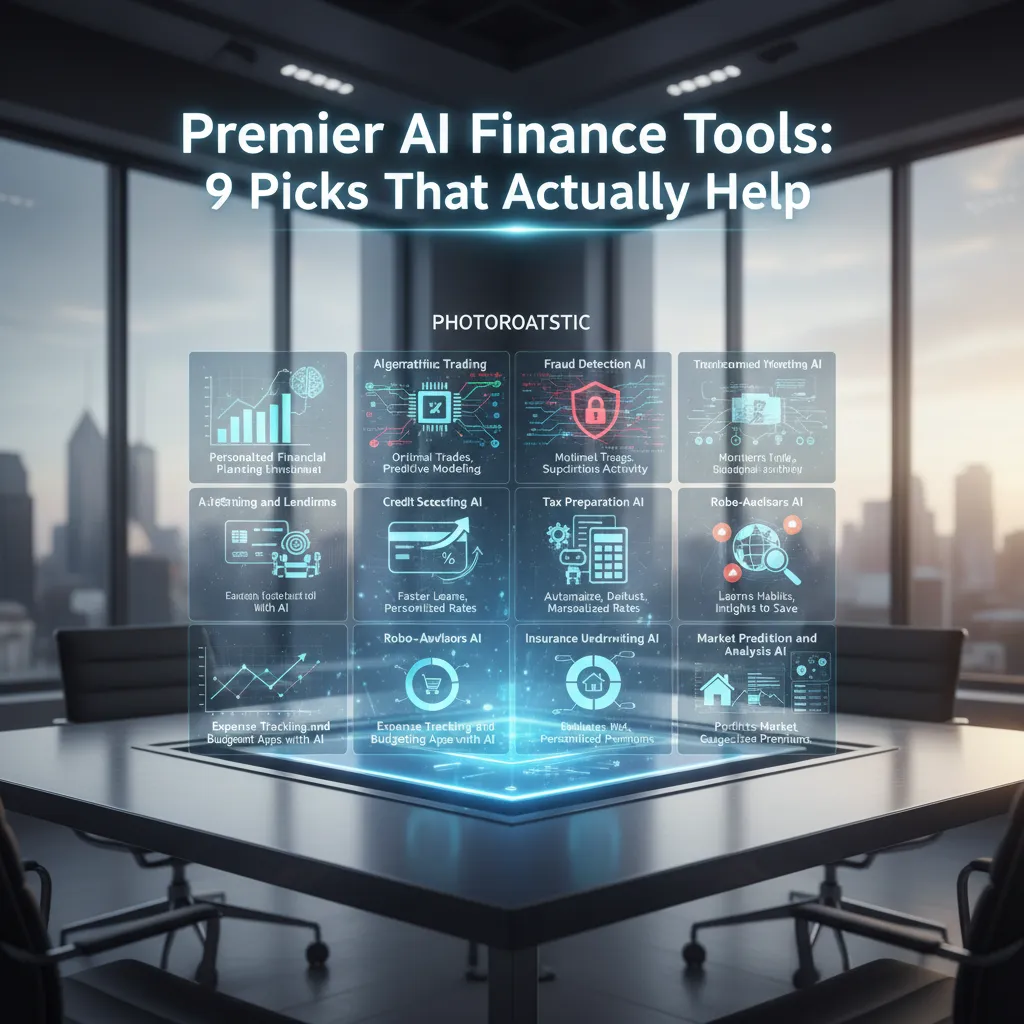
If you want faster close cycles and less manual work, focus on tools with strong data integration, explainable AI, and scenario planning. For decks: Prezent AI. For forecasting + fraud: DataRobot. For credit decisions: Zest AI or Upstart. For financial crime: SymphonyAI. For cash and treasury: HighRadius. For FP&A: Abacum or Planful. For investing signals: Kavout. Expect ~30% fewer manual tasks and close cycle improvements up to 70% when implementation and governance are done well.
AI Tools for HR: A No-Fluff 2026 Tool Bake-Off

If you’re choosing AI Tools for HR in 2026, start with the workflow you can’t afford to break (ER, onboarding, performance, recruiting). Then match tools by strength: HR Acuity for Employee Relations depth, Workday HCM for all-in-one with Real-Time Analytics, Leena AI for a Conversational Assistant, Lattice/Peoplebox.ai for performance + goals, Workleap for Engagement Surveys, Metaview for interview summaries, Zoho People for budget-friendly leave/attendance, Softr for Custom HR Portals, and Zapier to stitch it all together (8,000+ apps).
AI Sales Tools 2026: Best AI Sales Stack
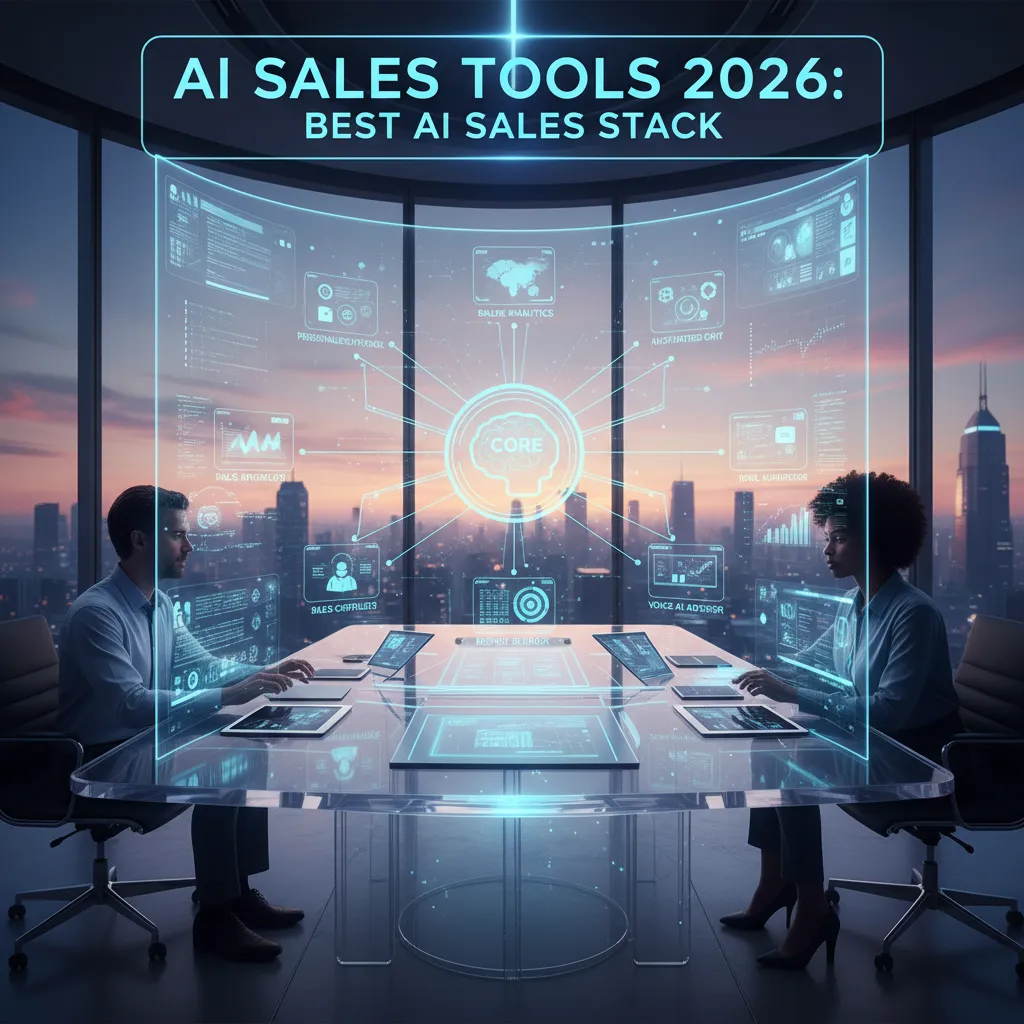
If you’re building a Sales Tools 2026 stack, start with an AI Powered CRM (Einstein or Zia), add Lead Generation (Apollo.io), then layer Revenue Intelligence (Gong) and Sales Engagement (Salesloft/Clari). For quick wins, email coaching like Lavender is a low-cost, high-impact add-on. Prioritize CRM integration, conversation intelligence, and forecasting over flashy “AI agents.”