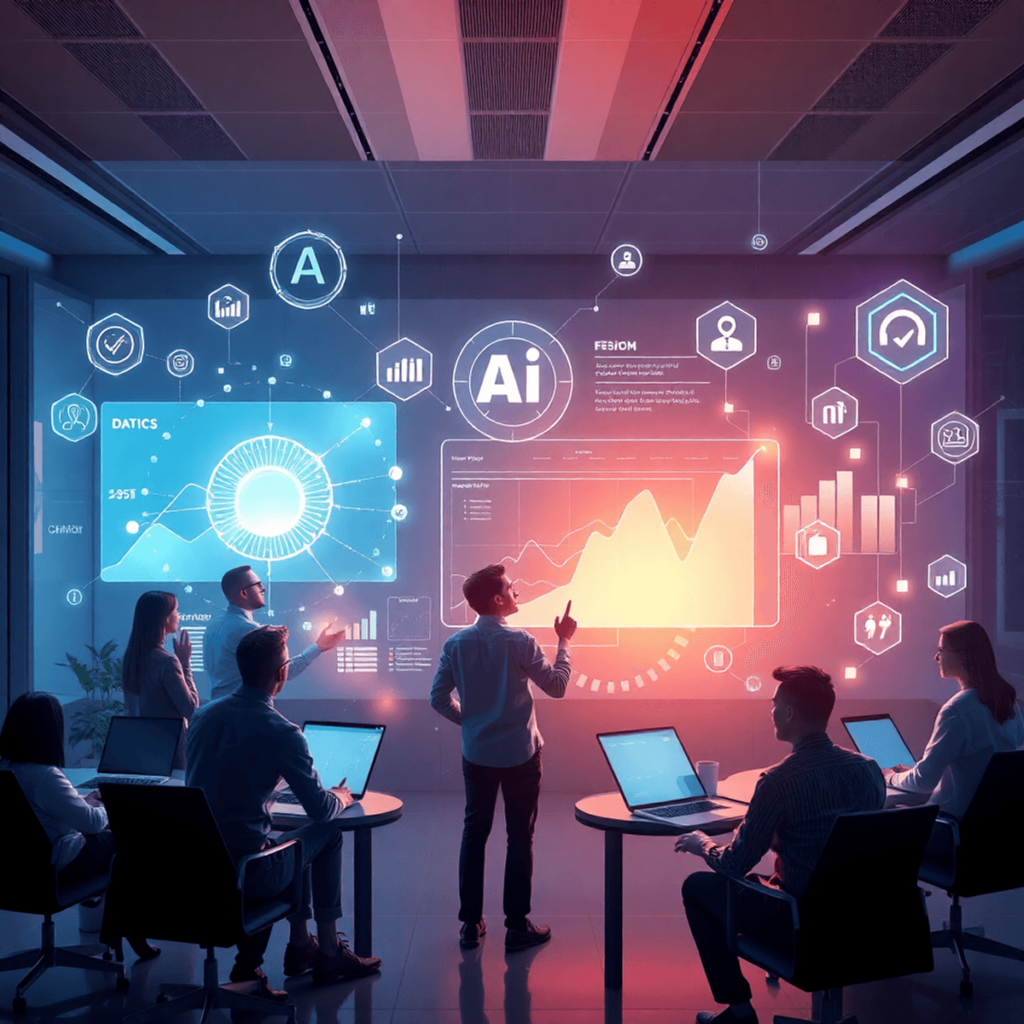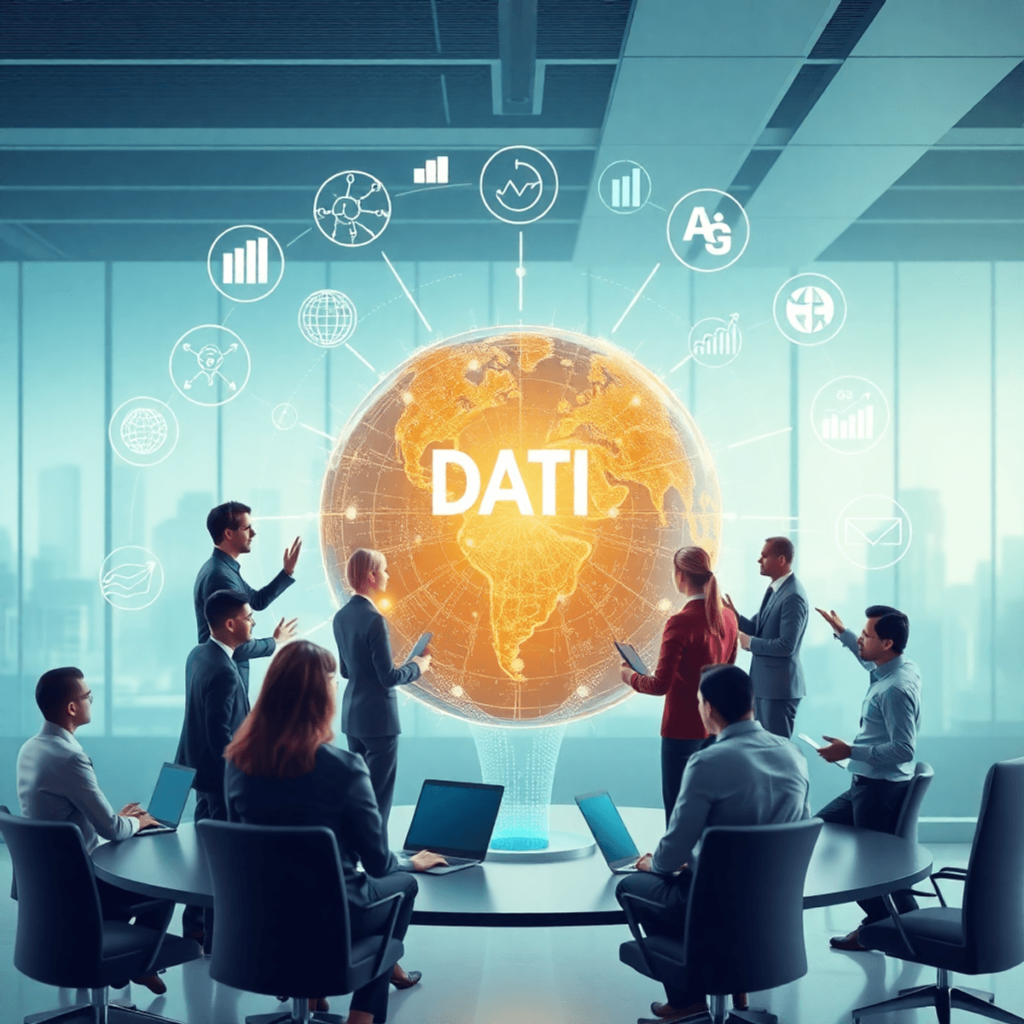
The world of operations is about to change significantly as we approach 2025-2026. The old ways of making small improvements and using basic automation are being replaced by more drastic changes in how organizations create and implement their operational models. This change is being driven by rapid advancements in artificial intelligence (AI) and other new technologies that go beyond just traditional automation tools.
Some of the key factors shaping the future include:
- The use of AI capabilities that allow not only task automation but also independent decision-making and flexible workflows.
- The merging of digital intelligence with physical systems, which is transforming industries such as manufacturing, logistics, and supply chain operations.
- A strategic rethinking of operational processes to align with changing market demands and technological possibilities.
Organizations that want to transform their operations need to do more than just automate their existing workflows. They must completely redesign these processes in order to achieve higher levels of efficiency, flexibility, and innovation. This shift requires viewing AI in operations as a fundamental enabler rather than just an additional feature.
This article explores the major operations trends 2025 that will redefine how businesses operate, highlighting the necessity of adopting forward-thinking strategies that incorporate AI’s full potential alongside complementary innovations.
1. AI Integration and Physical Automation
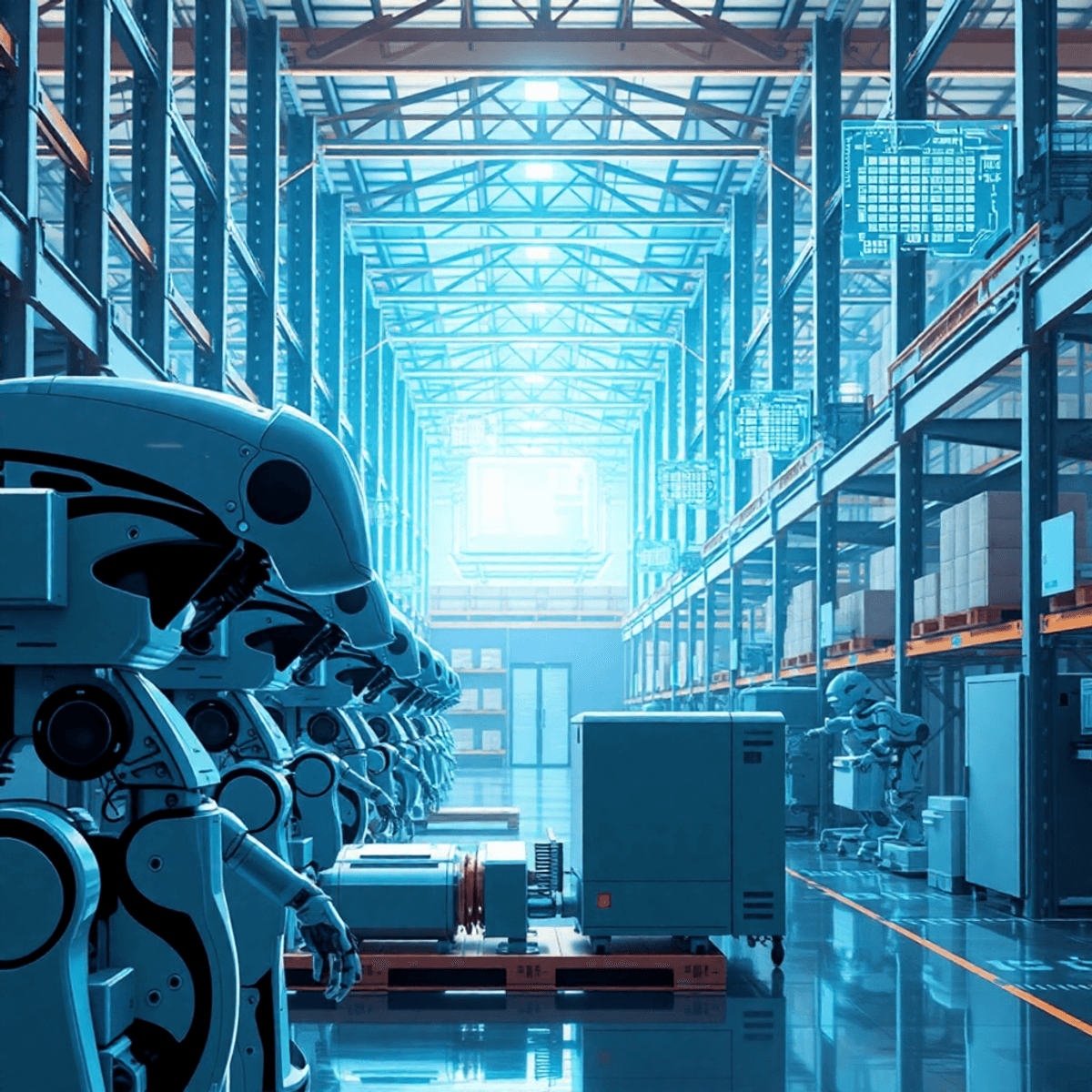
The combination of AI integration with robotics in operations is transforming warehouses and manufacturing plants, leading to a significant shift towards autonomous operations. By incorporating AI algorithms into robotic systems, these physical spaces are evolving from basic mechanization to intelligent ecosystems that can adapt, optimize, and learn from real-time data.
Transforming Warehouses and Manufacturing Plants
Here are some ways in which warehouses and manufacturing plants are being transformed:
- Dynamic inventory management: AI-powered robots can identify, sort, and transport goods on their own within warehouses, reducing human error and speeding up order fulfillment.
- Predictive maintenance: AI analytics continuously monitor equipment health, allowing robots to anticipate breakdowns and schedule maintenance proactively, minimizing downtime.
- Flexible production lines: AI-controlled robotic arms can adjust to changing product specifications without manual reprogramming, supporting mass customization at scale.
Benefits of Autonomous Physical Environments
Operational efficiency sees a significant improvement through:
- Increased accuracy: Robots equipped with computer vision and sensor fusion navigate complex spaces flawlessly, reducing picking errors or assembly faults.
- Continuous operation: Autonomous systems work around the clock without getting tired or taking breaks, speeding up production.
- Enhanced safety: Dangerous tasks are assigned to robots, keeping human workers safe from hazardous conditions while maintaining productivity.
- Scalability: Modular robotic solutions allow businesses to quickly scale operations in response to changing demand.
Real-World Applications Driving Convergence
Leading companies are showing us how this combination of AI and physical automation works:
- Amazon Robotics uses fleets of autonomous mobile robots in fulfillment centers that work together seamlessly with human workers to optimize package sorting and delivery timelines.
- Siemens incorporates AI-enabled robotic systems within smart factories that self-optimize production schedules based on supply chain inputs and market demand.
- Tesla’s Gigafactories employ robotic automation guided by AI for battery assembly lines, improving precision while lowering costs.
These examples highlight how the merging of AI with robotics is reshaping physical operations into adaptable environments capable of continuous improvement. This trend paves the way for larger organizational transformations driven by self-sufficient workforces and smarter infrastructure.
2. Agentic Workforce Development
The rise of the agentic workforce marks a pivotal shift in how organizations harness AI capabilities. AI agents are autonomous software entities designed to perform tasks, make decisions, and interact within digital or physical environments with minimal human intervention. Their role extends beyond basic automation, enabling dynamic problem-solving and adaptive responses that elevate operational effectiveness.
Understanding AI Agents in Modern Organizations
AI agents play a crucial role in modern organizations by:
- Serving as proactive collaborators alongside human employees, augmenting decision-making and execution.
- Facilitating complex workflows by handling routine or repetitive tasks, freeing human workers for strategic initiatives.
- Adapting continuously through machine learning to optimize performance based on real-time data inputs.
Challenges in Scaling AI Agent Deployment
While many organizations experiment with isolated AI agent pilots, they often struggle to expand these solutions enterprise-wide due to several challenges:
- Lack of clear strategy leading to fragmented implementations that fail to deliver sustained value.
- Integration complexity arising from legacy systems not designed for seamless AI interaction and data exchange.
- Resistance among the workforce due to uncertainty about roles, responsibilities, and trust in autonomous agents.
Redesigning Processes Versus Automating Flawed Workflows
Automating existing processes without critical evaluation tends to replicate inefficiencies at scale. An end-to-end process redesign is essential to unlock the full potential of an agentic workforce:
- Identify bottlenecks and redundant steps that hinder agility and productivity.
- Rethink workflows from a clean slate, embedding AI agents where they add the most strategic value.
- Create flexible processes capable of evolving as AI capabilities improve and business needs shift.
Strategies for Successful Integration of an Agentic Workforce
To successfully integrate an agentic workforce into your organization, consider implementing the following strategies:
- Define clear objectives: Align AI agent deployment with specific business outcomes rather than technology adoption for its own sake.
- Invest in training and change management: Prepare human teams for collaboration with AI agents, fostering trust and understanding.
- Develop modular architectures: Ensure systems support continuous updates and expansions without disruption.
- Implement robust governance frameworks: Monitor performance, ethical considerations, and compliance in agent activities.
An agentic workforce transforms operations by blending human creativity with AI precision. This evolution demands thoughtful redesign of organizational processes and cultures to fully realize benefits while managing risks inherent in scaling autonomous technologies.
3. Evolution of AI Infrastructure
The world of AI infrastructure is changing significantly as organizations shift from a strict cloud-first approach to more flexible hybrid cloud models. This change addresses the complex and diverse needs of modern operations, where flexibility, cost management, and performance are all critically important.
Hybrid Cloud Model Balancing Needs
The hybrid cloud model combines the scalability of public cloud resources with the reliability of on-premises systems. This allows organizations to customize their infrastructure based on specific workloads and operational requirements. By using a combination of cloud and local resources, businesses can:
- Optimize data sovereignty by keeping sensitive data within their control
- Reduce latency for applications that require quick response times
- Maintain strong control over critical assets by using dedicated on-premises systems
Economics and Performance at Scale for AI Inference
AI inference workloads, where models analyze real-time data to make decisions, require infrastructure that can deliver both high throughput (the amount of data processed in a given time) and low latency (the delay between input and output) without excessive costs. To achieve this balance, organizations need to focus on:
- Efficiently allocating resources between cloud and on-premises environments
- Dynamically scaling their infrastructure to handle varying levels of demand
- Utilizing specialized hardware accelerators like GPUs or TPUs designed specifically for inference tasks
These strategies will help ensure consistent performance while keeping operational expenses predictable.
Edge Computing Driving Immediacy and Latency Reduction
In situations where immediate data processing is necessary—such as manufacturing lines, self-driving cars, or Internet of Things (IoT) sensor networks—edge computing has become essential. By performing AI inference closer to where the data is generated (at the “edge” of the network), organizations can reduce delays caused by sending data back and forth between centralized clouds or data centers.
This immediate processing capability leads to faster decision-making, quicker adjustments in workflows, and improved reliability of systems.
Operational Benefits From Infrastructure Evolution
Organizations that embrace hybrid and edge-enabled AI infrastructures stand to gain several operational advantages:
- Greater flexibility in deploying AI capabilities across different environments
- Increased resilience through distributed computing resources that eliminate single points of failure
- Better compliance by keeping sensitive workloads within controlled premises while still utilizing public cloud resources for less critical tasks
The evolution of AI infrastructure goes beyond just upgrading technology; it also involves redefining how operations are structured. By finding a balance between the scalability offered by clouds, the reliability provided by on-premises systems, and the immediacy achieved through edge computing, businesses can effectively tackle the growing complexity and scale of AI-driven processes.
4. Organizational Transformation Through AI
Tech organizations are undergoing profound shifts by embedding AI deeply into their operational fabric. This transformation is not limited to technology adoption but extends to how companies structure themselves and approach decision-making.
Key characteristics of this transformation include:
1. Leaner, More Strategic Operations
- Automation and AI reduce reliance on manual tasks, enabling teams to focus on high-value, strategic initiatives.
- Data-driven insights powered by AI improve forecasting, resource allocation, and customer engagement.
- Organizations become more agile, responding rapidly to market changes with AI-enabled intelligence.
2. Modular System Architectures
- Designing systems as modular components allows quick adaptation and scalability of AI capabilities.
- Modular architectures facilitate integration of new AI models without overhauling entire platforms.
- This flexibility supports experimentation and iterative improvements aligned with evolving business needs.
3. Continuous Governance for Responsible AI
- Governance frameworks evolve from static policies to dynamic oversight that adjusts with AI development.
- Monitoring ethical considerations, bias mitigation, and compliance becomes an ongoing process.
- Automated tools assist in auditing AI decisions and ensuring transparency across operations.
4. Human-Agent Collaboration as a New Operating Model
- Rather than replacing human workers, AI agents augment human capabilities in complex tasks.
- Collaborative workflows blend human creativity and judgment with machine precision and speed.
- Training programs focus on developing skills to interact effectively with intelligent agents.
- This partnership enhances innovation capacity while maintaining accountability and empathy.
The integration of embedded AI reshapes organizational boundaries and operational models simultaneously. Companies adopting these principles position themselves to lead in a landscape defined by constant technological advancement and shifting competitive pressures.
5. Cybersecurity Challenges and Opportunities in Operations
The rapid integration of AI into operational environments introduces complex cybersecurity challenges and opportunities in operations. As organizations increasingly rely on AI-driven systems, the attack surface expands, making cybersecurity a critical focus area.
Growing Cybersecurity Risks with AI Adoption
- Expanded Attack Vectors: AI systems often require vast datasets, complex models, and interconnected infrastructure, creating multiple points vulnerable to attacks such as data poisoning, model theft, or adversarial manipulation.
- Supply Chain Vulnerabilities: Dependencies on third-party AI components and cloud services increase exposure to risks originating outside organizational boundaries.
- Operational Disruptions: Compromised AI can lead to degraded decision-making processes, production halts, or unsafe autonomous actions within physical environments like robotics or logistics.
AI’s Dual Role: Target and Defender
AI acts not only as a target for cyber threats but also as a powerful tool for defense mechanisms operating at machine speed:
- Threat Detection and Response: AI-powered defense systems analyze vast volumes of network traffic and system logs in real time to identify anomalies that human operators might miss.
- Adaptive Security Measures: Machine learning models dynamically evolve to counteract emerging threats, enabling proactive rather than reactive security postures.
- Automated Incident Management: Rapid containment actions triggered by AI reduce response time from hours or minutes to seconds.
Best Practices for Securing AI Systems
Protecting the integrity of AI within operations requires comprehensive strategies covering development, deployment, and ongoing management:
Robust Model Validation and Monitoring
- Continuously test models against adversarial inputs.
- Monitor model performance for unexpected behavior changes indicating possible tampering.
Data Governance and Integrity
- Enforce strict controls over training data provenance.
- Implement encryption and access restrictions to safeguard sensitive datasets.
Zero Trust Architecture
- Apply least privilege principles across all components interacting with AI systems.
- Segment networks to isolate critical AI workloads from general infrastructure.
Collaboration Between Security and Operations Teams
- Integrate cybersecurity expertise early in the design of operational AI workflows.
- Foster communication channels that allow rapid sharing of threat intelligence related to AI vulnerabilities.
Securing all facets of AI systems within operational environments is essential for maintaining trustworthiness and resilience. Organizations must balance innovation with rigorous protective measures to harness the full potential of AI while mitigating evolving cyber risks.
6. Embracing a Continuous Innovation Cycle
The rapid growth of technology adoption requires organizations to rethink how they integrate new capabilities into their operations. It’s no longer optional but essential to shorten the time between introducing new technologies and applying them in operations to stay competitive.
1. Rapid Experimentation as a Cornerstone
Rapid experimentation enables organizations to test hypotheses, validate new solutions, and iterate based on real-world feedback with unprecedented speed. This approach reduces risks associated with scaling unproven innovations and fosters a culture that values agility and learning. For example, pilot programs using AI-driven predictive maintenance can quickly reveal operational bottlenecks and suggest adjustments before full deployment.
2. Problem-Focused Resource Allocation
Directing investments toward specific challenges rather than broad technology adoption helps ensure meaningful innovation outcomes. Allocating resources strategically to areas such as supply chain resilience or customer experience improvement aligns innovation efforts with business priorities. This focus prevents dilution of effort and maximizes return on investment by addressing issues that directly impact operational effectiveness.
3. User-Centric Design in Operational Processes
Designing processes around user needs—whether employees, partners, or customers—drives adaptability and responsiveness. Incorporating feedback loops allows continuous refinement of workflows and tools, ensuring solutions remain relevant as conditions evolve. User-centric design principles encourage collaboration between technical teams and end-users, resulting in systems that enhance productivity while minimizing friction.
4. Adaptability Embedded in Operations
Embedding adaptability within operational models prepares organizations for ongoing change. Modular process architectures enable quick reconfiguration in response to shifting market demands or technology advancements. This flexibility supports seamless integration of new tools without disrupting existing workflows, creating an environment where innovation becomes part of daily operations rather than an occasional initiative.
Incorporating these elements cultivates an ecosystem where innovation cycles are continuous and self-reinforcing. Such an environment propels organizations beyond reactive changes toward proactive shaping of their futures through sustained experimentation, focused investment, and dynamic process design.
Conclusion
The future of operations is bright! Organizations need to rebuild their operational models instead of just automating the ones they already have. By using new technologies like AI, robotics, and hybrid infrastructure, we can completely change the way we design and carry out operations.
Here are the key things that will shape this transformation:
- Using technology to be more agile and quickly respond to changing market demands and operational challenges
- Focusing on business transformation that combines human and AI collaboration for better decision-making and execution
- Creating processes that are modular and scalable so they can easily adapt as technology improves
- Making continuous innovation a priority by encouraging experimentation, learning, and adaptation in our operational strategy
Operations that follow these principles will become more efficient, resilient, and competitive. To move forward, we need to think boldly—using emerging technologies as a foundation to build operational systems that can thrive in complex and ever-changing environments. This shift represents not just an evolution but a revolution in how organizations create value in 2025-2026 and beyond.